JSTOR Global Plants Home
  • Home
  • Browse
  • About
  • Access
  • Account
    • Saved Items
    • Profile
  • Log in

Global Plants

Skip to Main Content
  • JSTOR Global Plants Home
  • Global Plants

    • Browse
    • About
    • Access
    • Account
      • Saved Items
      • Profile
Log in
  • Browse
  • About
  • Access
  • Account
    • Saved Items
    • Profile
Advanced Search

Compilation
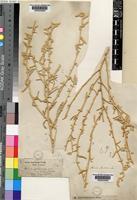
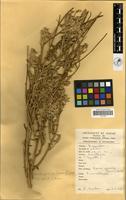
Aerva persica

6 Images see all

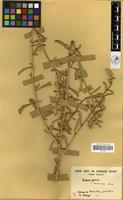
Filed as Aerva javanica (Burm.) Juss. ex Schult. [family AMARANTHACEAE]
Type of Aerva javanica unrecorded var. bovei Webb. [family AMARANTHACEAE]
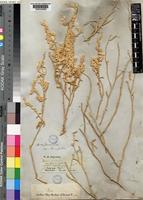
Aerva persica (Burm.f.) Merr. var. bovei [family AMARANTHACEAE]
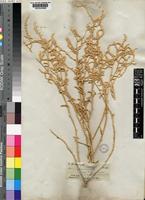
Type of Aerva tomentosa Forssk. [family AMARANTHACEAE]
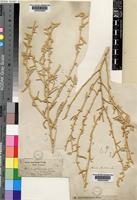
Aerva persica (Burm.f.) Merr. var. bovei [family AMARANTHACEAE]
Filed as Aerva javanica (Burm.) Juss. ex Schult. [family AMARANTHACEAE]
Previous
Next

Name

Identification
Aerva javanica (Burm.) Juss. ex Schult. [family AMARANTHACEAE ] (stored under name); Verified by Not on sheet, Aerva persica (Burm. f.) Merr. [family AMARANTHACEAE ] Verified by Not on sheet,
Related name
  • Achyranthes unrecorded
  • Aerva tomentosa
  • Aerva persica
  • Aerva javanica

Flora

Entry for AERVA javanica (Burm. f.) Juss. ex Schult. [family AMARANTHACEAE]
Herbarium
Royal Botanic Gardens, Kew (K)
Collection
Flora Somalia
Resource Type
Reference Sources
Entry From
Flora Somalia, Vol 1, (1993) Author: by C. C. Townsend [updated by M. Thulin 2008]
Names
AERVA javanica (Burm. f.) Juss. ex Schult. [family AMARANTHACEAE], (1819).
AERVA persica (Burm. f.) Merrill [family AMARANTHACEAE], (1921).
?AERVA ruspolii Lopr. [family ], (1899);. type: N1, Deragodleh near Berbera, Ruspoli & Riva 245 (not traced).
AERVA leucura [family AMARANTHACEAE], sensu Cuf. Enum.: 69 (1953).
Information
Plant frequently suffruticose or growing in erect clumps, 0.3–1.5 m, branched from about the base, stems simple or with long ascending branches, ± densely whitish- or yellowish-tomentose or pannose, when very dense the indumentum often appearing tufted. Leaves alternate, varying from linear to ± round, equally variable in size, ± densely white- or yellowish-pannose but usually more thinly so and greener on the upper surface, margins flat or ± involute (when strongly so the leaves frequently ± falcate-recurved), sessile or shortly petiolate. Spikes white to creamy-pink, cylindrical, dense and stout (to c. 10 x 1 cm) to slender and interrupted with lateral globose clusters. Flowers dioecious, male spikes slender (though not all slender spikes are male). Outer 2 tepals of female flowers 2–3 mm, oblong-obovate to obovate-spathulate, lanate, the yellowish midrib ceasing well below the tip; inner 3 slightly shorter, elliptic-oblong, ± densely lanate, acute, the narrow green vitta attaining 2/3 of their length. Style slender, at least equalled by the filiform stigmas; filaments very reduced, without anthers. Male flowers smaller, the outer tepals 1.5–2.25 mm; filaments delicate, the anthers ± equalling the perianth; ovary small, style very short with a rudimentary stigma. Capsule 1–1.5 mm, round, compressed.
Range
N1–3; C1, 2; S1–3 widespread in the drier parts of the tropics and subtropics of the Old World from Morocco south to Cameroun, across the drier regions of Africa south to Madagascar, and in Asia from Palestine and Arabia to Burma; adventive in Australia and elsewhere.
Altitude range
0–1630 m.
Distribution
SOMALIA Newbould 729; Elmi & Hansen 4056; Gillett 4649.
Distribution (external)
Djibouti
Eritrea
Ethiopia
Notes
The type of A. ruspolii has not been located in either FT or Z, and thus it has not been possible to determine its exact status. There seems nothing in the original description to separate it from A. javanica, at least specifically.

Related Materials

  • Terms and Conditions
  • Privacy Policy
  • Cookie Policy
  • Cookie Settings
  • Accessibility
  • Help
  • Contact Us
  • Facebook
  • Twitter
ITHAKA

JSTOR is part of ITHAKA, a not-for-profit organization helping the academic community use digital technologies to preserve the scholarly record and to advance research and teaching in sustainable ways.

©2000-2026 ITHAKA. All Rights Reserved. JSTOR®, the JSTOR logo, JPASS®, Aluka®, and ITHAKA® are registered trademarks of ITHAKA.

╳