JSTOR Global Plants Home
  • Home
  • Browse
  • About
  • Access
  • Account
    • Saved Items
    • Profile
  • Log in

Global Plants

Skip to Main Content
  • JSTOR Global Plants Home
  • Global Plants

    • Browse
    • About
    • Access
    • Account
      • Saved Items
      • Profile
Log in
  • Browse
  • About
  • Access
  • Account
    • Saved Items
    • Profile
Advanced Search

Compilation
Adiantum paradiseae

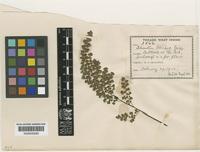
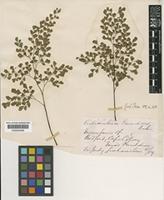
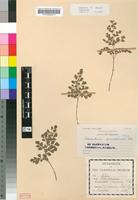
3 Images see all

Adiantum paradiseae Baker [family ADIANTACEAE]
Type of Adiantum paradiseae Baker [family PTERIDACEAE]
Adiantum paradiseae Baker [family ADIANTACEAE]
Previous
Next

Name

Identification
Adiantum paradiseae Baker [family ADIANTACEAE ] (stored under name);
Related name
  • Adiantum capillus-veneris
  • Adiantum paradiseae

Flora

Entry for ADIANTUM capillus-veneris L. [family ADIANTACEAE]
Herbarium
Royal Botanic Gardens, Kew (K)
Collection
Flora of Tropical East Africa
Resource Type
Reference Sources
Entry From
Flora of Tropical East Africa, page 1, (2002) Author: BERNARD VERDCOURT
Names
ADIANTUM capillus-veneris L. [family ADIANTACEAE], Sp. Pl.: 1096 (1753); Hook., Syn. Fil.: 123 (1867); Hieron. in P.O.A. C: 78 (1895) & in V.E. 2: 44 (1908); Carruth., Cat. Afr. Pl. Welw. 2: 166 (1901); Sim, Ferns S. Afr. ed. 2: 245, t. 121, 122 (1915); Ogata, Ic. Fil. Japan 1: t. 1 (1928); Tardieu in Mém. I.F.A.N. 28: 98, t. 15/7 (1953); Pic. Serm. in Webbia 12: 678, figs. 8 & 9 (1957); Tardieu, Fl. Madag. 5 (1): 132 (1958); Alston, Ferns W.T.A.: 39 (1959); Verdc. in Journ. E. Afr. Nat. Hist. Soc. 24: 39, fig. 3/c (1962); Ballard in Fl. Iraq 2: 63, t. 4 (1966); Launert in Prodr. Fl. S.W. Afr. 6: 1 (1969); Schelpe in Contr. Bolus Herb. 1: 55 (1969) & F.Z., Pterid.: 112, t. 36/b (1970); Lye in Uganda Journ. 34: 71, fig. 4/g, h (1970); Faden in U.K.W.F.: 33, 42 (fig.) (1974); Schelpe, C.F.A., Pterid.: 88 (1977); Schelpe & M.A. Diniz, Fl. Moçamb., Pterid.: 111 (1979); Kornaś, Distr. Ecol. Pterid. Zambia: 62, fig. 35 b (1979); W. Jacobsen, Ferns S. Afr.: 228, fig. 162, map 55 (1983); Dostál in Hegi, Illustr. Fl. Mitt.-Eur. ed. 3, 1 (1); 115, fig. 92/4 (1984); Duncan & Isaac, Ferns & Allied Pl. Vict. Tasm. & S. Austr.: 138, fig. 13/4–6 (1986); Schelpe & N.C. Anthony, F.S.A., Pterid.: 101, fig. 30/1, map 80 (1986); J.E. Burrows, S. Afr. Ferns: 123, t. 19/1, fig. 124, 124a, b, c, map (1990); Schippers in Fern Gaz. 14: 182 (1993); Shieh in Fl. Taiwan 1 (ed. 2): 237 (1994); Faden in U.K.W.F. ed. 2: 19, t. 170 (1994). Type: a specimen from France, Montpellier in Magnol’s Herb. sent by De Sauvages to Linnaeus, Linn. Herb. 1252.9 (LINN, lecto.; microfiche!).
ADIANTUM coriandrifolium Lam. [family ADIANTACEAE], Fl. Franc. 1: (29) (1778), nom. illegit. Type as for A. capillus-veneris
ADIANTUM fontanum Salisb. [family ADIANTACEAE], Prodr.: 404 (1796), nom. illegit . Type as for A. capillus-veneris
ADIANTUM capillus Sw. [family ADIANTACEAE], in Shrad. Journ. Bot. 1800 (2): 83 (1801), nom. illegit. Type as for A. capillus-veneris
ADIANTUM marginatum Schrad. [family ADIANTACEAE], in Gött. Gel. Anz. 1818: 918 (1818). Type: South Africa, Hesse s.n. (LE, lecto., K!, photo.)
ADIANTUM pseudocapillus Fée [family ADIANTACEAE], Mém. Fam. Foug. 5: 118 (1852). Type: South Africa, Cape Peninsula, Drège s.n. (K, iso.?)
ADIANTUM paradiseae Bak. [family ADIANTACEAE], in Gard. Chron. III, 6: 558 (1889). Type: South Africa, Bedford District, Paradise s.n. (K, not found, PRE, iso.)
ADIANTUM capillus-veneris Chiov. var. kenyense [family ADIANTACEAE], in Racc. Bot. Miss. Cons. Kenya: 146 (1935). Type: Kenya, Meru District, Keja, Balbo 760, 760 bis (TOM, syn.!) & Fort Hall District, Sagana R., Balbo 770 (TOM!, syn.)
Information
Rhizome creeping, short, ± coarse; scales narrow, brown, ± 3 mm long, with attenuate tips, entire. Fronds 5–50, clustered, erect or spreading or hanging, 5–50(–90?) cm tall, 2–3-pinnate; stipes dark brown to purplish black, slender, brittle, smooth and polished; basal scales light brown, shiny; rhachis and pinna-stalks very dark, slender; pinnules mostly obcuneate, 0.8–2.5 cm long, 0.6–2.8 cm wide, slightly asymmetrical with rounded to strongly cuneate bases and rounded outer edges, shallowly to deeply and irregularly incised or lobed, the lobes often long and narrow, toothed at the apex, glabrous; veins repeatedly forked, free; pinnule-stalklets very slender, 2–8 mm long. Sori 4–7 per pinnule, relatively large, at apices of lobes, oblong-elliptic, oblong or square, not curved, 1.5–2 mm long, 1–4 mm wide. Fig. 13/5 (p. 51).
Range
DISTR. U 1–4; K 1, 3, 4, 6, 7; T 1–3, 4 (fide Peter), 5–8 ± cosmopolitan
Altitude range
200–3000 m
Distribution
KENYA Northern Frontier Province Marsabit, 3 June 1960, Oteke 29!;KENYA Nakuru District Molo, Gardner in F.D. 979!;KENYA Nairobi District near Thika Road House, by Karura R., 22 Oct. 1950, Verdcourt 365!TANZANIA Mbulu District W boundary of Lake Manyara National Park, Marera R. Gorge, 17 Mar. 1964, Greenway & Kanuri 11370!;TANZANIA Pare District SW Pare Mts, Mwembe, 20 Jan. 1930, Greenway 2056!;TANZANIA Lindi District Tendaguru, 20 Feb. 1935, Schlieben 6034!UGANDA Karamoja District Mt Kadam, 3.2 km NE of Obda summit, near Kyesowe, 5 Apr. 1953, G.H.S. Wood 680!;UGANDA Toro District Mpanga R., Dawe 495!;UGANDA Mbale District Elgon, above Bumagabula, 17 June 1970, Lye 5767!
Notes
Since the species is cosmopolitan and also much cultivated, the literature is vast and hundreds of illustrations have been published (see Index Londinensis for earlier ones). The division of the pinnules is very variable and there are numerous cultivars some of which may have been grown in East Africa. The name var. kenyense refers to specimens with the pinnules deeply divided into narrow divisions. Faden & Evans 69/914! (Kenya, Thika, behind the Blue Posts Hotel, under Chania Falls, 3 Aug. 1969) has rounded obovate-transversely elliptic undivided or very slightly incised pinnules ± 0.8×1 cm and Greenway 9123! (Tanzania, Masai District, Olmoti, 6 Dec. 1956) from a limestone cave at 3000 m is rather similar; both are probably only environmental forms of A. capillus-veneris .

Related Materials

  • Terms and Conditions
  • Privacy Policy
  • Cookie Policy
  • Cookie Settings
  • Accessibility
  • Help
  • Contact Us
  • Facebook
  • Twitter
ITHAKA

JSTOR is part of ITHAKA, a not-for-profit organization helping the academic community use digital technologies to preserve the scholarly record and to advance research and teaching in sustainable ways.

©2000-2026 ITHAKA. All Rights Reserved. JSTOR®, the JSTOR logo, JPASS®, Aluka®, and ITHAKA® are registered trademarks of ITHAKA.

╳