JSTOR Global Plants Home
  • Home
  • Browse
  • About
  • Access
  • Account
    • Saved Items
    • Profile
  • Log in

Global Plants

Skip to Main Content
  • JSTOR Global Plants Home
  • Global Plants

    • Browse
    • About
    • Access
    • Account
      • Saved Items
      • Profile
Log in
  • Browse
  • About
  • Access
  • Account
    • Saved Items
    • Profile
Advanced Search

Compilation
Adhatoda protracta

5 Images see all

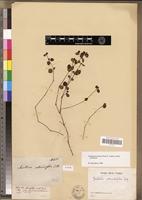
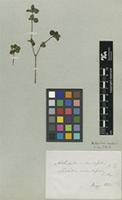
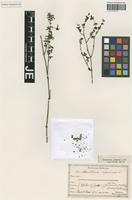
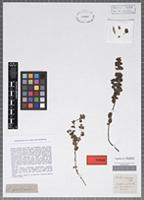
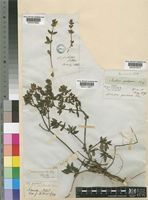
Type? of Adhatoda rotundifolia Nees [family ACANTHACEAE]
Type of Adhatoda rotundifolia Nees [family ACANTHACEAE]
Justicia protracta (Nees) T.Anderson [family ACANTHACEAE]
Type? of Gendarussa protracta Nees variety microphylla Nees [family ACANTHACEAE]
Type? of Adhatoda protracta (Nees) Nees species convexa Nees [family ACANTHACEAE]
Previous
Next

Name

Identification
Adhatoda protracta (Nees) Nees [family ACANTHACEAE ] (stored under name); Verified by Nees s.d.,
Related name
  • Justicia pulegioides
  • Adhatoda protracta
  • Gendarussa protracta
  • Justicia protracta

Flora

Entry for JUSTICIA mutica C. B. Clarke [family ACANTHACEAE]
Herbarium
Royal Botanic Gardens, Kew (K)
Collection
Flora Capensis
Resource Type
Reference Sources
Entry From
Flora Capensis, Vol 5, page 1, (1912) Author: By C. B. CLARKE.
Names
JUSTICIA mutica C. B. Clarke [family ACANTHACEAE]
Adhatoda protracta Nees [family ACANTHACEAE], in DC. Prod. xi. 392 partly.
Information
persistently hairy; branches 10–20 in. long; internodes 1–2 in. long; leaves 1 1/4 by 3/4 in., ovate; petiole up to 1/4 in. long; flowers axillary, scattered, solitary; calyx-segments exceeding 1/4 in. in length, linear; corolla 1/2– 2/3 in. long; anther-cells at nearly equal height, muticous or most obscurely tailed at the base; pollen ellipsoid with 2 stopples and 1 row of tubercles on either side of each stopple; ovary glabrous; style thinly hairy; capsule 1/3 by 1/6 in., 4-seeded. null
Distribution
COAST REGION in wooded situations in Uitenhage and Albany Divs., Bowie!
Notes
The anther-cells are not those of the genus Justicia: the larger calyx, capsule and leaves also do not agree with any example of J. pulegioides.

Related Materials

  • Terms and Conditions
  • Privacy Policy
  • Cookie Policy
  • Cookie Settings
  • Accessibility
  • Help
  • Contact Us
  • Facebook
  • Twitter
ITHAKA

JSTOR is part of ITHAKA, a not-for-profit organization helping the academic community use digital technologies to preserve the scholarly record and to advance research and teaching in sustainable ways.

©2000-2026 ITHAKA. All Rights Reserved. JSTOR®, the JSTOR logo, JPASS®, Aluka®, and ITHAKA® are registered trademarks of ITHAKA.

╳