JSTOR Global Plants Home
  • Home
  • Browse
  • About
  • Access
  • Account
    • Saved Items
    • Profile
  • Log in

Global Plants

Skip to Main Content
  • JSTOR Global Plants Home
  • Global Plants

    • Browse
    • About
    • Access
    • Account
      • Saved Items
      • Profile
Log in
  • Browse
  • About
  • Access
  • Account
    • Saved Items
    • Profile
Advanced Search

Compilation
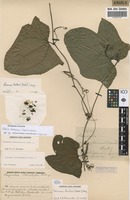
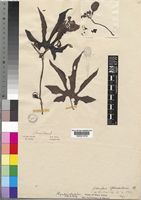
Adenopus eglandulosus

2 Images see all

Filed as Coccinia heterophylla ( Hook.f. ) Holstein [family CUCURBITACEAE]
Type of Ruthalicia eglandulosa (Hook.f.) C.Jeffrey [family CUCURBITACEAE]
Previous
Next

Name

Identification
Adenopus eglandulosus Hook.f. [family CUCURBITACEAE ] Physedra eglandulosa (Hook.f.) Hutch. & Dalziel [family CUCURBITACEAE ] Verified by Hutchinson & Dalziel, Ruthalicia eglandulosa (Hook.f.) C.Jeffrey [family CUCURBITACEAE ] (stored under name);
Related name
  • Adenopus eglandulosus
  • Physedra eglandulosa
  • Ruthalicia eglandulosa

Flora

Entry for ADENOPUS eglandulosus Hook. f. [family CUCURBITACEAE]
Herbarium
Royal Botanic Gardens, Kew (K)
Collection
Flora of Tropical Africa
Resource Type
Reference Sources
Entry From
Flora of Tropical Africa, Vol 2, page 521, (1871) Author: (By Mr. J. G. Baker.)
Names
ADENOPUS eglandulosus Hook. f. [family CUCURBITACEAE]
Information
Stem and petioles slightly pubescent. Leaves 4–5 in. long, digitately 5–7-lobed to near the base, lobes narrow-lanceolate, acuminate, entire or sinuate-lobed, with scattered hairs on the surface above and on the veins beneath. Male fl.: Peduncle stout, 2–3 in., pilose; pedicels short, pubescent. Calyx-tube 1/3 in. long, cylindric, slightly dilated in the middle; limb cup-shaped, with 5 remote, very slender, subulate lobes. Corolla 2–3 in. in diameter. Anther-head globose; cells contortuplicate.
Distribution
Sierra Leone Upper Guinea !
Notes
I have a single poor specimen of this most distinct plant; it was received from Mr. Morson, the eminent pharmacist, by the late R. Brown, and purchased at a sale of some of the plants of the latter gentleman.The leaves in drying turn very dark brown, as with A. longiflorus. I find no trace of glands on the petiole or leaf.

Related Materials

  • Terms and Conditions
  • Privacy Policy
  • Cookie Policy
  • Cookie Settings
  • Accessibility
  • Help
  • Contact Us
  • Facebook
  • Twitter
ITHAKA

JSTOR is part of ITHAKA, a not-for-profit organization helping the academic community use digital technologies to preserve the scholarly record and to advance research and teaching in sustainable ways.

©2000-2026 ITHAKA. All Rights Reserved. JSTOR®, the JSTOR logo, JPASS®, Aluka®, and ITHAKA® are registered trademarks of ITHAKA.

╳