JSTOR Global Plants Home
  • Home
  • Browse
  • About
  • Access
  • Account
    • Saved Items
    • Profile
  • Log in

Global Plants

Skip to Main Content
  • JSTOR Global Plants Home
  • Global Plants

    • Browse
    • About
    • Access
    • Account
      • Saved Items
      • Profile
Log in
  • Browse
  • About
  • Access
  • Account
    • Saved Items
    • Profile
Advanced Search

Compilation
Adenia schlechteri

8 Images see all

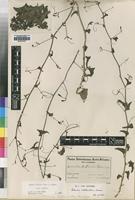
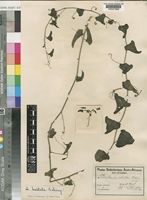
Isotype of Adenia schlechteri Harms [family PASSIFLORACEAE]
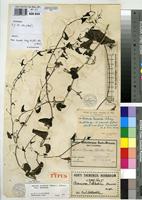
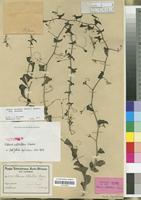
Adenia unrecorded (Harv.) Schinz var. hastata [family PASSIFLORACEAE]
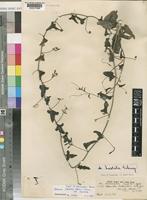
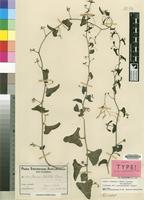
Type of Adenia schlechteri Harms [family PASSIFLORACEAE]
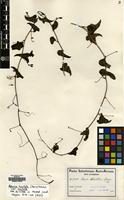
Adenia hastata (Harv.) Schinz var. hastata [family PASSIFLORACEAE]
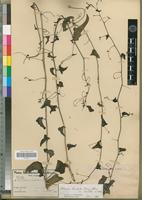
Isotype of Adenia schlechteri Harms [family PASSIFLORACEAE]
Type of Adenia schlechteri Harms [family PASSIFLORACEAE]
Previous
Next

Name

Identification
Adenia hastata (Harv.) Schinz [family PASSIFLORACEAE ] (stored under name); Verified by deWilde,W.J., Isotype of Adenia schlechteri Harms [family PASSIFLORACEAE ]
Related name
  • Adenia digitata
  • Adenia unrecorded
  • Adenia hastata
  • Adenia schlechteri

Flora

Entry for Adenia hastata Harv. Schinz [family PASSIFLORACEAE]
Herbarium
Royal Botanic Gardens, Kew (K)
Collection
Flora Zambesiaca
Resource Type
Reference Sources
Entry From
FZ, Vol 4, Part 0, page 368, (1978) Author: R. and A. Fernandes
Names
Adenia hastata Harv. Schinz [family PASSIFLORACEAE], in Engl., Bot. Jahrb. 15, Beibl. 33, 1: 3 (1892).—Burtt Davy in Ann. Transv. Mus. 3: 121 (1912).—Engl., Pflanzenw. Afr. 3, 2: 603 (1921).—Harms in Notizbl. Bot. Gart. Berl. 8: 295 (1923); in Engl. & Prantl, Pflanzenfam. ed. 2, 21: 491 (1925).—Burtt Davy, F.P.F.T. 1: 221 (1926).—Liebenberg in Bothalia 3: 519, 532, 536, fig. 4–5 (1939).—A. & R. Fernandes in Garcia de Orta 6, 2: 256, t. 9 (1958).—Watt & Breyer-Brandwijk, Med. & Pois. Pl. S. & E. Afr. ed. 2: 828 (1962).—de Wilde in Meded. Landb. Wag. 71, 18: 168 (1971).—J. H. Ross, Fl. Natal: 251 (1972). Type from S. Africa.
Modecca hastata Harv. [family PASSIFLORACEAE], Thes. Cap. 2: 43, t. 167 (1863). Type as above.
Adenia schlechteri Harms [family PASSIFLORACEAE], in Engl., Bot. Jahrb. 33, 1: 150 (1902). Type from S. Africa (Transvaal).
Information
Herbaceous climber up to 4 m., arising from a tuberous rootstock. Branches slender, greyish-green, striate, with internodes up to 5 cm. long. Leaf-lamina 1·5–10(14) × 1·5–10(13) cm., broadly ovate to ± hastate, apex obtuse to acute and with mucro up to 2 mm. long, margin entire, cordate to truncate at the base, membranous (herbaceous) to coriaceous, greyish-brown to blackish, often punctate, with 3–7 main nerves from the base, 1–2 pairs of nerves from the midrib and indistinct reticulation; petiole 0·5–5(10) cm. long. Glands at the lamina-base 1–2, 1–3(5) mm. in diameter, contiguous, borne on the ± semiorbicular or 2-lobed up to 4 mm. wide peltate lamina-base; lamina-glands 0–2(4), up to 5 mm. in diameter, at or near the apex. Stipules 1·5–2 mm. long, narrowly triangular, acute. Sterile tendrils up to 12 cm. long. Cymes with peduncles 0·5–4(11) cm. long, up to 12-flowered in male. 1–3-flowered in female; bracts and bracteoles 1–3 mm. long, narrowly triangular; pedicels 2–10 mm. long in the male, 1–2 mm. long in the female. male flower: (13)15–30 × (3)4–5 mm. (incl. the 2–6 mm. long stipe), tubular-infundibuliform; hypanthium 2–3 × 3–6 mm., cup-shaped; calyx-tube (5)7–15 mm. long; calyx-lobes 4–7 mm. long, ovate to elliptic, densely fimbriate at the margin; petals 5–7(9) × 0·33–1 mm., linear-lanceolate, 1–3-nerved, entire to densely fimbriate, inserted (1)2–8 mm. above the corona; corona hairy, the hairs sometimes branched; stamen-filaments 3–7 mm. long, connate for 2·5 mm. at the base, inserted at the base of the hypanthium or on an androgynophore; anthers 4–7 × 1 mm., obtuse, with apiculum up to 0·33 mm. long; disk-glands 1–1·5 mm. long; vestigial ovary c. 1 mm. long, with gynophore up to 1 mm. long.female flower: (8)10–18 × 5–7(8) mm. (incl. the 0·5–2·5 mm. long stipe), campanulate-infundibuliform; hypanthium 1–2 mm. long; calyx-tube 3–6 mm. long; calyx-lobes 4–7 mm. long, ovate, crenulate-laciniate at the margin; petals 3–5(6) × 0·1–0·33(·5) mm., linear, acute, 1-nerved, entire to ± fimbriate, inserted 1·5–3 mm. above the corona; corona consisting of slender hairs 1–1·5 mm. long; disk-glands 0·33–0·75 mm. long; pistil 7–9 mm. long; gynophore 1–1·5 mm. long; ovary (2)2·5–4·5 × (1·5)2–4 mm., ellipsoid to subglobose; styles connate at the base, with the arms 1·5–2·5 mm. long and stigmas palmately branched, papillate. Capsule 2–3·5(6) cm. in diameter, subglobose, with coriaceous pericarp, 5–25-seeded. Seeds 7(8) × 5·5–6·5 × 3 mm., ovoid to ellipsoid, pitted.

Related Materials

  • Terms and Conditions
  • Privacy Policy
  • Cookie Policy
  • Cookie Settings
  • Accessibility
  • Help
  • Contact Us
  • Facebook
  • Twitter
ITHAKA

JSTOR is part of ITHAKA, a not-for-profit organization helping the academic community use digital technologies to preserve the scholarly record and to advance research and teaching in sustainable ways.

©2000-2026 ITHAKA. All Rights Reserved. JSTOR®, the JSTOR logo, JPASS®, Aluka®, and ITHAKA® are registered trademarks of ITHAKA.

╳