JSTOR Global Plants Home
  • Home
  • Browse
  • About
  • Access
  • Account
    • Saved Items
    • Profile
  • Log in

Global Plants

Skip to Main Content
  • JSTOR Global Plants Home
  • Global Plants

    • Browse
    • About
    • Access
    • Account
      • Saved Items
      • Profile
Log in
  • Browse
  • About
  • Access
  • Account
    • Saved Items
    • Profile
Advanced Search

Compilation
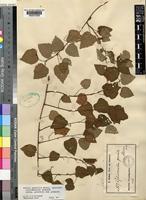
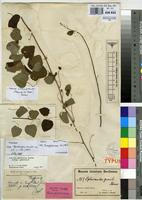
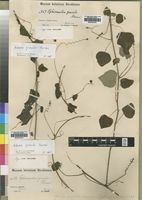
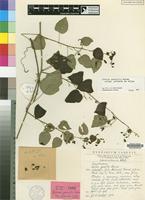
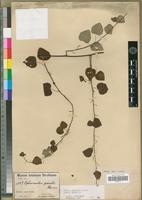
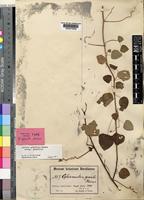
Adenia gracilis

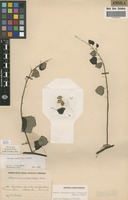
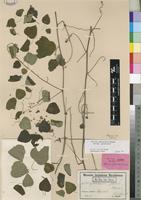
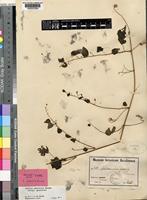
18 Images see all

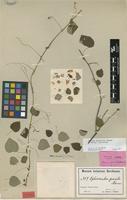
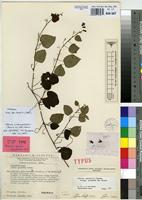
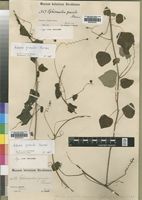
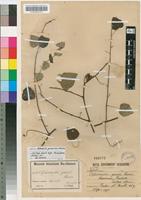
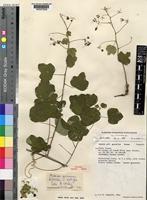
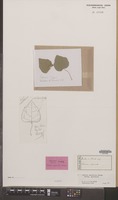
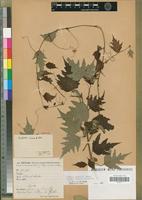
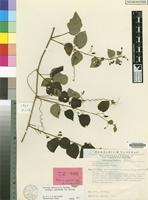
Adenia gracilis Harms subsp. gracilis [family PASSIFLORACEAE]
Isosyntype of Adenia gracilis Harms [family PASSIFLORACEAE]
Syntype of Ophiocaulon gracile Harms ex. Pellegr. [family PASSIFLORACEAE]
Holotype of Adenia gracilis Harms subsp. pinnata W.J.de Wilde [family PASSIFLORACEAE]
Syntype of Adenia gracilis Harms [family PASSIFLORACEAE]
Isotype of Adenia guineensis W.J.de Wilde [family PASSIFLORACEAE]
Syntype of Adenia gracilis Harms subsp. gracilis [family PASSIFLORACEAE]
Syntype of Modecca incisa A.Chev. [family PASSIFLORACEAE]
Holotype of Adenia gracilis Harms subsp. pinnata W.J.de Wilde [family PASSIFLORACEAE]
Filed as Adenia gracilis Harms [family PASSIFLORACEAE]
Type of Adenia gracilis Harms subsp. pinnata W.J. de Wilde [family PASSIFLORACEAE]
Syntype of Ophiocaulon gracile Harms ex. Pellegr. [family PASSIFLORACEAE]
Isosyntype of Adenia gracilis Harms [family PASSIFLORACEAE]
Type of Modecca incisa A.Chev. [family PASSIFLORACEAE]
Syntype of Adenia gracilis Harms [family PASSIFLORACEAE]
Type of Ophiocaulon gracile Harms [family PASSIFLORACEAE]
Syntype of Adenia gracilis Harms [family PASSIFLORACEAE]
Previous
Next

Name

Identification
Adenia gracilis Harms [family PASSIFLORACEAE ] (stored under name); Verified by deWilde,W.J., Ophiocaulon gracile Harms ex. Pellegr. [family PASSIFLORACEAE ]
Related name
  • Ophiocaulon gracile
  • Adenia cissampeloides
  • Adenia guineensis
  • Modecca incisa
  • Adenia gracilis
  • Adenia cissampeloids
Common name
  • nεŋbe (NWT) tawe (NWT) (SIERRA LEONE, MENDE), Burkill, H.M. 1985. The useful plants of west tropical Africa, Vol. 4
  • mawe (NWT) (SIERRA LEONE, LOKO), Burkill, H.M. 1985. The useful plants of west tropical Africa, Vol. 4

Flora

Entry for ADENIA gracilis Harms [family PASSIFLORACEAE]
Herbarium
Royal Botanic Gardens, Kew (K)
Collection
Flora of Tropical East Africa
Resource Type
Reference Sources
Entry From
Flora of Tropical East Africa, page 1, (1975) Author: W. J. J. O. de Wildem (Rijksherbarium, Leiden)
Names
ADENIA gracilis Harms [family PASSIFLORACEAE], in E. & P. Pf. III. 6A, Nachtr. 1 : 255 (1897); Engl., V.E. 3(2) : 602 (1921); F.W.T.A., ed. 2, 1 : 202 (1954); de Wilde in Acta Bot. Neerl. 17 : 129, 132, fig. 2/k (1968) & in Meded. Landbouwhogeschool Wagen-ingen 71–18 : 255 (1971). Types : Cameroun, Yaoundé, Zenker & Standi 383 (B, syn.†, BM, K, isosyn. !) & 457 (B, syn.†, BM, BR, K, S, isosyn. !)
Ophiocaulon gracile (Harms) Pellegr. [family PASSIFLORACEAE], in Mém. Soc. Linn. Norm. 26 (2) : 123 (1924)
Information
Subherbaceous climber up to 10 m., twigs brownish green or grey-green, sometimes pruinose, faintly spotted or not. Leaf-blades pale green to grey-glaucous beneath, mostly warty-punctate, entire or up to half-way 3–5(–7)-lobed, orbicular to ovate or ± 3–5-angular in outline, base cordate to rounded, top obtuse to acute-acuminate, 1–6(–7.5) by 1–5.5(–8) cm., 3-nerved from base and in addition (1–)2 pairs of nerves from near the base of the midrib, ascending or ± straight with sharp angles from the midrib and ending in marginal glands; reticulation fine, usually distinct; margin entire or minutely toothed; lobes triangular to rounded, up to 2 cm.; petiole 1–7 cm. Gland at blade-base single, on a median subcircular to spathulate appendage 1–3 mm.; blade glands 0–6, submarginal or scattered; marginal glands minute, mostly tooth-like, blackish, 1–6 at either side of the blade. Stipules broadly rounded, finely lacerate, 0.5(–1) mm. Inflorescences peduncled for (0.2–)0.5–1.5(–3) cm., up to 10-flowered in ♂, 1–3-flowered in ♀, usually in the axils of smaller leaves of special inflorescence-bearing twigs, tendril 0 or 1, 0.5–1.5 cm.; sterile tendrils simple or 3-fid, 6–15 cm. Male flowers ± campanulate, including the 1.5–5 mm. long stipe 9–13(–15) mm.; hypanthium shallowly cup-shaped, 0.7–1.5 by 2–3 mm.; calyx-tube 0; sepals lanceolate, subobtuse to subacute, 5–8 by 1.5–2.5 mm., subentire, punctate or dotted; petals oblanceolate to linear, obtuse, 5–8.5 mm., 3(–5)-nerved, lacerate-fimbriate in upper half, sparingly punctate or not; filaments 2–2.5(–3) mm., connate for about 1–1.5 mm., inserted at the base of the hypanthium; anthers 3.5–5 mm., obtuse; septa up to 0.3 mm. high; corona conspicuous, either as a 5-partite fleshy annulus or as 5 cap-shaped parts, 0.2–0.5 mm. high; disk glands 0. Female flowers campanulate, including the 0.2(–0.5) mm. long stipe 3.5–4.5 mm.; hypanthium flattish, 0.3–0.5 by 1.5–2 mm.; calyx-tube 0; sepals oblong-lanceolate, subacute, 2.5–4 by ± 0.7 mm., entire, sparingly punctate; petals linear, subacute, ± 1 mm., 1-nerved, subentire, not punctate; staminodes ± 0.3 mm.; septa ± 0.2 mm. high; corona a fleshy 5-lobed annulus, ± 0.3 mm. high; disk glands 0; gynophore 0.3–0.5 mm.; ovary ovoid, 2–3 mm.; style 0.7–1 mm.; stigmas subsessile, subreniform, laciniate-papillate, each ± 0.7 mm. in diameter. Fruits 1(–2) per inflorescence, ovoid to ellipsoid-oblong, ± fusiform, faintly 3(–6)-angular, excluding the 0.5–1 mm. long gynophore 1–2 cm.; pericarp coriaceous, 0.2–0.5 mm. thick, smooth or finely pitted or warted. Seeds 25–40 per capsule, subovoid, 3–4 mm.
Range
DISTR. U4; T4 W. and central Africa, from Nigeria to Angola, east to Zaire (see note)
Altitude range
1200 m.
Distribution
TANZANIA Kigoma District Gombe Stream National Park, 23 Feb. 1970, Clutton-Brock 430 !UGANDA Mengo District Kipayo, June 1914, Dummer 860 !
Notes
The typical subspecies occurs in East Africa; subsp. pinnata de Wilde occurs in W. Africa, from Senegal to Nigeria, and is distinguished by more pinnately nerved leaves and larger fruits.

Related Materials

  • Terms and Conditions
  • Privacy Policy
  • Cookie Policy
  • Cookie Settings
  • Accessibility
  • Help
  • Contact Us
  • Facebook
  • Twitter
ITHAKA

JSTOR is part of ITHAKA, a not-for-profit organization helping the academic community use digital technologies to preserve the scholarly record and to advance research and teaching in sustainable ways.

©2000-2026 ITHAKA. All Rights Reserved. JSTOR®, the JSTOR logo, JPASS®, Aluka®, and ITHAKA® are registered trademarks of ITHAKA.

╳