JSTOR Global Plants Home
  • Home
  • Browse
  • About
  • Access
  • Account
    • Saved Items
    • Profile
  • Log in

Global Plants

Skip to Main Content
  • JSTOR Global Plants Home
  • Global Plants

    • Browse
    • About
    • Access
    • Account
      • Saved Items
      • Profile
Log in
  • Browse
  • About
  • Access
  • Account
    • Saved Items
    • Profile
Advanced Search

Compilation
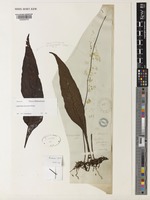
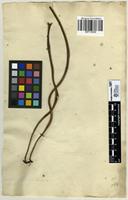
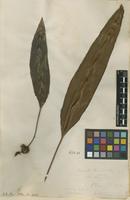
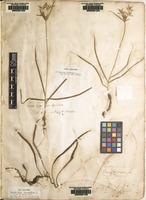
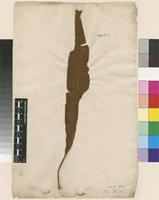
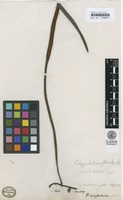
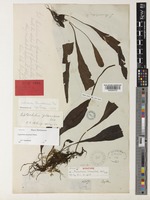
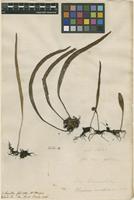
Acrostichum lanceolatum

12 Images see all

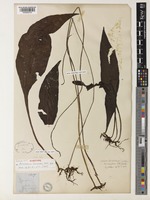
Leptochilus decurrens Blume [family POLYPODIACEAE]
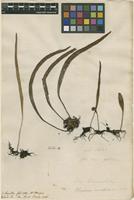
Filed as Acrostichum lanceolatum L. [family PTERIDACEAE]
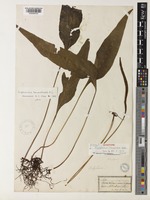
Filed as Acrostichum latifolium Sw. [family PTERIDACEAE]
Lectotype of Acrostichum lanceolatum L. [family POLYPODIACEAE]
Filed as Acrostichum lanceolatum L. [family PTERIDACEAE]
Filed as Acrostichum lanceolatum L. [family POLYPODIACEAE]
Leptochilus decurrens Blume [family POLYPODIACEAE]
Filed as Acrostichum lanceolatum L. [family PTERIDACEAE]
Leptochilus decurrens Blume [family POLYPODIACEAE]
Filed as Acrostichum lanceolatum L. [family PTERIDACEAE]
Syntype of Acrostichum lanceolatum Hook. [family PTERIDACEAE]
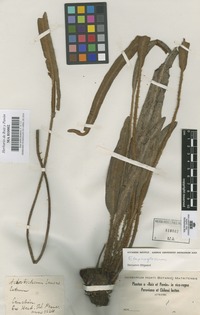
Original material of Acrostichum lanceolatum [family PTERIDACEAE]
Previous
Next

Name

Identification
Acrostichum lanceolatum L. [family POLYPODIACEAE ] (stored under name); Niphobolus lanceolatus (L.) Sw. [family POLYPODIACEAE ] Verified by Henry Trimen, Pyrrosia lanceolata (L.) Farwell [family POLYPODIACEAE ]
Related name
  • Polypodium acrostichoides
  • Acrostichum latifolium
  • Elaphoglossum not on sheet
  • Acrostichum lanceolatum
  • Pyrrosia lanceolata
  • Niphobolus lanceolatus

Flora

Entry for PYRROSIA lanceolata (L.) Farw. [family POLYPODIACEAE]
Herbarium
Royal Botanic Gardens, Kew (K)
Collection
Flora of Tropical East Africa
Resource Type
Reference Sources
Entry From
Flora of Tropical East Africa, page 1, (2001) Author: B. Verdcourt, B.Sc., Ph.D.
Names
PYRROSIA lanceolata (L.) Farw. [family POLYPODIACEAE], in Amer. Midl. Nat. 12: 245 (1931) (as ‘Pyrrhosia lanceolatus’ ); Ching in Bull. Chin. Bot. Soc. 1: 70 (1935); C. Chr. & Tardieu in Not. Syst., Paris 8: 205 (1939); Schelpe in Journ. S. Afr. Bot. 18: 131, fig. 1/7 & 2/4 (1952); Alston, Ferns W.T.A.: 46 (1959); Sledge in Bull. Brit. Mus. Nat. Hist., Bot. 2: 133 (1960); Tardieu, Fl. Madag. 5 (2): 102 (1960) & Fl. Cameroun 3, Ptérid.: 340 (1964) & Fl. Gabon 8, Ptérid.: 201 (1964); Schelpe in Contr. Bolus Herb. 1: 91 (1969) & F.Z.: Pterid.: 146 (1970); Schelpe & M.A. Diniz, Fl. Moçamb., Pterid.: 149 (1979); W. Jacobsen, Ferns S. Afr.: 305, fig. 221, map 91 (1983); Hovenkamp, Monogr. Pyrrosia : 191, fig. 25 (1986); J.E. Burrows, S. Afr. Ferns: 189, t. 31/1, fig. 191, 191a, map (1990); Hovenkamp in Fl. Males. ser. II, 3: 161 (1998). Type: Sri Lanka, Herb. Hermann s.n. (BM-HERM 1/3, holo., Bibl. Inst. France, L, iso.)
Acrostichum lanceolatum L. [family PTERIDACEAE], Sp. Pl.: 1067 (1753)
Candollea lanceolata (L.) Mirb. [family ], in Lam. & Mirb., Hist. Nat. Veg. 5: 89 (1803)
Polypodium spissum Willd. [family POLYPODIACEAE], Sp. Pl. ed. 4, 5: 146 (1810). Type: Réunion, Bory s.n. (B-W 19627, holo., P, iso., microfiche!)
Cyclophorus spissus (Willd.) Desv. [family POLYPODIACEAE], in Mag. Naturf. Berlin 5: 301 (1811)
Niphobolus spissus (Willd.) Kaulf. [family POLYPODIACEAE], Enum. Fil.: 126 (1824); Hieron. in E.J. 28: 347 (1900) & in V.E. 2: 55 (1908)
Niphobolus lanceolatus (L.) Trimen [family POLYPODIACEAE], in J.L.S. 24: 152 (1886) nom. illeg ., non N. lanceolatus Keyserl. (1873)
Niphobolus tener Giesenh. [family POLYPODIACEAE], Niphobolus : 211 (1901). Type: Réunion, Cordemoy s.n. (M, holo., P, iso.)
Cyclophorus tener (Giesenh.) C. Chr. [family POLYPODIACEAE], Ind. Fil.: 201 (1905)
Niphobolus spissus Hieron. var. continentalis [family POLYPODIACEAE], in V.E. 2: 55, fig. 53 (1908); F.D.-O.A.: 33 (1929). Type: Tanzania, Tanga/Lushoto District, East Usambaras, Sigi Valley, near Longuza [Lugusa], Engler 382 (B, lecto., P, isolecto.)
Cyclophorus spissus (Hieron.) Hieron. var. continentalis [family POLYPODIACEAE], in E.J. 46: 399 (1911)
Cyclophorus lanceolatus (L.) Alston [family POLYPODIACEAE], in J.B. 69: 102 (1931)
Information
Epiphytic, on rocks or buildings or rarely terrestrial. Rhizome long-creeping, 1.2–2.1 mm thick with fronds borne at intervals of 1–2 cm and with pale brown to grey linear-lanceolate usually distinctly ciliate scales 1–8 mm long, 0.3–1.3 mm wide. Fronds indistinctly to distinctly stipitate, ± coriaceous, moderately to distinctly dimorphic; stipes 0.5–5(–9) cm long; lamina linear to lanceolate or narrowly elliptic, 2–31 cm long, 0.3–3.5(–4.3) cm wide, rounded to acute at the apex, cuneate, narrowly cuneate or attenuate at the base, the margins often narrowly reflexed, thinly stellate-pubescent to ± glabrous above, densely tomentose beneath with pale brown to grey stellate hairs 0.2–1.2 mm wide with short flattened or narrow arms, but often soon glabrescent or ± glabrous. Sori mostly apical or all over the lamina, closely packed in a ± sharply defined patch, eventually individually distinct and emergent from the tomentum.
Range
DISTR. U 4; T 3, 6, 7 Cameroon, Principe, Gabon, Congo (Brazzaville), Central African Republic, Congo (Kinshasa), Mozambique, Madagascar, Mascarene Is.; also from India to China, Indo-China, Malesia, Australia and Pacific; Hovenkamp also mentions Ecuador amongst some doubtful localities
Altitude range
(270–)450–1200 m
Distribution
UGANDA Mengo District Entebbe Botanic Gardens (wild flora), Mar. 1938, Chandler 2183! & Mabira Forest, 13 Nov. 1938, Loveridge 74! & 3.2 km SE of Kampala, Nsambya, St Peter’s Church, 8 Sept. 1969, Faden 69/962!TANZANIA Lushoto District Sigi Singali, 14 Apr. 1950, Verdcourt 149! & Amani, Mar. 1903, Warnecke 317! & 7 July 1928, Greenway 756!TANZANIA Morogoro District Turiani, 30 Mar. 1953, Drummond & Hemsley 1917!
Notes
Hovenkamp gives a great deal of extra synonymy and bibliography and discusses the variation shown by the species (pp. 197–198); he gives descriptions of 7 informal infraspecific taxa and the African material falls under “spissa”. Since the East African material appears genuinely conspecific with the typical Indian and Ceyloneseplants no further discussion is needed but certainly some material from east of India does appear rather different. The earliest specimen from East Africa appears to be one collected at Morogoro by Archbishop Leroy in 1888.

Related Materials

  • Terms and Conditions
  • Privacy Policy
  • Cookie Policy
  • Cookie Settings
  • Accessibility
  • Help
  • Contact Us
  • Facebook
  • Twitter
ITHAKA

JSTOR is part of ITHAKA, a not-for-profit organization helping the academic community use digital technologies to preserve the scholarly record and to advance research and teaching in sustainable ways.

©2000-2026 ITHAKA. All Rights Reserved. JSTOR®, the JSTOR logo, JPASS®, Aluka®, and ITHAKA® are registered trademarks of ITHAKA.

╳