JSTOR Global Plants Home
  • Home
  • Browse
  • About
  • Access
  • Account
    • Saved Items
    • Profile
  • Log in

Global Plants

Skip to Main Content
  • JSTOR Global Plants Home
  • Global Plants

    • Browse
    • About
    • Access
    • Account
      • Saved Items
      • Profile
Log in
  • Browse
  • About
  • Access
  • Account
    • Saved Items
    • Profile
Advanced Search

Compilation
Acrostemon incurvus

8 Images see all

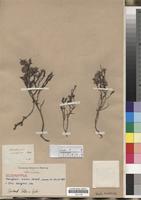
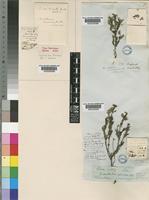
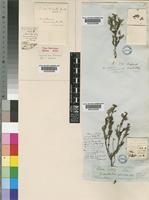
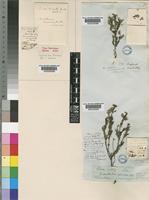
Isosyntype of Comacephalus incurvus Klotzsch [family ERICACEAE]
Acrostemon incurvus (Klotzsch) Benth. [family ERICACEAE]
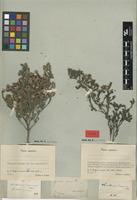
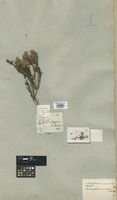
Filed as Erica eriocephala Lam. [family ERICACEAE]
Type of Erica hirsuta Thunb. [family ERICACEAE]
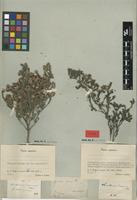
Filed as Acrostemon incurvus (Klotzsch) Benth. [family ERICACEAE]
Acrostemon incurvus (Klotzsch) Benth. [family ERICACEAE]
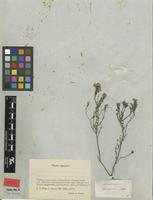
Type? of Comocephalus incurvus Klotzsch [family ERICACEAE]
Previous
Next

Name

Identification
Erica eriocephala Lam. [family ERICACEAE ] (stored under name); Verified by HBG-formal name change, 2010 Comacephalus incurvus Klotzsch [family ERICACEAE ] Verified by HBG-formal name entry, 2010 Acrostemon incurvus (Klotzsch) Benth. [family ERICACEAE ] Verified by Not on sheet,
Related name
  • Grisebachia plumosa
  • Acrostemon incurvus
  • Erica unrecorded
  • Erica eriocephala
  • Erica hirsuta
  • Comocephalus incurvus
  • Comacephalus incurvus

Flora

Entry for ACROSTEMON incurvus Benth. [family ERICACEAE]
Herbarium
Royal Botanic Gardens, Kew (K)
Collection
Flora Capensis
Resource Type
Reference Sources
Entry From
Flora Capensis, Vol 4, page 2, (1909) Author: By H. BOLUS, F. GUTHRIE, and N. E. BROWN.
Names
ACROSTEMON incurvus Benth. [family ERICACEAE], in DC. Prodr. vii. 702
Erica hirsuta Thunb. [family ERICACEAE], Prodr. 72, and Fl. Cap. ed. Schultes, 358, partly (sheet β of Thunberg's Herbarium); Salisbury in Trans. Linn. Soc. vi. 339.
Blæria hirsuta Thunb. [family ], Diss. Blæria, 8.
Blæria Thunbergii G. Don [family ], Gen. Syst. iii. 805.
Comacephalus incurvus Klotzsch [family ], in Linnæa, xii. 224; Rach in Linnæa, xxvi. 790.
Information
branchlets pubescent or densely puberulous intermingled with longer hairs; leaves 4-nate, closely placed or loosely imbricate, incurved-erect, 1 1/3–2 1/3 lin. long, linear, subobtuse, villous on the back with long hairs which often fall away, rugose, glabrous on the upper side; heads globose, terminating short lateral branches, 6–9-flowered; pedicels 1/2– 3/4 lin. long, bracteate at the apex, pilose; bracts adpressed to the calyx, very unequal, the middle one 1–1 1/2 lin. long, equalling or exceeding the calyx, leaf-like, incurved, the lateral pair 1/8– 1/3 lin. long, linear, all villous; calyx lobed to more than 3/4 of the way down; lobes 1/2 lin. long, 1/3 lin. broad, ovate or ovate-lanceolate, acute, villous with long simple hairs on the back; corolla 1 1/3–1 3/4 lin. long, tubular, 4-angled, faintly narrowed at the middle, glabrous; lobes very small, rounded or deltoid-ovate, obtuse, connivent-erect; filaments 1 2/3–2 lin. long, glabrous; anthers much exserted, 1/2– 3/4 lin. long, linear or oblong-linear, spurless, smooth, or minutely scabrous on the margins; ovary subquadrate, obtuse, 3–4-angled and -celled, glabrous; style 2 1/4 lin. long, glabrous; stigma simple. null
Distribution
COAST REGION Tulbagh Div.; mountains near Saron, Schlechter, 10680! near Tulbagh Waterfall, Bolus, 7583! Winterhoek Mountain, Witsenberg Range and Vogel Valley, Ecklon & Zeyher, ex Klotzsch.SOUTH AFRICA without locality, Thunberg! Roxburgh! Sieber, 152!
Notes
The descriptions of Thunberg are doubtless chiefly, and that of Salisbury probably exclusively, based upon the specimen on sheet β of Erica hirsuta in Thunberg's Herbarium. Salisbury has evidently dissected it and has written upon that sheet, but not on sheet α, which contains a very poor specimen (the type of A. glandulosus), with the flowers mostly destroyed. A specimen in the British Museum, collected by Masson and named Erica hirsuta by Salisbury, is Grisebachia hispida, Klotzsch.

Related Materials

  • Terms and Conditions
  • Privacy Policy
  • Cookie Policy
  • Cookie Settings
  • Accessibility
  • Help
  • Contact Us
  • Facebook
  • Twitter
ITHAKA

JSTOR is part of ITHAKA, a not-for-profit organization helping the academic community use digital technologies to preserve the scholarly record and to advance research and teaching in sustainable ways.

©2000-2026 ITHAKA. All Rights Reserved. JSTOR®, the JSTOR logo, JPASS®, Aluka®, and ITHAKA® are registered trademarks of ITHAKA.

╳