JSTOR Global Plants Home
  • Home
  • Browse
  • About
  • Access
  • Account
    • Saved Items
    • Profile
  • Log in

Global Plants

Skip to Main Content
  • JSTOR Global Plants Home
  • Global Plants

    • Browse
    • About
    • Access
    • Account
      • Saved Items
      • Profile
Log in
  • Browse
  • About
  • Access
  • Account
    • Saved Items
    • Profile
Advanced Search

Compilation
Acridocarpus pauciglandulosus

7 Images see all

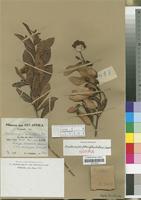
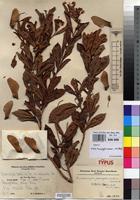
Isotype of Acridocarpus pauciglandulosus Launert [family MALPIGHIACEAE]
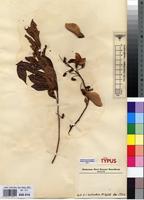
[family ]
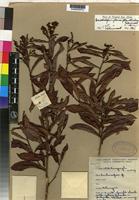
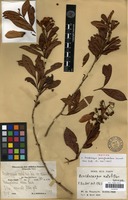
Holotype of Acridocarpus pauciglandulosus Launert [family MALPIGHIACEAE]
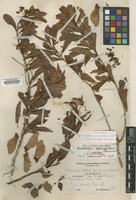
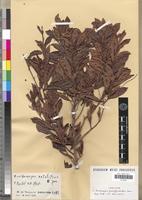
Isotype of Acridocarpus pauciglandulosus Launert [family MALPIGHIACEAE]
Previous
Next

Name

Identification
Acridocarpus pauciglandulosus Launert [family MALPIGHIACEAE ] (stored under name); Verified by Jacek Wajer, Acridocarpus eglandulosus Launert [family MALPIGHIACEAE ] Verified by Jacek Wajer, Acridocarpus eglandulosus Launert [family MALPIGHIACEAE ] Verified by Georg Oskar Edmund Launert, Acridocarpus natalitius Nied. [family UNKNOWN ]
Related name
  • Acridocarpus eglandulosus
  • `
  • Acridocarpus natalitius
  • Acridocarpus pauciglandulosus

Flora

Entry for ACRIDOCARPUS pauciglandulosus Launert [family MALPIGHIACEAE]
Herbarium
Royal Botanic Gardens, Kew (K)
Collection
Flora of Tropical East Africa
Resource Type
Reference Sources
Entry From
Flora of Tropical East Africa, page 1, (1968) Author: E. LAUNERT (British Museum (Natural History))
Names
ACRIDOCARPUS pauciglandulosus Launert [family MALPIGHIACEAE], in K.B. 19: 350(1965). Type: Tanganyika, Lindi District, Rondo [Mwera] Plateau, Schlieben 5498 (BM, holo.!, M, iso.!)
ACRIDOCARPUS natalitius Niedenzu var. acuminatus [family MALPIGHIACEAE], in Arb. Bot. Inst. Akad. Braunsberg 7: 8 (1921) & in E.P. IV. 141: 267 (1928), pro parte excl. specim. Afr.-austr.; T.T.C.L.: 295(1949). Types: Tanganyika, Uzaramo District, Pugu Hills, Holtz 467 (B, syn. †) & Uzaramo District, without precise locality, Goetze 13 (B, syn. †)
Information
A straggling shrub (or ? woody climber) with branches up to 3 m. in length. Younger branches ± densely ferrugineous-pubescent, older ones glabrous, lenticellate. Leaf-lamina oblanceolate to (rarely) obovate, 4–7 x 1.5– 2.5(–3) cm., obtuse or shortly acuminate, cuneate, coriaceous, with margins slightly involute, finely ferrugineous-pubescent when young, soon glabrescent or sometimes upper surface and midrib beneath remaining finely pubescent, with 9–13 pairs of lateral nerves, eglandular or with a pair of very small glands at the very base beneath; petiole 1–2 mm. long, ± robust, subcanaliculate, pubescent or glabrous. Inflorescences mostly axillary, 3–5 cm. long, many-flowered, with a fairly stout rhachis, ± densely ferrugineous-sericeous, forming pyramidal or corymbiform racemes; bracts triangular-subulate, 1.5–2.5 mm. long, persistent; bracteoles subulate, 1–1.5 mm. long, eglandular. Flowers ± 2.25 cm. in diameter. Calyx eglandular or with 1–2(–3) small circular glands, ± densely sericeous outside; lobes 2–2.5 (–3) mm. long, ovate to ovate-oblong, usually glabrous but shortly ciliate at margins. Petals yellow, obovate, ± 12 mm. long, entire or shortly lacerate, clawed. Stamens with oblong-ovate anthers 3–4mm. long; filaments cylindric to ligulate, 1–1.5 mm. long, carnose, glabrous. Ovary densely sericeous. Styles 2, 7–10 mm. long, usually glabrous. Wing of samara obliquely obovate, 4–5 × 1.75–2.25 cm., narrowed in lower half, broadest across the middle, distally oblique-truncate and obtuse (see fig. 1/1), clasping the nut only by a very small ridge, usually glabrous, sometimes finely pubescent. Fig. 1/1, p. 4.
Range
DISTR. T6, 8 not known elsewhere
Altitude range
± 200–600 m.
Distribution
TANGANYIKA Lindi District Rondo [Mwera] Plateau, 21 Nov. 1934, Schlieben 5498!TANGANYIKA Newala District Kitangari, 23 Mar. 1943, Gillman 1329 !

Related Materials

  • Terms and Conditions
  • Privacy Policy
  • Cookie Policy
  • Cookie Settings
  • Accessibility
  • Help
  • Contact Us
  • Facebook
  • Twitter
ITHAKA

JSTOR is part of ITHAKA, a not-for-profit organization helping the academic community use digital technologies to preserve the scholarly record and to advance research and teaching in sustainable ways.

©2000-2026 ITHAKA. All Rights Reserved. JSTOR®, the JSTOR logo, JPASS®, Aluka®, and ITHAKA® are registered trademarks of ITHAKA.

╳