JSTOR Global Plants Home
  • Home
  • Browse
  • About
  • Access
  • Account
    • Saved Items
    • Profile
  • Log in

Global Plants

Skip to Main Content
  • JSTOR Global Plants Home
  • Global Plants

    • Browse
    • About
    • Access
    • Account
      • Saved Items
      • Profile
Log in
  • Browse
  • About
  • Access
  • Account
    • Saved Items
    • Profile
Advanced Search

Compilation
Acokanthera spectabilis

9 Images see all

Filed as Acokanthera spectabilis [family APOCYNACEAE]
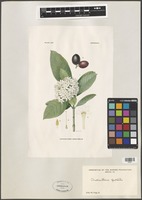
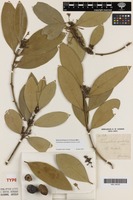
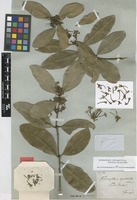
Type of Toxicophlaea spectabilis Sond. [family APOCYNACEAE]
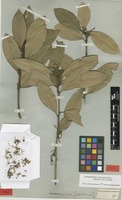
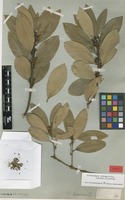
Isolectotype of Toxicophlaea spectabilis Sond. [family APOCYNACEAE]
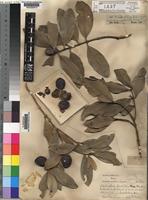
Acokanthera oblongifolia (Hochst.) Codd [family APOCYNACEAE]
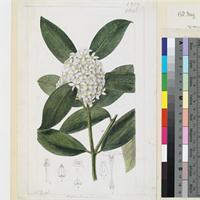
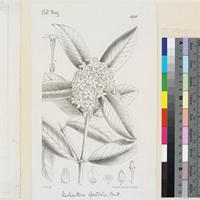
Acokanthera spectabilis Benth. published illustration from Curtis's Botanical Magazine
Acokanthera spectabilis (Sond.) Hook.f.
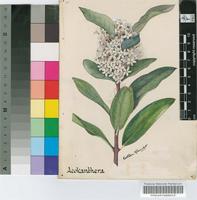
Acokanthera spectabilis Benth. original illustration from Curtis's Botanical Magazine
Isolectotype of Toxicophlaea spectabilis Sond. [family APOCYNACEAE]
Previous
Next

Name

Identification
Acokanthera spectabilis (Sond.) Hook.f. [family APOCYNACEAE ]
Related name
  • Acokanthera spectabilis

Flora

Entry for ACOKANTHERA spectabilis Hook. f. [family APOCYNACEAE]
Herbarium
Royal Botanic Gardens, Kew (K)
Collection
Flora Capensis
Resource Type
Reference Sources
Entry From
Flora Capensis, Vol 4, page 490, (1909) Author: By OTTOSTAPF.
Names
ACOKANTHERA spectabilis Hook. f. [family APOCYNACEAE], in Bot. Mag. t. 6359;—K. Schum. in Engl. & Prantl, Pflanzenfam. iv. ii. 126; Wood, Natal Pl. 60, t. 74; Stapf in Dyer, Fl. Trop. Afr. iv. i. 95.
ACOKANTHERA venenata Schweinf. ex Lewin [family APOCYNACEAE], in Engl. Jahrb. xvii. Beibl. 41, 46, and Lewin, l.c. 47–51; L. Planchon, Prod. Apocyn. 255; Vogtherr in Köhler, Mediz. Pfl. iii. (text to t. 64); not of G. Don.
ACOKANTHERA venenata Sim var. spectabilis [family APOCYNACEAE], For. Fl. Cape Col. 270, t. cliv. fig. 2.
ACOKANTHERA sp. Benth. et Hook. f. [family APOCYNACEAE], Gen. Pl. ii. 696.
Carissa oblongifolia Hochst. [family APOCYNACEAE], in Flora, 1844, 827, and ex Walp. Rep. vi. 466.
Toxicophlæa spectabilis Dyer ex Gard. [family ], Chron. 1872, 363; Flor. Mag. new ser. t. 20; Gard. Chron. xv. (1894), 209, fig. 23; Rev. Hort. 1879, 270, with plate; 1888, 517 with fig.
Toxicophlæa Thunbergii Sonder [family ], in Linnæa, xxiii. 79; Gartenflora, 1878, t. 940; Rev. Hort. 1880, 370, with plate; Ill. Hort. xxxii. (1885) t. 553, not of Harvey.
Information
a tall shrub or small tree up to 15 ft. high, glabrous (except sometimes the inflorescences); young branches compressed; leaves elliptic or oblong-lanceolate, acute, rarely obtuse, generally mucronate, acute at the base, 2 1/2–5 in. long, 1–2 in. broad, very coriaceous, dark green, paler and sometimes purplish beneath; secondary nerves usually 7–10 on each side, sometimes with similar tertiary nerves between them, faint or like the reticulating veins slightly prominent on both sides; petiole stout, 2–4 lin. long; corymbs or clusters short, dense, many-flowered, subsessile, glabrous or puberulous; bracts ovate, caducous, ciliolate; calyx more or less pubescent, green or whitish, 1 1/2 lin. long; sepals ovate-lanceolate, ciliolate; corolla white, tinged with pink, fragrant; tube 7–9 lin. long, pubescent or almost glabrous without, hairy within; lobes ovate to oblong, acute, 2–3 lin. long; anthers 3/4 lin. long; stigma short, cylindric, obtusely apiculate; berry ellipsoid, 1 lin. long or longer, purplish-black; seeds 1–2, semi-ellipsoid, 5–9 lin. long. null
Distribution
COAST REGION Bathurst Div.; wooded sand-hills near the sea, Bowker! Bathurst Div.; mouth of the Great Fish River, Burchell, 3760! East London Div.; coast at East London, Galpin, 1850!EASTERN REGION Natal; near The Point, Krauss, 361! near Durban, Wood, 1017! Wilms, 2005! in woods along the coast, Wood in MacOwan, Herb. Austr.-Afr. 1501! and without precise locality, Cooper, 1247! 1262! 1263! Gerrard, 88!
Notes
Sim (l.c.) considers this as “the eastern coast form” of A. venenata, into “which it merges gradually … in accordance with surroundings.” O. Kuntze indicates this species from Hereroland (Jahrb. Berl. Bot. Gart. iv. 1886, 268). I suspect that this is due to a confusion with A. venenata. The plant contains a deadly poison.

Related Materials

  • Terms and Conditions
  • Privacy Policy
  • Cookie Policy
  • Cookie Settings
  • Accessibility
  • Help
  • Contact Us
  • Facebook
  • Twitter
ITHAKA

JSTOR is part of ITHAKA, a not-for-profit organization helping the academic community use digital technologies to preserve the scholarly record and to advance research and teaching in sustainable ways.

©2000-2026 ITHAKA. All Rights Reserved. JSTOR®, the JSTOR logo, JPASS®, Aluka®, and ITHAKA® are registered trademarks of ITHAKA.

╳