JSTOR Global Plants Home
  • Home
  • Browse
  • About
  • Access
  • Account
    • Saved Items
    • Profile
  • Log in

Global Plants

Skip to Main Content
  • JSTOR Global Plants Home
  • Global Plants

    • Browse
    • About
    • Access
    • Account
      • Saved Items
      • Profile
Log in
  • Browse
  • About
  • Access
  • Account
    • Saved Items
    • Profile
Advanced Search

Compilation
Acioa goetzeana

5 Images see all

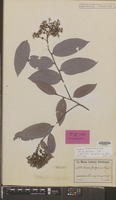
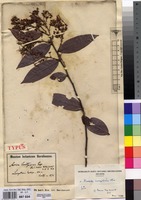
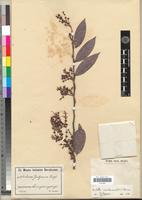
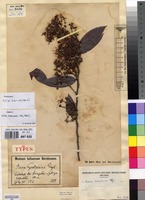
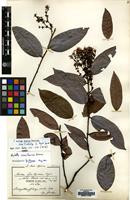
Isotype of Acioa goetzeana Engl. [family ROSACEAE]
Isotype of Acioa goetzeana Engl. [family CHRYSOBALANACEAE]
Type of Acioa goetzeana Engl. [family CHRYSOBALANACEAE]
Previous
Next

Name

Identification
Isotype of Acioa goetzeana Engl. [family CHRYSOBALANACEAE ] Verified by Not on sheet, Hirtella zanzibarica Oliv. [family CHRYSOBALANACEAE ] (stored under name); Verified by Not on sheet,
Related name
  • Acioa goetzeana
  • Hirtella zanzibarica

Flora

Entry for HIRTELLA zanzibarica Oliv. [family CHRYSOBALANACEAE]
Herbarium
Royal Botanic Gardens, Kew (K)
Collection
Flora of Tropical East Africa
Resource Type
Reference Sources
Entry From
Flora of Tropical East Africa, page 1, (1960) Author: R. A. GRAHAM
Names
HIRTELLA zanzibarica Oliv. [family CHRYSOBALANACEAE], in Hook., Ic. Pl. 12: 81, t. 1193 (1876); Brenan in Trop. Woods No. 86: 5 (1946); T.T.C.L.: 475 (1949). Type: Tanganyika, Mafia Island, Kirk (K, holo.!)
Acioa goetzeana Engl. [family CHRYSOBALANACEAE], in E.J. 30: 315, t. 12 (1901). Type: Tanganyika, base of Livingstone Mts., Ikombe, Goetze 1176 (B, holo. †, BE, iso.!)
HIRTELLA zanzibarica Brenan var. cryptadenia [family CHRYSOBALANACEAE], in Trop. Woods No. 86: 11 (1946). Type: Zanzibar, Pemba, Chake Chake, Vaughan 652!
Information
An evergreen tree up to 25 m. tall with blackish bark, or rarely a shrub. Young branchlets closely pubescent to densely villous with spreading light brown hairs; older branches commonly glabrescent, black or almost so. Leaves shortly petiolate, leathery, shining (especially on the upper surface), ovate-elliptic to oblong-elliptic, 3.8–8.5 × 1.4–4.3 cm. (commonly about 8 × 4 cm.), ± acute or shortly acuminate, basally short-cuneate to sub-cordate but commonly rounded or ± so, glabrous (or pubescent on the midrib and nerves beneath when immature), reticulately nerved on both sides, but more obscurely so beneath. Inflorescence a terminal or axillary dense panicle up to 15(–18) × 11 (–14) cm., the branchlets velvety; lower bracts ovate to oblong-lanceolate, ± densely pubescent and eglandular; upper bracts ovate-reniform, usually with many obvious unequally-stalked glands on the margins (rarely eglandular, or with the glands sessile and hidden in the indumentum). Flowers greenish-white. Calyx-tube 6–9 mm. long, 1.1–1.8 mm. broad, slightly expanded above, abruptly enlarged at the base, hairy; lobes oblong, 4–5 mm. long, usually glandular on the margins. Petals scarcely exceeding the calyx-lobes, oblong-elliptic to obovate, ± twisted. Stamens up to 1 cm. long (? longer), long-exserted; staminodes very short. Ovary densely shaggy; style 1.2 cm. long (? longer), with many ± spreading hairs in the lower part. Fruit dark brown, ellipsoid, basally narrowed, 1.8–2.3(–2.6) × 1.1–1.2 cm., obtuse; pericarp externally subglabrous, densely lanate within. Fig. 8/5, 6, p. 57.
Range
DISTR. K7; T6, 7; P
Distribution
KENYA Kwale District Shimba Hills, Mwele Mdoga Forest, Feb. 1953, Drummond & Hemsley 1172! & Shimba Hills, May 1930, Donald 22 in F.D. 2367!KENYA Buda Forest, Nov. 1936, Dale 3579!TANGANYIKA Uzaramo District Vikindu Forest Reserve, Aug. 1953, Semsei 1316!;TANGANYIKA Rufiji District Mafia Island, Tondwa, Oct. 1937, Greenway 5376! & Kilindoni, Aug. 1937, Greenway 4996!ZANZIBAR Pemba, Kichange, Vaughan 377! & Chake Chake, Sept. 1929, Vaughan 652!
Distribution (external)
Portuguese East Africa
Nyasaland
Madagascar
Notes
Var. cryptadenia is separated from typical material on vegetative characters, which are, however, embraced by the general plasticity of the species. Its poor glandular development can be matched with material from Portuguese East Africa (Dawe 401!) though in this specimen the inflorescence-indumentum is more normal. The more coppery-coloured leaves and apparently pendulous inflorescences of the variety do not seem to be other than minor variational characters. Thus, although var. cryptadenia may stand apart as an extreme form, its separation as a taxon is perhaps not fully justifiable.

Related Materials

  • Terms and Conditions
  • Privacy Policy
  • Cookie Policy
  • Cookie Settings
  • Accessibility
  • Help
  • Contact Us
  • Facebook
  • Twitter
ITHAKA

JSTOR is part of ITHAKA, a not-for-profit organization helping the academic community use digital technologies to preserve the scholarly record and to advance research and teaching in sustainable ways.

©2000-2026 ITHAKA. All Rights Reserved. JSTOR®, the JSTOR logo, JPASS®, Aluka®, and ITHAKA® are registered trademarks of ITHAKA.

╳