JSTOR Global Plants Home
  • Home
  • Browse
  • About
  • Access
  • Account
    • Saved Items
    • Profile
  • Log in

Global Plants

Skip to Main Content
  • JSTOR Global Plants Home
  • Global Plants

    • Browse
    • About
    • Access
    • Account
      • Saved Items
      • Profile
Log in
  • Browse
  • About
  • Access
  • Account
    • Saved Items
    • Profile
Advanced Search

Compilation
Acidanthera gracilis

2 Images see all

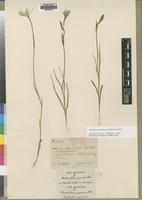
Isotype of Acidanthera gracilis Pax [family IRIDACEAE]
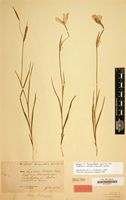
Type of Acidanthera gracilis Pax [family IRIDACEAE]
Previous
Next

Name

Identification
Isotype of Acidanthera gracilis Pax [family IRIDACEAE ] Verified by Goldblatt, P., Gladiolus candidus (Rendle) Goldblatt [family IRIDACEAE ] (stored under name); Verified by Not on sheet.,
Related name
  • Acidanthera gracilis
  • Gladiolus candidus

Flora

Entry for ACIDANTHERA gracilis Pax [family IRIDACEAE]
Herbarium
Royal Botanic Gardens, Kew (K)
Collection
Flora of Tropical Africa
Resource Type
Reference Sources
Entry From
Flora of Tropical Africa, Vol 7, page 337, (1898) Author: (By J. G. BAKER.)
Names
ACIDANTHERA gracilis Pax [family IRIDACEAE], in Engl. Jahrb. xv. 154.
ACIDANTHERA zanzibarica Baker [family IRIDACEAE], Handb. Irid. 188.
Information
Corm small, globose. Produced leaves 2–3, narrowly linear, firm, erect, 3–4 in. long, 1/8 in. broad. Stem simple, slender, under 1 ft. long, 1–2-flowered; outer spathe-valve lanceolate, green, 1 1/4–1 1/2 in. long. Perianth white, tinged outside with red; tube slender, 2 in. long, scarcely dilated at the apex; segments ovate, 1 in. long, not spotted at the throat. Stamens and style reaching halfway up the perianth-limb.
Distribution
British East Africa Nile Land near Mombasa, in heavy soil amongst grass Hildebrandt, 2015! Ukamba, Scott-Elliot, 2351!

Related Materials

  • Terms and Conditions
  • Privacy Policy
  • Cookie Policy
  • Cookie Settings
  • Accessibility
  • Help
  • Contact Us
  • Facebook
  • Twitter
ITHAKA

JSTOR is part of ITHAKA, a not-for-profit organization helping the academic community use digital technologies to preserve the scholarly record and to advance research and teaching in sustainable ways.

©2000-2026 ITHAKA. All Rights Reserved. JSTOR®, the JSTOR logo, JPASS®, Aluka®, and ITHAKA® are registered trademarks of ITHAKA.

╳