JSTOR Global Plants Home
  • Home
  • Browse
  • About
  • Access
  • Account
    • Saved Items
    • Profile
  • Log in

Global Plants

Skip to Main Content
  • JSTOR Global Plants Home
  • Global Plants

    • Browse
    • About
    • Access
    • Account
      • Saved Items
      • Profile
Log in
  • Browse
  • About
  • Access
  • Account
    • Saved Items
    • Profile
Advanced Search

Compilation
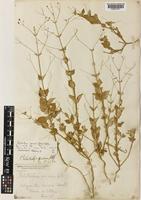
Achyranthes sericea

5 Images see all

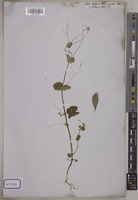
Achyranthes sericea B.Heyne ex Wall. [family AMARANTHACEAE]
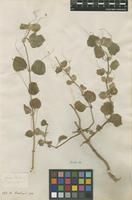
Filed as Achyranthes sericea J.König ex Roxb. [family AMARANTHACEAE]
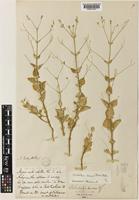
Psilotrichum sericeum (J. König ex Roxb.) Dalzell [family AMARANTHACEAE]
Type of Psilotrichum sericum (J. König ex Roxb.) Dalziel [family AMARANTHACEAE]
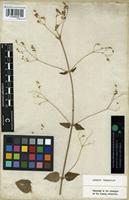
Psilotrichum sericeum (J. König ex Roxb.) Dalzell [family AMARANTHACEAE]
Previous
Next

Name

Identification
Achyranthes sericea J. König ex Roxb. [family AMARANTHACEAE ] Verified by Not on Sheet, Psilotrichum sericum (J. König ex Roxb.) Dalziel [family AMARANTHACEAE ] (stored under name); Verified by Not on Sheet, Boerhavia sericea J. Koenig [family NYCTAGINACEAE ] Verified by Not on Sheet,
Related name
  • Psilotrichum sericum
  • Psilostachys seriea
  • Boerhavia sericea
  • Achyranthes sericea
  • Psilotrichum sericeum

Flora

Entry for Psilotrichum sericeum Koen. ex Roxb. Dalz. [family AMARANTHACEAE]
Herbarium
Royal Botanic Gardens, Kew (K)
Collection
Flora Zambesiaca
Resource Type
Reference Sources
Entry From
FZ, Vol 9, Part 1, page 28, (1988) Author: C. C. Townsend
Names
Psilotrichum boivinianum Baill. [family AMARANTHACEAE], in Bull. Soc. Linn. Paris 1: 622 (1889). Type from Zanzibar.
Psilotrichum nervulosa Baill. [family AMARANTHACEAE], loc. cit. (1889); in F.T.A. 6, 1: 61 (1909). Type, “E. African coast”.
Psilotrichum filipes Baill. [family AMARANTHACEAE], loc. cit. (1889): in F.T.A. 6, 1: 61 (1909). Type from Zanzibar.
Psilotrichum axillare C.B. Clarke [family AMARANTHACEAE], in F.T.A. 6, 1: 60 (1909).—Schinz in Engl. & Prantl Pflanzenfam. ed. 2, 16C: 60 (1934). Type from Kenya.
Psilotrichum edule C.B. Clarke [family AMARANTHACEAE], in F.T.A. 6, 1: 61 (1909). Type from Tanzania.
Psilotrichum sericeum Koen. ex Roxb. Dalz. [family AMARANTHACEAE], in Dalz. & Gibson, Bombay Fl.: 216 (1861).—Verdcourt in Kew Bull. 17: 491 (1964). TAB. 24 fig. B. Type, Smith's Herbarium, specimen 424.4 (LINN, lectotype).
Achyranthes sericea Koen. ex Roxb. [family AMARANTHACEAE], Fl. Ind., ed. Carey 2: 502 (1824). Type as above.
Psilostachys sericea Koen. ex Roxb. Hook. f [family AMARANTHACEAE], in Benth. & Hook. Gen. Pl. 3: 32 (1880). Type as above.
Information
Erect or occasionally prostrate or ascending annual herb, with numerous stems c. 0.3–1 m. tall, much-branched in the lower half and frequently also above, the lowest internodes of particularly the lower branches very divergent. Stem and branches striate, the lower internodes terete, the upper subquadrate and more or less sulcate, nodes somewhat swollen; indumentum very variable, from subglabrous or with sparse soft pubescence to densely pilose with a double indumentum of shorter soft hairs and long, fine, multicellular, spreading bristly hairs (even when absent elsewhere tufts of bristly hairs occur between the branches and leaves at least of the upper nodes, frequently forming an annulus there). Main stem and branch leaves cordate-ovate to broadly ovate or rarely cordate-lanceolate,obtuse to acuminate at the apex, 1.3–7 × 0.7–5.2 cm., the lowest on petioles up to c. 1 (1.8) cm. long, leaves towards the ends of the stem and branches reducing in size and almost sessile; indumentum of mature leaves very variable, from green on both surfaces and moderately softly appressed-pilose below and thinly so with long and shorter multicellular, strigose hairs above to moderately appressed-pilose above and densely silvery-sericeous on the lower surface (always so in young leaves). Inflorescence a large, open compound panicle, of axillary opposite panicles formed of simple or branched spikes, each with a flexuose, glabrous rhachis; peduncle and branches of the partial inflorescences capillary, glabrous or with long, strigose, multicellular hairs, the axes zigzag; bracts lanceolate, 0.75–1 mm. long, sparingly pilose, mucronate with the excurrent midrib; bracteoles similar but slightly shorter. Flowers sessile. Tepals, green, acute, prominently 3-nerved with the nerves confluent at the apex and excurrent in a minute mucro, glabrous or usually more or less furnished with spreading, white, multicellular, minutely denticulate hairs; outer 2 tepals 2–2.5 mm. long, narrowly hyaline-margined with all 3 nerves equally strong, if hairs present then all nerves white-pilose, hairs sometimes also present on the surfaces between; inner 2 widely hyaline-margined (the margin wider than the nerved central portion at halfway up the tepal), pilose only along the midrib, which is much stronger than the lateral nerves; middle tepal with one side as in the outer 2 and one as in the inner 2. Stamens delicate, c. 1.5–1.75 mm. long; pseudostaminodes none. Style short, c. 0.5 mm. long. Capsule ovoid, c. 1.75–2 mm. long. Seed subglobose, black, shining, feebly reticulate, c. 1.5 mm. in diam.
Habitat
Habitat in Mozambique not recorded, elsewhere in sandy places near the shore, roadsides, abandoned cultivation, in grassland and Acacia scrub
Range
from E. African coastal and subcoastal region from Socotra and Somalia south to Tanzania (incl. Zanzibar and Pemba)
Altitude range
sea-level–320 m.
320
0
Distribution
Mozambique M Maputo between Mata de Marracuene and the settlement Jafar, 1.x.1957, Barbosa & Lemos in Barbosa 7890 (K; LMU).Mozambique N Ilha de Mocambique, 31.viii.1942, Mendonça 1164 (BM; LISC)
Distribution (external)
India

Related Materials

  • Terms and Conditions
  • Privacy Policy
  • Cookie Policy
  • Cookie Settings
  • Accessibility
  • Help
  • Contact Us
  • Facebook
  • Twitter
ITHAKA

JSTOR is part of ITHAKA, a not-for-profit organization helping the academic community use digital technologies to preserve the scholarly record and to advance research and teaching in sustainable ways.

©2000-2026 ITHAKA. All Rights Reserved. JSTOR®, the JSTOR logo, JPASS®, Aluka®, and ITHAKA® are registered trademarks of ITHAKA.

╳