JSTOR Global Plants Home
  • Home
  • Browse
  • About
  • Access
  • Account
    • Saved Items
    • Profile
  • Log in

Global Plants

Skip to Main Content
  • JSTOR Global Plants Home
  • Global Plants

    • Browse
    • About
    • Access
    • Account
      • Saved Items
      • Profile
Log in
  • Browse
  • About
  • Access
  • Account
    • Saved Items
    • Profile
Advanced Search

Compilation
Achyranthes corymbosa

18 Images see all

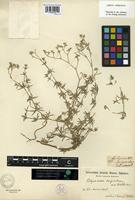
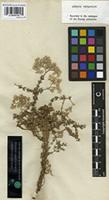
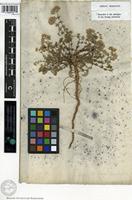
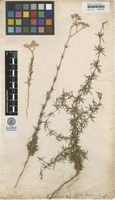
Lectotype of Achyranthes corymbosa L. [family CARYOPHYLLACEAE]
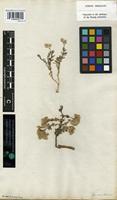
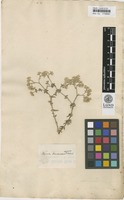
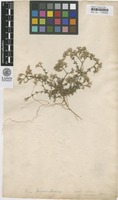
Filed as Hagaea indet. [family CARYOPHYLLACEAE]
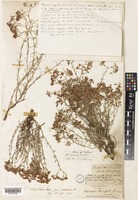
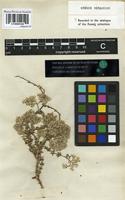
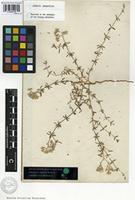
Type? of Celosia corymbosa Retz. [family CARYOPHYLLACEAE]
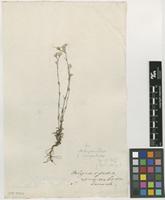
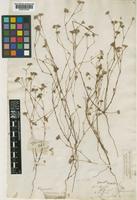
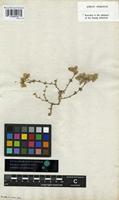
Type? of Celosia corymbosa Retz. [family AMARANTHACEAE]
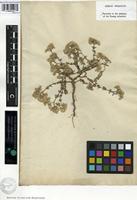
Polycarpaea aurea Wight & Arn. [family CARYOPHYLLACEAE]
Type? of Celosia corymbosa Retz. [family AMARANTHACEAE]
Polycarpaea synandra F.Muell. var. gracilis Benth. [family CARYOPHYLLACEAE]
Filed as Achyranthes corymbosa L. [family AMARANTHACEAE]
Filed as Hagaea indet. [family CARYOPHYLLACEAE]
Filed as Polycarpaea corymbosa (L.) Lam. [family CARYOPHYLLACEAE]
Type? of Celosia corymbosa Retz. [family AMARANTHACEAE]
Type? of Celosia corymbosa Retz. [family CARYOPHYLLACEAE]
Type? of Celosia corymbosa Retz. [family AMARANTHACEAE]
Achyranthes corymbosa L. [family CARYOPHYLLACEAE]
Type? of Celosia corymbosa Retz. [family AMARANTHACEAE]
Type? of Celosia corymbosa Retz. [family CARYOPHYLLACEAE]
Type? of Celosia corymbosa Retz. [family AMARANTHACEAE]
Previous
Next

Name

Identification
Achyranthes corymbosa L. [family CARYOPHYLLACEAE ] (stored under name); Verified by Arthur Wallis Exell, Polycarpaea corymbosa (L.) Lam. [family CARYOPHYLLACEAE ] Verified by Henry Trimen,
Related name
  • Achyranthes corymbosa
  • Celosia corymbosa
  • Polycarpaea synandra
  • Hagaea indet.
  • Achyranthes dichotoma
  • Gomphrena tenella
  • Polycarpaea corymbosa

Flora

Entry for Polycarpaea corymbosa (Linnaeus) Lamarck [family CARYOPHYLLACEAE]
Herbarium
Flora of North America (FNA)
Collection
Flora of North America
Resource Type
Reference Sources
Entry From
Flora of North America, Vol 5,
Names
Polycarpaea corymbosa (Linnaeus) Lamarck [family CARYOPHYLLACEAE], in J. Lamarck and J. Poiret, Tabl. Encycl., 2: 129. 1797
Achyranthes corymbosa Linnaeus [family AMARANTHACEAE], Sp. Pl., 1: 205. 1753
Polycarpaea nebulosa Lakela [family CARYOPHYLLACEAE]
Past names
Policarpaea
Treatment Author(s)
John W. Thieret
Richard K. Rabeler
Information
Stems 6–18 cm, ± pilose. Leaves dimorphic; basal (sometimes absent in older specimens) with petiole 2.5–4 mm, blade oblong-ovate to suborbiculate, 8–12 mm, margins flat, glabrous; cauline subtending fascicles of usually smaller leaves, blade linear, 1–2.5 cm, margins revolute, glabrous or ciliate. Cymes dense. Pedicels 0.8–3 mm. Flowers: sepals 2.2–3.1 mm; petals marcescent, elliptic to ovate, 0.7–1 mm; stigmas nearly sessile. Capsules 1.5 mm. Seeds 0.4–0.5 mm. 2n = 36.
Phenology
dec-feb (winter), jun-aug (summer), sep-nov (fall)
Altitude range
10 m;
Distribution
South AmericaAsiaAfricaAustralia.USA Fla.
Discussion
Polycarpaea corymbosa was first found in the sandhills of Tampa, Florida, in 1960 by O. Lakela (1962, 1963). Although she eventually described her plants as a new species, subsequent authors have concluded that the features supposedly distinguishing it lie within the range of P. corymbosa, a widely distributed paleotropical taxon. It is now known from five counties in central Florida.
Polycarpaea corymbosa is morphologically diverse, especially in Africa. While at least five varieties have been described (four since 1975) for distinctive populations in Asia and South America, a thorough study across the range of the species is yet to be undertaken.
K. R. Beena et al. (2000) demonstrated the presence of endophytic fungi in Polycarpaea corymbosa.
Native/Introduced
introduced;

Related Materials

  • Terms and Conditions
  • Privacy Policy
  • Cookie Policy
  • Cookie Settings
  • Accessibility
  • Help
  • Contact Us
  • Facebook
  • Twitter
ITHAKA

JSTOR is part of ITHAKA, a not-for-profit organization helping the academic community use digital technologies to preserve the scholarly record and to advance research and teaching in sustainable ways.

©2000-2026 ITHAKA. All Rights Reserved. JSTOR®, the JSTOR logo, JPASS®, Aluka®, and ITHAKA® are registered trademarks of ITHAKA.

╳