JSTOR Global Plants Home
  • Home
  • Browse
  • About
  • Access
  • Account
    • Saved Items
    • Profile
  • Log in

Global Plants

Skip to Main Content
  • JSTOR Global Plants Home
  • Global Plants

    • Browse
    • About
    • Access
    • Account
      • Saved Items
      • Profile
Log in
  • Browse
  • About
  • Access
  • Account
    • Saved Items
    • Profile
Advanced Search

Compilation
Achillea arenicola

10 Images see all

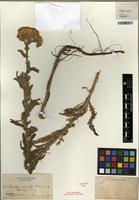
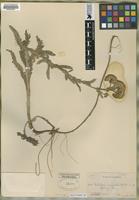
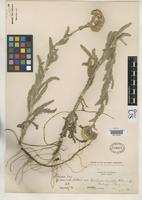
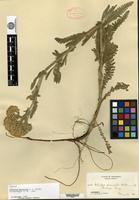
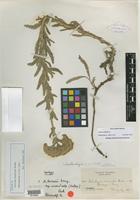
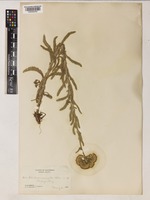
Isotype of Achillea arenicola A. Heller [family ASTERACEAE]
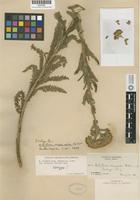
Isotype of Achillea arenicola Heller [family ASTERACEAE]
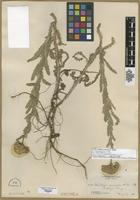
Filed as Achillea arenicola Heller, A.A. 1904 [family ASTERACEAE]
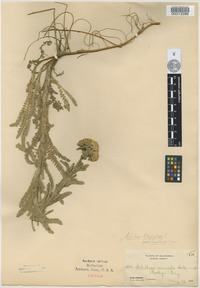
Isotype of Achillea arenicola A. Heller [family ASTERACEAE]
Type? of Achillea arenicola A.Heller [family ASTERACEAE]
Isotype of Achillea arenicola A.Heller [family ASTERACEAE]
Achillea arenicola A.Heller [family ASTERACEAE]
Isotype of Achillea arenicola A.Heller [family COMPOSITAE]
Previous
Next

Name

Identification
Isotype of Achillea arenicola A.Heller [family ASTERACEAE ] (stored under name); Verified by Not on sheet,
Related name
  • Achillea millefolium
  • Achillea arenicola
Common name
  • Common yarrow, Flora of North America Vol. 19
  • achillée millefeuille, Flora of North America Vol. 19
  • herbe-à-dinde, Flora of North America Vol. 19

Flora

Entry for Achillea millefolium Linnaeus [family COMPOSITAE]
Herbarium
Flora of North America (FNA)
Collection
Flora of North America
Resource Type
Reference Sources
Entry From
Flora of North America, Vol 19,
Names
Achillea millefolium Linnaeus [family COMPOSITAE], Sp. Pl., 2: 899. 1753
Achillea alpicola (Rydberg) Rydberg [family COMPOSITAE]
Achillea arenicola A. Heller [family COMPOSITAE]
Achillea borealis Bongard subsp. arenicola (A. Heller) D. D. Keck [family COMPOSITAE]
Achillea borealis subsp. californica (Pollard) D. D. Keck [family COMPOSITAE]
Achillea californica Pollard [family COMPOSITAE]
Achillea gigantea Pollard [family COMPOSITAE]
Achillea lanulosa Nuttall [family COMPOSITAE]
Achillea lanulosa subsp. alpicola (Rydberg) D. D. Keck [family COMPOSITAE]
Achillea laxiflora Pollard & Cockerell [family COMPOSITAE]
Achillea megacephala Raup [family COMPOSITAE]
Achillea millefolium var. alpicola (Rydberg) Garrett [family COMPOSITAE]
Achillea millefolium var. arenicola (A. Heller) Nobs [family COMPOSITAE]
Achillea millefolium var. asplenifolia (Ventenat) Farwell [family COMPOSITAE]
Achillea millefolium subsp. borealis (Bongard) Breitung [family COMPOSITAE]
Achillea millefolium var. borealis (Bongard) Farwell [family COMPOSITAE]
Achillea millefolium var. californica (Pollard) Jepson [family COMPOSITAE]
Achillea millefolium var. gigantea (Pollard) Nobs [family COMPOSITAE]
Achillea millefolium subsp. lanulosa (Nuttall) Piper [family COMPOSITAE]
Achillea millefolium var. lanulosa (Nuttall) Piper [family COMPOSITAE]
Achillea millefolium var. litoralis Ehrendorfer ex Nobs [family COMPOSITAE]
Achillea millefolium var. maritima Jepson [family COMPOSITAE]
Achillea millefolium var. megacephala (Raup) B. Boivin [family COMPOSITAE]
Achillea millefolium var. nigrescens E. Meyer [family COMPOSITAE]
Achillea millefolium var. occidentalis de Candolle [family COMPOSITAE]
Achillea millefolium var. pacifica (Rydberg) G. N. Jones [family COMPOSITAE]
Achillea millefolium var. puberula (Rydberg) Nobs [family COMPOSITAE]
Achillea nigrescens (E. Meyer) Rydberg [family COMPOSITAE]
Achillea occidentalis (de Candolle) Rafinesque ex Rydberg [family COMPOSITAE]
Achillea pacifica Rydberg [family COMPOSITAE]
Achillea puberula Rydberg [family COMPOSITAE]
Achillea rosea Desfontaines [family COMPOSITAE]
Achillea subalpina Greene [family COMPOSITAE]
Treatment Author(s)
Debra K. Trock
Information
Perennials, 6–65+ cm (usually rhizomatous, sometimes stoloniferous). Stems 1(–4), erect, simple or branched, densely lanate-tomentose to glabrate. Leaves petiolate (proximally) or sessile (distally, weakly clasping and gradually reduced); blades oblong or lanceolate, 3.5–35+ cm × 5–35 mm, 1–2-pinnately lobed (ultimate lobes ± lanceolate, often arrayed in multiple planes), faces glabrate to sparsely tomentose or densely lanate. Heads 10–100+, in simple or compound, corymbiform arrays. Phyllaries 20–30 in ± 3 series, (light green, midribs dark green to yellowish, margins green to light or dark brown) ovate to lanceolate, abaxial faces tomentose. Receptacles convex; paleae lanceolate, 1.5–4 mm. Ray florets (3–)5–8, pistillate, fertile; corollas white or light pink to deep purple, laminae 1.5–3 × 1.5–3 mm. Disc florets 10–20; corollas white to grayish white, 2–4.5 mm. Cypselae 1–2 mm (margins broadly winged). 2n = 18, 27, 36, 45, 54, 63, 72 (including counts from Europe).
Phenology
apr-may (spring), jun-aug (summer), sep (fall)
Altitude range
0–3600 m;
Distribution
GreenlandSt. Pierre and MiquelonMexicoEurasia.USA Ala.USA AlaskaUSA Ariz.USA Ark.USA Calif.USA Colo.USA Conn.USA Del.USA D.C.USA Fla.USA Ga.USA IdahoUSA Ill.USA Ind.USA IowaUSA Kans.USA Ky.USA La.USA MaineUSA Md.USA Mass.USA Mich.USA Minn.USA Miss.USA Mo.USA Mont.USA Nebr.USA Nev.USA N.H.USA N.J.USA N.Mex.USA N.Y.USA N.C.USA N.Dak.USA OhioUSA Okla.USA Oreg.USA Pa.USA R.I.USA S.C.USA S.Dak.USA Tenn.USA Tex.USA UtahUSA Vt.USA Va.USA Wash.USA W.Va.USA Wis.USA Wyo.Canada Alta.Canada B.C.Canada Man.Canada N.B.Canada Nfld. and Labr.Canada N.W.T.Canada N.S.Canada NunavutCanada Ont.Canada P.E.I.Canada Que.Canada Sask.Canada Yukon
Discussion
Achillea millefolium is morphologically variable and has been treated as either a single species with varieties or as multiple distinct species. At least 58 names have been used for North American specimens. Some early workers (e.g., J. Clausen et al. 1948) thought the native North American plants were taxonomically distinguishable from introduced, Old World plants. Other workers (e.g., R. J. Tyrl 1975) have treated A. millefolium as a cosmopolitan, Northern Hemisphere polyploid complex of native and introduced plants that have hybridized, forming diploid, tetraploid, pentaploid, hexaploid, septaploid, and octoploid plants and/or populations constituting a single, variable species.
Morphologic characters that have been used to segregate these populations into species and/or varieties include: (1) degree and persistence of tomentum; (2) phyllaries with greenish, light brown, or dark brown margins; (3) shapes of capitulescences (rounded or flat-topped); and (4) degrees of leaf dissection and shapes of lobes.
While examining specimens for this treatment, two general trends were noted: (1) Plants growing either at high latitudes or high elevations tend to have darker colored margins on the phyllaries. (2) Plants at high latitudes or elevations or from extreme desert locations tend to be more densely lanate than plants from less extreme habitats. These are only trends; variations in local populations due to local environmental conditions are to be expected.
An eco-morphotype adapted to the Athabasca sand dunes of northern Saskatchewan has been known as A. megacephala or A. millefolium var. megacephala and has been treated as a taxon of special concern in Canada (V. L. Harms 1999).

Related Materials

  • Terms and Conditions
  • Privacy Policy
  • Cookie Policy
  • Cookie Settings
  • Accessibility
  • Help
  • Contact Us
  • Facebook
  • Twitter
ITHAKA

JSTOR is part of ITHAKA, a not-for-profit organization helping the academic community use digital technologies to preserve the scholarly record and to advance research and teaching in sustainable ways.

©2000-2026 ITHAKA. All Rights Reserved. JSTOR®, the JSTOR logo, JPASS®, Aluka®, and ITHAKA® are registered trademarks of ITHAKA.

╳