JSTOR Global Plants Home
  • Home
  • Browse
  • About
  • Access
  • Account
    • Saved Items
    • Profile
  • Log in

Global Plants

Skip to Main Content
  • JSTOR Global Plants Home
  • Global Plants

    • Browse
    • About
    • Access
    • Account
      • Saved Items
      • Profile
Log in
  • Browse
  • About
  • Access
  • Account
    • Saved Items
    • Profile
Advanced Search

Compilation
Acanthochiton wrightii

12 Images see all

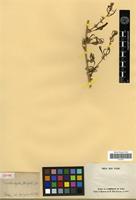
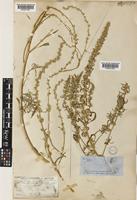
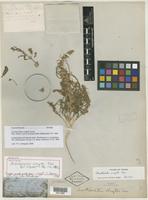
Isotype of Acanthochiton wrightii Torr. [family AMARANTHACEAE]
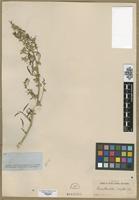
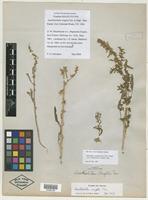
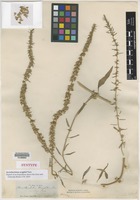
Type? of Acanthochiton wrightii [family AMARANTHACEAE]
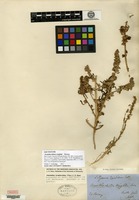
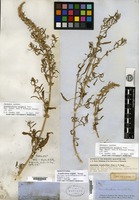
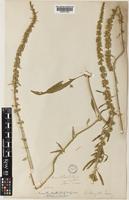
Lectotype of Acanthochiton wrightii Torrey [family AMARANTHACEAE]
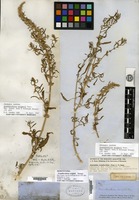
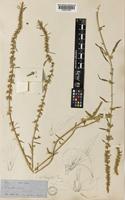
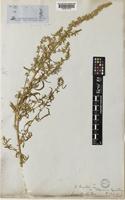
Isotype of Acanthochiton wrightii Torrey [family AMARANTHACEAE]
Amaranthus acanthochiton J.D.Sauer [family AMARANTHACEAE]
Isotype of Acanthochiton wrightii Torrey [family AMARANTHACEAE]
Amaranthus acanthochiton J.D.Sauer [family AMARANTHACEAE]
Type? of Acanthochiton wrightii Torr. [family AMARANTHACEAE]
Syntype of Acanthochiton wrightii Torr. [family AMARANTHACEAE]
Amaranthus acanthochiton J.D.Sauer [family AMARANTHACEAE]
Previous
Next

Name

Identification
Acanthochiton wrightii Torr. [family AMARANTHACEAE ] Amaranthus acanthochiton J.D.Sauer [family AMARANTHACEAE ] (stored under name); Acanthochiton unrecorded Torr. [family AMARANTHACEAE ]
Related name
  • Amaranthus acanthochiton
  • Acanthochiton wrightii
  • Acanthochiton unrecorded
Common name
  • Gree nstripe, Flora of North America Vol. 4
  • greenstripe amaranth, Flora of North America Vol. 4

Flora

Entry for Amaranthus acanthochiton J. D. Sauer [family AMARANTHACEAE]
Herbarium
Flora of North America (FNA)
Collection
Flora of North America
Resource Type
Reference Sources
Entry From
Flora of North America, Vol 4,
Names
Amaranthus acanthochiton J. D. Sauer [family AMARANTHACEAE], Madroño, 13: 44. 1955
Acanthochiton wrightii Torrey [family AMARANTHACEAE], in L. Sitgreaves, Rep. Exped. Zuni Colorado Rivers, 170, plate 13. 1853
Treatment Author(s)
Sergei L. Mosyakin
Kenneth R. Robertson
Information
Plants glabrous or glabrescent. Stems erect, much-branched, 0.1–0.8 m; proximal branches ascending. Leaves: petiole shorter than blade; blade narrowly linear-lanceolate to linear, 2–8 × 0.2–1.2(–1.7) cm, base narrowly cuneate to narrowly decurrent, margins erose, crispate, or irregularly undulate, apex acute to subobtuse. Inflorescences terminal spikes, erect, usually stiff. Bracts completely enfolding flower; of pistillate flowers with prominent excurrent midrib, venation distinct, broadly triangular to deltate, 5+ mm, longer than tepals, margins erose, crenate, or denticulate, apex acute or acuminate; of staminate flowers shorter than tepals, apex acute. Pistillate flowers: outer tepals rudimentary, less that 1.2 mm; inner tepals with venation distinct, 3–4(–5) mm, apex acute, with terminal mucro; style branches spreading; stigmas 3. Staminate flowers: tepals 5, equal or subequal, 2–3 mm, margins erose to denticulate, outer tepals with apex subobtuse to acute-acuminate; inner tepals with apex distinctly acuminate or mucronulate; stamens 5. Utricles light brown, elliptic to obovate-elliptic, 2(–2.5) mm, shorter than outer tepals, slightly rugose to smooth. Seeds dark reddish brown to brown, 1–1.3 mm diam., shiny.
Phenology
jun-aug (summer), sep-nov (fall)
Altitude range
1000–2000 m;
Distribution
n Mexico (Chihuahua).USA Ariz.USA N.Mex.USA Tex.USA Utah
Discussion
Amaranthus acanthochiton is very different morphologically from other taxa of dioecious amaranths. In its vegetative and floral morphology, it is similar to the monoecious A. fimbriatus, especially in branching habit, narrow linear to linear-lanceolate leaf blade, and broadly spatulate to almost fan-shaped tepals of the pistillate flowers. These species are also similar phytogeographically, occurring within the southwestern part of the United States and neighboring northern Mexico. The “dioecious amaranths” are an artificial and polyphyletic group consisting of at least two (or three) independently evolved lineages roughly corresponding to the sections of subg. Acnida outlined by S. L. Mosyakin and K. R. Robertson (1996).
Amaranthus acanthochiton is critically imperiled in Utah and imperiled in Arizona; its Global Heritage Status Rank is G5 as defined by The Nature Conservancy. Seeds and young leaves of A. acanthochiton were used by Native Americans (Hopi) as food: the seeds cooked as a kind of porridge, and the leaves cooked and eaten as greens or with meat (D. E. Moerman 1998).

Related Materials

  • Terms and Conditions
  • Privacy Policy
  • Cookie Policy
  • Cookie Settings
  • Accessibility
  • Help
  • Contact Us
  • Facebook
  • Twitter
ITHAKA

JSTOR is part of ITHAKA, a not-for-profit organization helping the academic community use digital technologies to preserve the scholarly record and to advance research and teaching in sustainable ways.

©2000-2026 ITHAKA. All Rights Reserved. JSTOR®, the JSTOR logo, JPASS®, Aluka®, and ITHAKA® are registered trademarks of ITHAKA.

╳