JSTOR Global Plants Home
  • Home
  • Browse
  • About
  • Access
  • Account
    • Saved Items
    • Profile
  • Log in

Global Plants

Skip to Main Content
  • JSTOR Global Plants Home
  • Global Plants

    • Browse
    • About
    • Access
    • Account
      • Saved Items
      • Profile
Log in
  • Browse
  • About
  • Access
  • Account
    • Saved Items
    • Profile
Advanced Search

Compilation
Acalypha pubiflora

4 Images see all

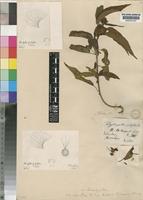
Acalypha pubiflora (Klotzch) Baill. [family EUPHORBIACEAE]
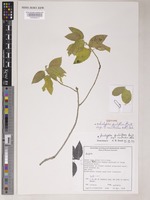
Isotype of Acalypha pubiflora (Klotzsch) Baill. subsp. australica Radcl.-Sm. [family EUPHORBIACEAE]
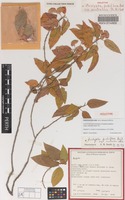
Holotype of Acalypha pubiflora Baill. subsp. australica Radcl.-Sm. [family EUPHORBIACEAE]
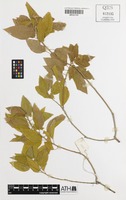
Isotype of Acalypha pubiflora Baill. subsp. australica Radcl.-Sm. [family EUPHORBIACEAE]
Previous
Next

Name

Identification
Acalypha pubiflora (Klotzch) Baill. [family EUPHORBIACEAE ] (stored under name); Calyptrospatha pubiflora Klotzsch [family EUPHORBIACEAE ]
Related name
  • Calyptrospatha pubiflora
  • Acalypha pubiflora

Flora

Entry for Acalypha pubiflora Baill. [family EUPHORBIACEAE]
Herbarium
Royal Botanic Gardens, Kew (K)
Collection
Flora Zambesiaca
Resource Type
Reference Sources
Entry From
FZ, Vol 9, Part 4, (1996) Author: A. Radcliffe-Smith
Names
Calyptrospatha pubiflora Baill. Klotzsch [family EUPHORBIACEAE], in Peters, Naturw. Reise Mossambique 6, 1: 97, t. 18 (1861).
Acalypha pubiflora Baill. [family EUPHORBIACEAE], Adansonia 1: 268 (1861). —Müller Argoviensis in De Candolle, Prodr. 15, 2: 866 (1866). —Engler, Pflanzenw. Ost-Afrikas C: 239 (1895). —Hutchinson in F.T.A. 6, 1: 896 (1912). —Engler, Pflanzenw. Afrikas (Veg. Erde 9) 3, 2: 98 (1921). —Pax in Engler, Pflanzenr. [IV, fam. 147, xvi] 85: 136 (1924). —Drummond in Kirkia 10: 252 (1975). Type: Mozambique, Inhambane, fr. 1842–8, Peters s.n. (B†, holotype; K).
Information
A much-branched shrub up to 6 m tall, similar to A. fruticosa but with lanceolate, long-acuminate, shallowly crenate-serrate leaves up to 15 × 5 cm; leaves ± penninerved, with 5–7 pairs of lateral nerves; male flower buds sometimes glabrous; female bracts much larger, spathaceous, accrescent to 1.5–2.5 × 1.5–3 cm in fruit.
Habitat
Lowveld deciduous woodland, often at the base of rocky outcrops or in riverine vegetation, in granite sand
Altitude range
30–1220 m.
1220
30
Distribution
Mozambique M Magude, Mapulanguene, fr. 30.xi.1944, Mendonça 3176 (LISC).Mozambique GI Inhambane, fr. 1842–8, Peters s.n. (B†; K).Mozambique MS Boka, lower Búzi, fr. 20.xii.1906, Swynnerton 736 (BM; K; SRGH).Zimbabwe S Chikadziwa, fl. xi.1956, Davies 2205 (K; MO; PRE; SRGH).Mozambique Z fr. Kirk s.n. (K).Malawi S Lengwe Nat. Park, y. male fl. 24.v.1981, Sherry 237 (MAL).Zimbabwe W Mt. Silozwane Mt. (Silorzwe), southwest Matopos, fr. 8.i.1963, Wild 5968 (BM; K; LISC; PRE; SRGH).Botswana SE Old Palapye, fl. 26.x.1980, Woollard 824 (GAB; SRGH; PRE).
Distribution (external)
South Africa (northern Transvaal)
Notes
Subsp. australica Radcl.-Sm. was recently discovered in NW Australia [Kew Bull. 45, 4: 678 (1990)].

Related Materials

  • Terms and Conditions
  • Privacy Policy
  • Cookie Policy
  • Cookie Settings
  • Accessibility
  • Help
  • Contact Us
  • Facebook
  • Twitter
ITHAKA

JSTOR is part of ITHAKA, a not-for-profit organization helping the academic community use digital technologies to preserve the scholarly record and to advance research and teaching in sustainable ways.

©2000-2026 ITHAKA. All Rights Reserved. JSTOR®, the JSTOR logo, JPASS®, Aluka®, and ITHAKA® are registered trademarks of ITHAKA.

╳