JSTOR Global Plants Home
  • Home
  • Browse
  • About
  • Access
  • Account
    • Saved Items
    • Profile
  • Log in

Global Plants

Skip to Main Content
  • JSTOR Global Plants Home
  • Global Plants

    • Browse
    • About
    • Access
    • Account
      • Saved Items
      • Profile
Log in
  • Browse
  • About
  • Access
  • Account
    • Saved Items
    • Profile
Advanced Search

Compilation
Acalypha hirsuta

12 Images see all

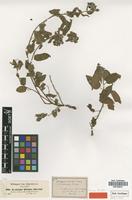
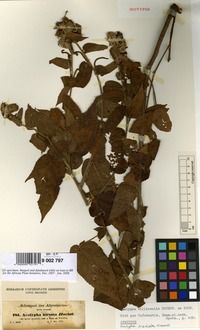
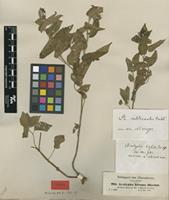
Syntype of Acalypha villicaulis Hochst. ex A.Rich. [family EUPHORBIACEAE]
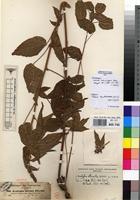
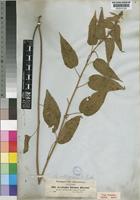
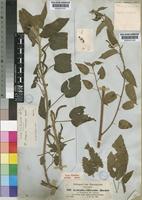
Isotype of Acalypha hirsuta Hochst. ex A.Rich. [family EUPHORBIACEAE]
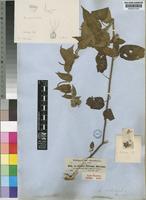
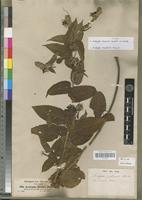
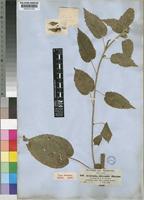
Type of Acalypha hirsuta Hochst. ex A.Rich. [family EUPHORBIACEAE]
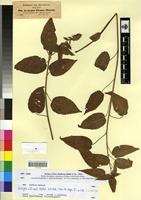
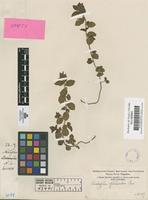
Isotype of Acalypha hirsuta Hochst. ex A.Rich. [family EUPHORBIACEAE]
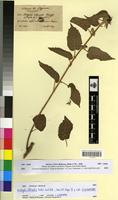
Type of Acalypha hirsuta Hochst. ex A.Rich. [family EUPHORBIACEAE]
Isosyntype of Acalypha villicaulis Hochst. [family EUPHORBIACEAE]
Type of Acalypha brachiata Krauss [family EUPHORBIACEAE]
Filed as Acalypha phleoides Cav. [family EUPHORBIACEAE]
Type of Acalypha hirsuta Hochst. ex A.Rich. [family EUPHORBIACEAE]
Type of Acalypha villicaulis Hochst. ex A.Rich. [family EUPHORBIACEAE]
Isosyntype of Acalypha villicaulis Hochst. ex A. Rich. [family EUPHORBIACEAE]
Previous
Next

Name

Identification
Isotype of Acalypha hirsuta Hochst. ex A.Rich. [family EUPHORBIACEAE ] Verified by Not on sheet, Acalypha brachiata Krauss [family EUPHORBIACEAE ] (stored under name); Verified by Not on sheet,
Related name
  • Acalypha phleoides
  • Acalypha hirsuta
  • Acalypha brachiata
  • Acalypha villicaulis

Flora

Entry for Acalypha villicaulis Hochst. [family EUPHORBIACEAE]
Herbarium
Royal Botanic Gardens, Kew (K)
Collection
Flora Zambesiaca
Resource Type
Reference Sources
Entry From
FZ, Vol 9, Part 4, (1996) Author: A. Radcliffe-Smith
Names
Acalypha sidifolia A. Rich. [family EUPHORBIACEAE], Tent. Fl. Abyss. 2: 249 (1851), as “sidaefolia”. —Müller Argoviensis in De Candolle, Prodr. 15, 2: 844 (1866). —Hutchinson in F.T.A. 6, 1: 909 (1912). —Pax in Engler, Pflanzenr. [IV, fam. 147, xvi] 85: 81 (1924). Type from Ethiopia (Tigray Province).
Acalypha senensis Klotzsch [family EUPHORBIACEAE], in Peters, Naturw. Reise Mossambique 6, 1: 96 (1861). —Müller Argoviensis in De Candolle, Prodr. 15, 2: 845 (1866). —Engler, Pflanzenw. Ost-Afrikas C: 239 (1895). —Hutchinson in F.T.A. 6, 1: 888 (1912). —Prain & Hutchinson in Bull. Misc. Inform., Kew 1913: 18 (1913). —R.E. Fries, Wiss. Ergebn. Schwed. Rhod.-Kongo-Exped. 1, 1: 122 (1914). —Eyles in Trans. Roy. Soc. South Africa 5: 396 (1916). —Prain in F.C. 5, 2: 473 (1920). —Engler, Pflanzenw. Afrikas (Veg. Erde 9) 3, 2: 97 (1921). —Pax in Engler, Pflanzenr. [IV, fam. 147, xvi] 85: 79 (1924). —De Wildeman, Pl. Bequaert. 3, 4: 493 (1926). —Burtt Davy, Fl. Pl. Ferns Transvaal: 305 (1932). —Bremekamp & Obermeyer in Ann. Transvaal Mus. 16, 3: 421 (1935). —Robyns & Tournay, Fl. Sperm. Parc Nat. Alb. 1: 464 (1948). —Brenan, Check-list For. Trees Shrubs Tang. Terr.: 197 (1949). —Suessenguth & Merxmüller, Contrib. Fl. Marandellas Distr. 43: 84 (1951). —F.W. Andrews, Fl. Pl. Anglo-Egypt. Sudan 2: 50 (1952). —Martineau, Rhod. Wild Fl.: 45, t. 15 (1953). —Brenan in Mem. N.Y. Bot. Gard. 9, 1: 74 (1954). —Keay in F.W.T.A., ed. 2, 1, 2: 409 (1958). —Topham, Check List For. Trees Shrubs Nyasaland Prot.: 49 (1958). —P.G. Meyer in Merxmüller, Prodr. Fl. SW. Afrika, fam. 67: 6 (1967). —Mogg in Macnae & Kalk, Nat. Hist. Inhaca Isl., Moçamb., rev. ed.: 148 (1969). Type: Mozambique, Manica e Sofala, Vila de Sena, Peters s.n. (B†, holotype).
Acalypha zambesica Müll. Arg. [family EUPHORBIACEAE], in Flora 47: 440 (1864); in De Candolle, Prodr. 15, 2: 845 (1866). —Engler, Pflanzenw. Ost-Afrikas C: 239 (1895). Type: Mozambique, Zambézia Province, Morrumbala (Moramballa), xii.1858, Kirk Acalypha (3) (K, holotype).
Acalypha villicaulis var. minor Müll. Arg. [family EUPHORBIACEAE], in Abh. Naturwiss. Vereine Bremen 7: 26 (1882). Type from Kenya.
Acalypha haplostyla Pax [family EUPHORBIACEAE], in Bot. Jahrb. Syst. 19: 98 (1894). Syntypes from Zaire.
Acalypha chariensis Beille [family EUPHORBIACEAE], in Bull. Soc. Bot. Fr., Mém 8: 80 (1908). Syntypes from Central African Republic.
Acalypha villicaulis Hochst. [family EUPHORBIACEAE], in Sched. Schimperi Iter. Abyss., sectio secunda, coll. no.: 737 (1842). —A. Rich., Tent. Fl. Abyss. 2: 248 (1851). —Müller Argoviensis in De Candolle, Prodr. 15, 2: 845 (1866). —Engler, Pflanzenw. Ost-Afrikas C: 239 (1895). —Hutchinson in F.T.A. 6, 1: 893 (1912). —Eyles in Trans. Roy. Soc. South Africa 5: 397 (1916). —Engler, Pflanzenw. Afrikas (Veg. Erde 9) 3, 2: 97 (1921). —Pax in Engler, Pflanzenr. [IV, fam. 147, xvi] 85: 80 (1924). —De Wildeman, Pl. Bequaert. 3, 4: 494 (1926). —Brenan, Check-list For. Trees Shrubs Tang. Terr.: 197 (1949). —F.W. Andrews, Fl. Pl. Anglo-Egypt. Sudan 2: 50 (1952). —Agnew, Upl. Kenya Wild Fls.: 216 (1974). —Troupin, Fl. Rwanda 2: 200, fig. 56/1 (1983). —Radcliffe-Smith, F.T.E.A., Euphorb. 1: 192 (1987). Types from Ethiopia (Tigray Province).
Acalypha hirsuta Hochst. [family EUPHORBIACEAE], in Sched. Schimperi Iter. Abyss., sectio secunda, coll. no. 781 (1842). Type from Ethiopia.
Acalypha petiolaris Hochst. ex Krauss [family EUPHORBIACEAE], in Flora 28: 83 (1845). —Müller Argoviensis in De Candolle, Prodr. 15, 2: 847 (1866). —Schinz & Junod in Mém. Herb. Boissier, No. 10: 47 (1900). —Prain & Hutchinson in Bull. Misc. Inform., Kew 1913: 18 (1913). —Eyles in Trans. Roy. Soc. South Africa 5: 396 (1916). —Prain in F.C. 5, 2: 474 (1920). —Engler, Pflanzenw. Afrikas (Veg. Erde 9) 3, 2: 97 (1921). —Pax in Engler, Pflanzenr. [IV, fam. 147, xvi] 85: 81 (1924). —Burtt Davy, Fl. Pl. Ferns Transvaal: 305 (1932). —Martineau, Rhod. Wild Fl.: 45 (1953). Type from South Africa (KwaZulu-Natal).
Information
A perennial herb or subshrub up to 2 m tall, from a woody rootstock; stems several, erect, ascending or decumbent, often many-branched, villous, hirsute or pubescent.Petioles 0.5–6 cm long.Leaf blades 2–17 × 0.7–5 cm, ovate, lanceolate, oblong to linear-lanceolate, acuminate at the apex, serrate on the margin, rarely irregularly lobed, cordate or sometimes rounded or truncate at the base, often with a pair of stipelliform glands at the base, firmly membranous, 7-nerved from the base, sparingly to evenly hirsute-pubescent on both surfaces, pale green to sage-green; lateral nerves in 5–12(15) pairs.Stipules 2–7 mm long, linear, subulate or filiform.Male racemes axillary, solitary, up to 12 cm long on a peduncle up to 5 cm long, dense flowered; axis crisped-puberulous; bracts linear, 1.5 mm long.Male flowers: pedicels 1 mm long; buds tetragonal-subglobose, sparingly pubescent; calyx lobes yellowish- or creamy-green; anthers yellow.Female spike up to 5 cm long with a peduncle up to 1.5 cm, terminal, sometimes also with 1 or more axillary in the upper axils, or terminating short axillary shoots; bracts accrescent to up to 8 × 15 mm, transversely ovate, coarsely dentate, sparingly to densely stipitate-glandular, ciliate, greenish, the glands yellow, 1-flowered.Female flowers sessile; sepals 3–4, 1 mm long, ovate-lanceolate, ciliate; ovary 0.8 mm in diameter, 3-lobed to subglobose, pubescent in the upper half, with or without gland-tipped hairs; styles up to 1.6 cm long, free, pectinate or with few or no lateral segments, crimson.Fruits 4 × 5 mm, 3-lobed, sparingly pubescent and sometimes also with a few gland-tipped pairs at the apex, otherwise glabrous.Seeds 2.5 × 2 mm, ovoid-subglobose, smooth, dark grey, with a depressed-hemispherical caruncle c. 1 mm across.
Habitat
Widespread in open woodland, miombo woodland, mopane woodland, Acacia woodland and woodland on Kalahari Sand, and in grassland, usually with tall grasses, in submontane and wooded grasslands and dambos, also in coastal and lakeshore grassland, sometimes in riverine and submontane forest
Range
tropical Africa from Senegal east to Ethiopia and southwards to Namibia, South Africa (Transvaal) and Swaziland
Altitude range
30–2135 m.
2135
30
Distribution
Mozambique M Ressano Garcia, y. fl. 22.xii.1897, Schlechter 11882 (BM; MO).Mozambique GI Bilene, fl. & fr. 5.ii.1948, Torre 7254 (LISC).Mozambique MS Gondola–Vila Machado, fl. 22.iii.1960, Wild & Leach 5215 (K; PRE; MO; SRGH).Mozambique T 3.6 km Casula–Chiuta, fl. 8.vii.1949, Barbosa & Carvalho in Barbosa 3499 (K; LISC; LMA).Mozambique Z Namagoa Plantation, fl. 19.ix.1948, Faulkner K 296 (K).Malawi S Namwera, Sister Martha Hospital, st. 23.viii.1976, Pawek 11661 (K; MAL; MO; SRGH; UC).Malawi C Chimaliro For. Res., Phaso Road, fr. 10.i.1975, Pawek 8888 (K; MAL; MO; SRGH).Zimbabwe S Runde (Lundi) Hotel, fl. xii.1955, Davies 1707 (K; LISC; MO; PRE; SRGH).Zimbabwe E Stapleford, Nyamakwarara Valley, fl. 1.xi.1967, Mavi 380 (K; LISC; PRE; SRGH).Zimbabwe C Rusape, The Springs, y. fl. 30.xi.1930, Fries, Norlindh & Weimarck 3326a (K; LD; PRE).Zimbabwe W Gwampa For. Res., fl. i.1956, Goldsmith 77/56 (K; LISC; PRE; SRGH).Zambia S Monze, fl. 3.i.1964, van Rensburg 2701 (K; SRGH).Zambia E near Chadiza, fl. & y. fr. 25.xi.1958, Robson 707 (BM; K; LISC; PRE; SRGH).Zambia C Lusaka, Stewart Park, fl. 7.v.1961, Lusaka Natural History Club 39 (K; MO; SRGH).Zambia W Chondwe For. Res., east of Ndola, fl. 2.ii.1952, Angus 911 (BM; FHO; K; MO).Zambia N South Downs, fl. 12.ii.1961, Linley 73 (K; MO; SRGH).Botswana SE Gaborone, University Campus, fl. 12.ii.1974, Mott 157 (K; UBLS).Mozambique N Nampula, fl. 14.iii.1937, Torre 1283 (COI; LISC).Malawi N Livingstonia Escarpment, fl. 31.xii.1973, Pawek 7686 (K; MAL; MO; SRGH; UC).Zimbabwe N Umvukwe Mts., fl. 24/27.iv.1948, Rodin 4454 (K; MO; PRE; SRGH; UC).Zambia B Kaoma (Mankoya), fl. 20.xi.1959, Drummond & Cookson 6660 (SRGH).Botswana N Gwetshaa Island, Okavango Swamp, fl. 25.ii.1973, P.A. Smith 444 (K; MO; PRE; SRGH).Caprivi Strip Linyanti area, fl. 28.xii.1958, Killick & Leistner 3166 (PRE; SRGH).
Notes
A very variable species as regards habit, indumentum, petiole length and leaf blade shape, size and colour.Vernacular names as recorded in specimen data include: “cigaga” (Malawi-Mua area); “munkulukuncha” (Tok.); “nyalisa” (chiNyanja); “nyalisi” (chiYao).

Related Materials

  • Terms and Conditions
  • Privacy Policy
  • Cookie Policy
  • Cookie Settings
  • Accessibility
  • Help
  • Contact Us
  • Facebook
  • Twitter
ITHAKA

JSTOR is part of ITHAKA, a not-for-profit organization helping the academic community use digital technologies to preserve the scholarly record and to advance research and teaching in sustainable ways.

©2000-2026 ITHAKA. All Rights Reserved. JSTOR®, the JSTOR logo, JPASS®, Aluka®, and ITHAKA® are registered trademarks of ITHAKA.

╳