JSTOR Global Plants Home
  • Home
  • Browse
  • About
  • Access
  • Account
    • Saved Items
    • Profile
  • Log in

Global Plants

Skip to Main Content
  • JSTOR Global Plants Home
  • Global Plants

    • Browse
    • About
    • Access
    • Account
      • Saved Items
      • Profile
Log in
  • Browse
  • About
  • Access
  • Account
    • Saved Items
    • Profile
Advanced Search

Compilation
Acacia stolonifera

6 Images see all

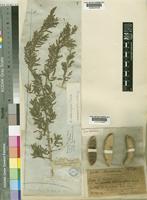
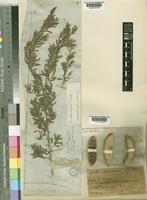
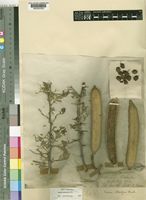
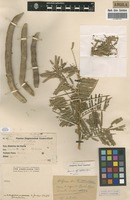
Acacia hebeclada DC. [family LEGUMINOSAE-MIMOSOIDEAE]
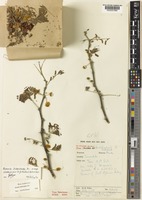
Type of Acacia stolonifera Burch. var. chobiensis O.B. Mill. [family LEGUMINOSAE-MIMOSOIDEAE]
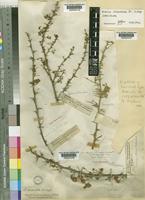
Type of Acacia stolonifera Burch. [family LEGUMINOSAE-MIMOSOIDEAE]
Acacia hebeclada DC. [family LEGUMINOSAE-MIMOSOIDEAE]
Filed as Acacia stolonifera Burch. [family FABACEAE]
Previous
Next

Name

Identification
Acacia hebeclada DC. [family LEGUMINOSAE-MIMOSOIDEAE ] (stored under name); Verified by Brenan, J.P.M., Acacia stolonifera Burch [family LEGUMINOSAE-MIMOSOIDEAE ]
Related name
  • Acacia hebeclada
  • Acacia stolonifera
  • Mimosa unrecorded

Flora

Entry for Acacia hebeclada DC. [family LEGUMINOSAE]
Herbarium
Royal Botanic Gardens, Kew (K)
Collection
Flora Zambesiaca
Resource Type
Reference Sources
Entry From
FZ, Vol 3, Part 1, (1970) Author: J.P.M. Brenan
Names
Acacia hebeclada DC. [family LEGUMINOSAE], Cat. Hort. Monspel.: 73 (1813). — Oliv., F.T.A. 2: 348 (1871). — Harms in Warb., Kunene-Samb.-Exped. Baum: 243 (1903). — Gomes e Sousa, Pl. Menyharth.: 69 (1936). — Hutch., Botanist in S. Afr.: 398, 399 (photogr.) (1946). — O. B. Mill., B.C.L.: 19 (1948). — Wild, Guide Fl. Vict. Falls: 148 (1953). — F. White, F.F.N.R.: 85, fig. 18 a (1962). — Boughey in Journ. S. Afr. Bot. 30: 157 (1964). TAB. 16 fig. 19. Type from S. Africa.
Acacia stolonifera Burch. [family LEGUMINOSAE], Trav. Int. S. Afr. 2: 241 (1824). — Burtt Davy, F.P.F.T. 2: 340, fig. 58 (1932). — Hutch., Botanist in S. Afr.: 398, 418, 433, 632 (1946). — O. B. Mill., B.C.L.: 21 (1948); in Journ. S. Afr. Bot. 18: 25 (1952). Type from S. Africa.
Acacia stolonifera var. chobiensis O. B. Mill. [family LEGUMINOSAE], in Journ. S. Afr. Bot. 18: 25 (1952). Type: Botswana, Serondela, Miller B/1069 (K, holotype).
Information
Shrub or small tree, 0.4-7 m. high, branched near ground-level, forming thickets; bark dark-grey, longitudinally fissured, flaking; young branchlets densely pubescent to tomentose with grey spreading hairs; epidermis on twigs not splitting or if (rarely) so then inner layer not markedly rusty-red as in A. gerrardii. Stipules spinescent, straight to arcuate or hooked, either short and up to c. 1.5 cm. long or up to c. 6 cm. and then straight; “ant-galls” and other prickles absent. Leaves: rhachis 0.5-5 cm. long, like the petiole ± densely spreading-pubescent; pinnae 2-9(13) pairs; leaflets 7-16 pairs per pinna, (1.5)2-7 x (0.75)1-2 mm., linear-oblong, often slightly broadened above, rounded or obtuse at the apex, ± ciliate on the margins at least near the base, otherwise glabrous or nearly so. Flowers white to cream, in heads on axillary eglandular peduncles; hairs on peduncle equalling or longer than its diameter (in our area); involucel at or shortly above the base, occasionally and sporadically up to 1/4-way up the peduncle. Calyx densely rather long-pubescent above. Corolla glabrous or rarely slightly hairy outside. Pods finally dehiscent, 4-15 x (1.3)1.6-4 cm., straight or nearly so, turgid, oblong-ellipsoid, cylindric or fusiform; valves thick, hard, densely grey-tomentellous outside, faintly but often closely longitudinally nerved. Seeds ± transverse in the pod, brown, 10-13 x 8-11 mm., irregular in size and shape; areole 7-9 x 5-6.5 mm.
Habitat
Usually on sand or alluvium in arid areas, often by rivers
Altitude range
760–1190 m.
1190
760
Distribution
Zambia S Bombwe, fr. 1937, Martin 711 (K).Botswana SE Springfield Farm, 3 km. S. of Lobatsi, fr. 17.i.1960, Leach & Noel 141 (SRGH).Botswana SW Tsabong camp, fr. 3.iii.1958, de Beer 711 (SRGH).Zimbabwe W Victoria Falls, Cataract I., fr. 23.xi.1949, Wild 3159 (K; SRGH).Zambia B 11 km. SW. of Senanga, fl. & fr. 5.viii.1952, Codd 7407 (BM; K; PRE).Botswana N 24 km. S. of Sigara Pan overlooking Makarikari Pan, fr. 25.iv.1957, Drummond & Seagrief 5234 (K; SRGH).Caprivi Strip Linyanti, fr. 28.xii.1958, Killick & Leistner 3164 (K; PRE; SRGH).
Distribution (external)
south-western Africa
South Africa
Notes
Within A. hebeclada, as interpreted here, there are two extremes of variation which both occur in our area:(1) A low spreading shrub up to c. 1?5 m. high with short internodes mostly up to c. 1-1?5 cm. long, small foliage, small shortly pedunculate heads, and small pods up to c. 9 x 1?5 cm.(2) A taller shrub or small tree more than 1?5 m. high with large internodes c. 1?5-4 cm. long, larger laxer foliage, large heads on longer peduncles and larger pods up to 15 x 4 cm.A. stolonifera var. chobiensis O. B. Mill. corresponds with No. 2, and this is probably the prevalent variant in Zambia and Rhodesia and the northern part of Botswana. In southern Botswana No. 1 is more general.Nos. 1 and 2 are connected by intermediates, and the basis of the variation is not clear. It may be that No. 1 is merely a state growing in a more extreme climate, or (and this appears more probable) that the two variants are imperfectly differentiated ecotypes. Further study and observation are needed, and it therefore seems preferable at present to record this variation but not to give it taxonomic recognition.A. hebeclada when in pod cannot be mistaken. Flowering specimens, however, particularly with inadequate notes on the habit, can be confused with A. gerrardii Benth. and and A. luederitzii Engl. A. gerrardii can usually be recognized by the habit, the epidermis of the twigs splitting to expose a rusty-red inner layer, and by the usually more numerous and more parallel-sided leaflets, while A. luederitzii has less grey-green often narrower and more parallel-sided leaflets, and (at least in our area) the indumentum is shorter, the hairs on the peduncles being shorter than its diameter.

Related Materials

  • Terms and Conditions
  • Privacy Policy
  • Cookie Policy
  • Cookie Settings
  • Accessibility
  • Help
  • Contact Us
  • Facebook
  • Twitter
ITHAKA

JSTOR is part of ITHAKA, a not-for-profit organization helping the academic community use digital technologies to preserve the scholarly record and to advance research and teaching in sustainable ways.

©2000-2026 ITHAKA. All Rights Reserved. JSTOR®, the JSTOR logo, JPASS®, Aluka®, and ITHAKA® are registered trademarks of ITHAKA.

╳