JSTOR Global Plants Home
  • Home
  • Browse
  • About
  • Access
  • Account
    • Saved Items
    • Profile
  • Log in

Global Plants

Skip to Main Content
  • JSTOR Global Plants Home
  • Global Plants

    • Browse
    • About
    • Access
    • Account
      • Saved Items
      • Profile
Log in
  • Browse
  • About
  • Access
  • Account
    • Saved Items
    • Profile
Advanced Search

Compilation
Acacia stenocarpa

11 Images see all

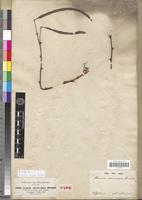
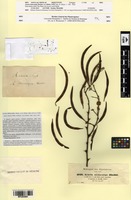
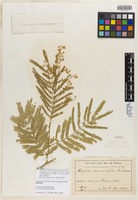
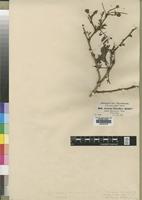
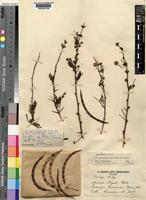
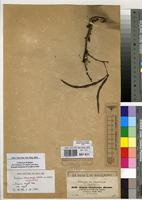
Type of Acacia stenocarpa A. Rich. [family FABACEAE-MIMOSOIDEAE]
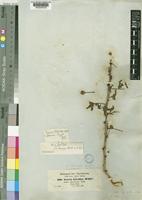
Isosyntype of Acacia stenocarpa A.Rich. [family FABACEAE]
Isotype of Acacia stenocarpa Malme [family FABACEAE]
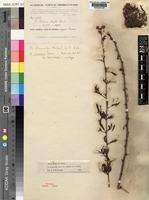
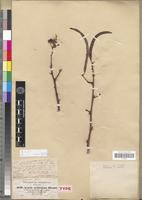
Type of Acacia stenocarpa Hochst. ex A.Rich. [family LEGUMINOSAE]
Acacia hockii De Wild. [family LEGUMINOSAE-MIMOSOIDEAE]
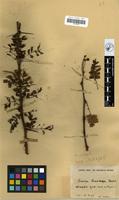
Isosyntype of Acacia stenocarpa Hochst. ex A. Rich. [family LEGUMINOSAE/FABACEAE]
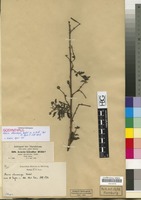
Syntype of Acacia chariensis A.Chev. [family LEGUMINOSAE-MIMOSOIDEAE]
Filed as Acacia seyal Del. [family LEGUMINOSAE-MIMOSOIDEAE]
Isosyntype of Acacia stenocarpa Hochst. ex A.Rich. [family FABACEAE]
Acacia seyal Delile [family LEGUMINOSAE-MIMOSOIDEAE]
Type of Acacia stenocarpa A. Rich. [family FABACEAE-MIMOSOIDEAE]
Previous
Next

Name

Identification
Acacia stenocarpa Hochst. ex A.Rich. [family LEGUMINOSAE ] (stored under name);
Related name
  • Acacia giraffae
  • Acacia raddiana
  • Acacia hockii
  • Acacia seyal
  • Acacia chariensis
  • Acacia stenocarpa

Flora

Entry for ACACIA hockii De Wild. [family LEGUMINOSAE-MIMOSOIDEAE]
Herbarium
Royal Botanic Gardens, Kew (K)
Collection
Flora of Tropical East Africa
Resource Type
Reference Sources
Entry From
Flora of Tropical East Africa, page 1, (1959) Author: J. P. M. Brenan
Names
ACACIA hockii De Wild. [family LEGUMINOSAE-MIMOSOIDEAE], in F.R. 11: 502 (1913); L.T.A.: 849 (1930); F.W.T.A., ed. 2, 1: 500 (1958). Type: Belgian Congo, Katanga, Luafu Valley, Hock (BR, holo.!)
ACACIA stenocarpa [family LEGUMINOSAE-MIMOSOIDEAE], [sensu auct. mult. e.g. F.T.A. 2: 351 (1871), pro max. parte; L.T.A.: 845 (1930); T.S.K.: 68 (1936); F.P.N.A. 1: 389 (1948), pro parte; Bogdan in Nature in E. Afr., ser. 2, No. 1: 13 (1949), non [Hochst. ex] A. Rich.]
ACACIA holstii Taub. [family LEGUMINOSAE-MIMOSOIDEAE], in P.O.A. C: 194, t. 21, fig. C (1895) pro parte, excl. legumina; nom. rejic. I.T.U.: 113, fig. 36k (1940). Types: Tanganyika, Lushoto District, Mashewa, Holst 8744 (B. holo. †, K, P, iso.!). The Kew isotype is entirely A. hockii, but lacks pods.
ACACIA chariensis A. Chev. [family LEGUMINOSAE-MIMOSOIDEAE], in Bull. Soc. Bot. Fr. 74: 958 (1927); L.T.A.: 845 (1930). Types: Shari, Koddo, Chevalier 6432 (P. syn.!, K, isosyn.!) & Dar-Banda, Chevalier 6661 (P, syn.! K, photo.!)
ACACIA seyal [Schweinf. ex] Bak. f. var. multijuga [family LEGUMINOSAE-MIMOSOIDEAE], L.T.A.: 844 (1930); T.T.C.L.: 338 (1949); I.T.U., ed. 2: 213, fig. 48k, t .11 (1952); Consp. Fl. Angol. 2: 284 (1956). Type: not cited; the Sudan, Schweinfurth 1091. 2061, 2627 (BM, annotated by Schweinfurth and presumably syntypes!, 1091 & 2627 at K, isosyn.!)
ACACIA seyal [family LEGUMINOSAE-MIMOSOIDEAE], [sensu Gilb. & Bout. in F.C.B. 3: 160 (1952), saltern pro max. parte non Del.]
Information
Shrub or tree (1–) 2–6 (–12) m. high; bark not powdery, red-brown to greenish or rarely pale yellow, peeling off in papery layers when not burned. Young branchlets ± densely puberulous, rarely glabrous, with ± numerous reddish sessile glands, usually elongate and slender with reddish or brownish bark which does not peel to expose a powdery layer as in A. seyal. Stipules spinescent, mostly short, straight, suberect or spreading, to 2 (rarely to 4) cm. long, subulate or flattened on upper side; “ant-galls” and other prickles absent. Leaves often with a gland on the petiole and between the top 1(–3) pairs of pinnae; pinnae (1–)2–11 pairs; leaflets 9–29 pairs, 2–6.5 mm. long, 0.5–1 (–1.25) mm. wide, usually (at least in East Africa) ± densely ciliolate, lateral nerves invisible beneath. Flowers bright yellow, in axillary pedunculate heads 5–12 mm. in diameter; involucel ⅓–⅔-way up peduncle, 1.5–3 mm. long. Apex of bracteoles rounded to rhombic, sometimes pointed. Calyx (1–)1.5–2 mm. long, glabrous except above. Corolla 2.5–3.5 mm. long, glabrous outside. Pods (Fig. 15/33, p. 66) as in A. seyal, except for being often ± puberulous, (4–)5–14 cm. long, 0.3–0.6(–0.8) cm. wide. Seeds olive-brown, smooth, elliptic, compressed, 5–7 mm. long, 3–4 mm. wide; areole 3.5–4.5 mm. long, 2–2.5 mm. wide.
Range
DISTR. U1–4; K1, 3–6; T1–7 from French Guinea, the Ivory Coast, Ghana and the Sudan in the north to Angola, Northern Rhodesia and Portuguese East Africa in the south
Altitude range
0–2300 m.
Distribution
KENYA Uasin Gishu District Eldoret, 15 Oct. 1951, G. R. Williams 9295!KENYA Elgon, Oct.–Nov. 1930, Lugard 75!;KENYA Masai District Bakitabuk, 29 June 1948, Vesey-FitzGerald 175!TANGANYIKA Shinyanga District Mwantine Hills, 18 June 1931, B. D. Burtt 3309!;TANGANYIKA Tanga District Ngomeni, 25 Aug. 1944, Greenway 7031!;TANGANYIKA Morogoro District without locality, 30 Nov. 1932, Wallace 517!UGANDA Ankole District Mbarara, 26 Apr. 1941, A. S. Thomas 3835!;UGANDA Teso District Lake Kioga, Lale, 13 Oct. 1952, Verdcourt 836!;UGANDA Masaka District Kiagwe, Bukasa, June 1932, Eggeling 447 in F.H. 781!
Notes
A. hockii occupies a wide range both of habitat and altitude, and is also widespread in tropical Africa. The plant is correspondingly variable, and it may later be possible to divide it into races. In the past it has been confused with A. seyal, but, although the two are closely related, it seems preferable to maintain them as distinct species. A. hockii differs from A. seyal primarily by having non-powdery bark. The twigs are usually (not always) more elongate and slender, with reddish or brownish bark which does not peel to expose the inner layer so characteristic of A. seyal. The young branchlets are usually clothed with a more or less dense puberulence which is not found in A. seyal; rarely, however, the branchlets are glabrous except for sessile glands (Holst 2158 from Tanganyika, Tanga District, Gombelo; Snowden 1058 & Tweedie 708, from Uganda, Elgon). The spines are never “ant-galled” and usually short, but may occasionally be up to 4 cm. long and whitish even on the flowering twigs (Bally 5288 from Kenya, Masai District; Welch 40 from Tanganyika, Shinyanga District; and Doggett 122 from Tanganyika, Nzega District) In T.T.C.L.: 337–8 it is stated that the corolla is divided as far as or beyond the calyx in A. hockii (as A. seyal var. multijuga) , but not as far as the calyx in A. seyal. This is incorrect: the two species are not distinguishable in this way, although both the calyx and corolla are rather shorter in A. hockii than in A. seyal; for measurements see the descriptions. The internode-length varies considerably in different gatherings, often resulting in great differences in general appearance, which may however be mainly or entirely due to the various habitats. There is evidence also that the bark may vary in colour, perhaps in the way that it does in A. seyal; but careful observation of this in the field is still wanted. Gillett 13705 (Kenya, Northern Frontier Province, Moyale) is said to have pale yellow papery-peeling bark (a most unusual colour for A. hockii) , but to lose it and develop grey-brown bark when the tree is old; this specimen is also abnormal in having a dense, almost pubescent, indumentum extending even over the surface of the leaflets. A strange tendency of A. hockii, shared also by A. seyal and A. nilotica, is for a few flowers to arise in the involucel on the peduncle, sometimes giving the appearance of a smaller secondary capitulum below the main one.

Related Materials

  • Terms and Conditions
  • Privacy Policy
  • Cookie Policy
  • Cookie Settings
  • Accessibility
  • Help
  • Contact Us
  • Facebook
  • Twitter
ITHAKA

JSTOR is part of ITHAKA, a not-for-profit organization helping the academic community use digital technologies to preserve the scholarly record and to advance research and teaching in sustainable ways.

©2000-2026 ITHAKA. All Rights Reserved. JSTOR®, the JSTOR logo, JPASS®, Aluka®, and ITHAKA® are registered trademarks of ITHAKA.

╳