JSTOR Global Plants Home
  • Home
  • Browse
  • About
  • Access
  • Account
    • Saved Items
    • Profile
  • Log in

Global Plants

Skip to Main Content
  • JSTOR Global Plants Home
  • Global Plants

    • Browse
    • About
    • Access
    • Account
      • Saved Items
      • Profile
Log in
  • Browse
  • About
  • Access
  • Account
    • Saved Items
    • Profile
Advanced Search

Compilation
Acacia redacta

8 Images see all

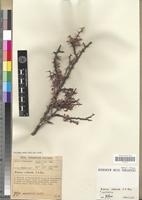
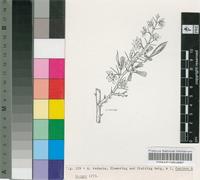
Type of Acacia redacta J.H. Ross [family FABACEAE-MIMOSOIDEAE]
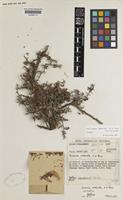
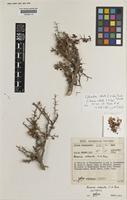
Isotype of Acacia redacta J.H.Ross [family LEGUMINOSAE-MIMOSOIDEAE]
Isotype of Acacia redacta Ross, J.H. 1974 [family FABACEAE]
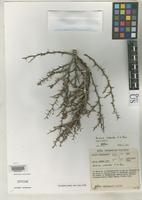
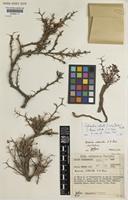
Isotype of Acacia redacta J.H.Ross [family LEGUMINOSAE-MIMOSOIDEAE]
Acacia redacta J.H.Ross
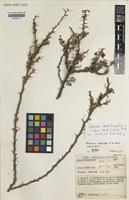
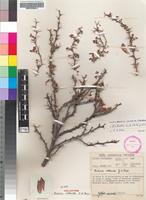
Holotype of Acacia redacta J.H.Ross [family FABACEAE]
Isotype of Acacia redacta J.H.Ross [family LEGUMINOSAE-MIMOSOIDEAE]
Previous
Next

Name

Identification
Acacia redacta J.H.Ross [family FABACEAE ]
Related name
  • Acacia redacta

Flora

Entry for Acacia redacta [family FABACEAE]
Herbarium
South African National Biodiversity Institute, Compton Herbarium, Cape Town (SAM)
Collection
Flora of Southern Africa
Resource Type
Reference Sources
Entry From
Flora of South Africa, (2003) Author: Dr J.P. Roux
Names
Acacia redacta [family FABACEAE]
Information
Much branched shrub 0,3-0,6 m high. Bark dark grey-brown, flaking minutely; young branchlets reddish-brown, densely and persistently appressed pubescent, with numerous small conspicuous dark purplish glands scattered in amongst the hairs. Stipules spinescent, in pairs, 0,8-1,4 cm long, reddish-brown, straight or often deflexed, slender. Leaves: petiole short, mostly 2-6 mm long, grey-puberulous, adaxial gland absent; pinna 1 pair; rhachillae 0,4-1,8 cm long, subglabrous or puberulous; leaflets 2-4 pairs per pinna, 2-5,5 X 1,2-3,5 mm, oblique, oblong or elliptic or ± subrotund, apex rounded or obtuse, sparingly to densely appressed pubescent on both surfaces or on the lower surface only, midrib and lateral nerves not visible or inconspicuous beneath, with minute reddish glands at the point of attachment of the leaflets. Inflorescences apparently capitate, reduced, on axillary peduncles; flowers 2-4 per inflorescence or rarely apparently solitary. Flowers apparently pinkish; peduncles 2-6 mm long, conspi­cuously glandular, usually densely appressed pubescent. Calyx cupular, 0,8-1,2 mm long, densely pubescent. Corolla 4-6 mm long, lobes tinged with red or purple apically, densely appressed pubescent or tomentellous. Stamen-filaments 14-17 mm long, pinkish, shortly connate basally and tubular for ± 2 mm. Ovary ±1,5 mm long, shortly stipitate. Pods pinkish-brown, 2,6-3,2 X 0,9-1,1 cm, linear-oblong, straight, 1-2-seeded, densely appressed grey-puberulous, with small con­spicuous dark purplish sessile glands among the hairs, dehiscent, acute or acuminate apically. Seeds not seen.
Habitat
A. redacta differs from all other species in our area in having reduced inflorescences which contain only 2-4 flowers or, rarely, the flowers appear to be solitary. This reduction in the number of flowers per "head" is coupled with an increase in the size of the individual flowers, the flowers being larger than in most other species of African Acacia. A. redacta is also unusual in that the stamen-filaments are shortly united basally. The pods dehisce longitudinally from the apex downwards and the two valves diverge. More material is required and the flower colour needs confirmation.
Use
44. Acacia redacta /. H. Ross in Bothalia 11 : 231 (1974). Type: Cape, Namaqualand, 22,4 km N. of Stinkfontein on way to Jenkinskop, Werger 1518 (PRE, holo.!; K!).
Range
Restricted to the north western Cape Province. Occurs most frequently on schistoid granite ridges.

Related Materials

  • Terms and Conditions
  • Privacy Policy
  • Cookie Policy
  • Cookie Settings
  • Accessibility
  • Help
  • Contact Us
  • Facebook
  • Twitter
ITHAKA

JSTOR is part of ITHAKA, a not-for-profit organization helping the academic community use digital technologies to preserve the scholarly record and to advance research and teaching in sustainable ways.

©2000-2026 ITHAKA. All Rights Reserved. JSTOR®, the JSTOR logo, JPASS®, Aluka®, and ITHAKA® are registered trademarks of ITHAKA.

╳