JSTOR Global Plants Home
  • Home
  • Browse
  • About
  • Access
  • Account
    • Saved Items
    • Profile
  • Log in

Global Plants

Skip to Main Content
  • JSTOR Global Plants Home
  • Global Plants

    • Browse
    • About
    • Access
    • Account
      • Saved Items
      • Profile
Log in
  • Browse
  • About
  • Access
  • Account
    • Saved Items
    • Profile
Advanced Search

Compilation
Acacia pilispina

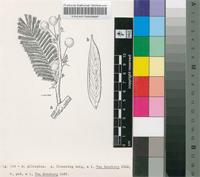
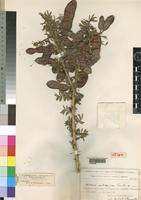
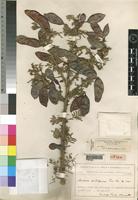
3 Images see all

Acacia pilispina Pic.Serm.
Isotype of Acacia pilispina Pic.Serm. [family LEGUMINOSAE]
Holotype of Acacia pilispina Pic.Serm. [family LEGUMINOSAE]
Previous
Next

Name

Identification
Acacia pilispina Pic.Serm. [family FABACEAE ]
Related name
  • Acacia pilispina

Flora

Entry for ACACIA pilispina Pichi-Serm. [family LEGUMINOSAE-MIMOSOIDEAE]
Herbarium
Royal Botanic Gardens, Kew (K)
Collection
Flora of Tropical East Africa
Resource Type
Reference Sources
Entry From
Flora of Tropical East Africa, page 1, (1959) Author: J. P. M. Brenan
Names
ACACIA pilispina Pichi-Serm. [family LEGUMINOSAE-MIMOSOIDEAE], Miss. Stud. Lago Tana, Ric. Bot. 1: 205, t. 43 (1951). Type: Ethiopia, Atghebà Ghiorghis, Pichi-Sermolli 2696 (FI, holo.)
Information
Shrub or tree 1–15 m. high (in our area usually a tree 5 m. or more high); crown flat or spreading; bark on trunk grey to brown and rugose or ± smooth. Young branchlets densely clothed with long grey to slightly yellowish spreading hairs mostly 0.5–2 mm. long, red-brown beneath the hair; epidermis falling away to expose a yellow or sometimes greenish powdery bark on the twigs. Stipules spinescent, mostly short, straight or nearly so, up to 7 mm. long, hairy except towards tips, sometimes (? on young shoots) longer, grey, to 4.5 cm.; “ant-galls” and other prickles absent. Leaves: rhachis mostly 2.5–6 cm. long, hairy; pinnae mostly 8–16(–26) pairs, 1–2.2 cm. long; leaflets 14–28 pairs, 1.5–3.75(–4) mm. long, 0.5–1 mm. wide, ciliate. Flowers cream or tinged red outside, in heads on axillary peduncles (0.5–) 1.5–2.5 cm. long and ± hairy but eglandular, whose involucel is basal or in the lower fifth. Corolla glabrous outside. Pods (Fig. 16/40, p. 67) straight or slightly curved, flattened, papery or sub-coriaceous, grey to grey-brown or purple-brown, dehiscent, narrowed at base and sometimes at top, 7–12.5 cm. long, 1.4–2.9 cm. wide, finely and ± longitudinally veined, glabrous or nearly so.
Range
DISTR. T1, 4
Altitude range
1220–1830 m.
Distribution
TANGANYIKA Bukoba District Bugera, Jan. 1949, Watkins 289!;TANGANYIKA Buha District Mpembe R., 14 Aug. 1950, Bullock 3166!;TANGANYIKA Ufipa District Ufipa Plateau, Kizombwe, 13 Dec. 1934, Michelmore 1055!
Distribution (external)
; Belgian Congo (Katanga)
Ethiopia
Northern Rhodesia
Nyasaland
Notes
Pichi-Sermolli described A. pilispina as a shrub 1–3 m. high, with up to 10 pairs of pinnae and 8–16 pairs of leaflets per pinna. These differences seem very possibly due to the higher altitude at which the species was growing in Ethiopia, but this theory needs checking. A. pilispina, which has a distribution along the western side of Tanganyika, should be carefully looked for in Uganda, where it probably occurs. The pods are somewhat variable, but in Tanganyika are usually rather broad, slightly curved or oblique, and grey when old.

Related Materials

  • Terms and Conditions
  • Privacy Policy
  • Cookie Policy
  • Cookie Settings
  • Accessibility
  • Help
  • Contact Us
  • Facebook
  • Twitter
ITHAKA

JSTOR is part of ITHAKA, a not-for-profit organization helping the academic community use digital technologies to preserve the scholarly record and to advance research and teaching in sustainable ways.

©2000-2026 ITHAKA. All Rights Reserved. JSTOR®, the JSTOR logo, JPASS®, Aluka®, and ITHAKA® are registered trademarks of ITHAKA.

╳