JSTOR Global Plants Home
  • Home
  • Browse
  • About
  • Access
  • Account
    • Saved Items
    • Profile
  • Log in

Global Plants

Skip to Main Content
  • JSTOR Global Plants Home
  • Global Plants

    • Browse
    • About
    • Access
    • Account
      • Saved Items
      • Profile
Log in
  • Browse
  • About
  • Access
  • Account
    • Saved Items
    • Profile
Advanced Search

Compilation
Acacia persiciflora

4 Images see all

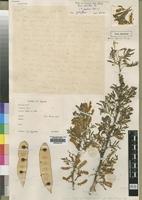
Type of Acacia eggelingii Baker,f. [family LEGUMINOSAE]
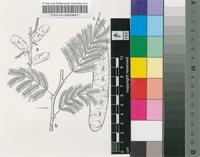
Acacia persiciflora Pax
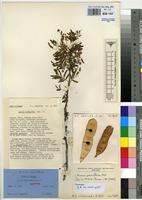
Isotype of Acacia eggelingii Bak.f. [family FABACEAE]
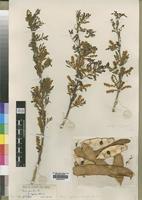
Type of Acacia eggelingii Baker,f. [family LEGUMINOSAE]
Previous
Next

Name

Identification
Acacia persiciflora Pax [family FABACEAE ]
Related name
  • Acacia persiciflora

Flora

Entry for ACACIA persiciflora Pax [family LEGUMINOSAE-MIMOSOIDEAE]
Herbarium
Royal Botanic Gardens, Kew (K)
Collection
Flora of Tropical East Africa
Resource Type
Reference Sources
Entry From
Flora of Tropical East Africa, page 1, (1959) Author: J. P. M. Brenan
Names
ACACIA persiciflora Pax [family LEGUMINOSAE-MIMOSOIDEAE], in E.J. 39: 624 (1907); L.T.A.: 854 (1930). Type: Ethiopia, West Shoa, Urga Valley, Rosen (BRSL?, holo.)
ACACIA eggelingii Bak. f. [family LEGUMINOSAE-MIMOSOIDEAE], in J.B. 73: 263 (1935); Bogdan in Nature in E. Afr., ser. 2, No. 1: 13 (1949); I.T.U., ed. 2: 209, fig. 47c (1952); Gilb. & Bout. in F.C.B. 3: 152 (1952). Type: Uganda, West Nile District, Zeio, Eggeling 1905 (BM, holo.!)
Information
Tree 4.5–9(–15) m. high, sometimes flat-crowned; bark brownish-yellow, scaling off in vertical strips. Young branchlets pubescent to puberulous. Stipules not spinescent. Prickles few (often absent from branchlets), in pairs just below nodes, small, recurved, up to about 3 mm. long. Leaves: petiole usually glandular (gland 0.3–0.5 mm. in diameter); rhachis pubescent, glandular between the top 1–5 pairs of pinnae; pinnae 4–8 pairs; leaflets 11–17 pairs, 3–5.5(–10) mm. long, 0.75–1.5(–2.5) mm. wide, oblong-linear, ciliate on margins or glabrous or nearly so, lateral nerves almost invisible beneath, apex obtuse to subacute. Flowers sessile or subsessile, precocious, in spikes 1.5–3 cm. long on peduncles 0.3–1.3 cm. long. Calyx cupular, 1–1.4 mm. long, red or purplish, glabrous. Corolla 2.5–3.5 mm. long, red or purplish, 5-lobed, glabrous. Stamen-filaments 6–8 mm. long, white; anthers 0.1–0.15 mm. across, glandular at apex. Ovary glabrous, shortly stipitate. Pods (Fig. 14/10, p. 52) brown, dehiscent, straight or slightly curved, venose, with minute dark glands, otherwise sparsely puberulous to subglabrous, 6–15 cm. long, (1.4–) 1.6–2.5 cm. wide. Seeds subcircular-lenticular, 7–8 mm. diam.; central areole small, 2 × 2 mm.
Range
DISTR. U1, 3 (also in 4, fide I.T.U.) K3, 5
Altitude range
1220–2130 m.
Distribution
KENYA ?Trans-Nzoia District Suam Valley, Mar. 1953, Tweedie 1106!KENYA N. Kavirondo District N. Kitosh Reserve, Jan. 1931, Honoré in F.H. 2590! & in C.M. 13961!UGANDA West Nile District Payida, Feb. 1934, Eggeling 1453! & 20 Mar. 1945, Greenway & Eggeling 7234!;UGANDA Mbale District Kaburon, Jan. 1936, Eggeling 2490! & 2497!
Distribution (external)
; Belgian Congo
Ethiopia
the Sudan
Notes
The colour of the flowers, which is unusual among the African species of Acacia, makes A. persiciflora particularly striking. One of the closest relatives of A. persiciflora is A. galpinii Burtt-Davy in K.B. 1922: 326 (1922), recorded from Portuguese East Africa, Northern and Southern Rhodesia, Bechuanaland and the Transvaal. A poor fruiting specimen without precise locality but probably collected near the coast of Tanganyika Territory in T6, Busse 68 (K!), is quite possibly A. galpinii, but I hesitate to include the species without more certain evidence, but it is accounted for in the key at the beginning of the genus. A. venosa [Hochst. ex] Benth. from Ethiopia is also very closely related to A. persiciflora, but has larger leaflets. A. galpinii should be sought for in southern Tanganyika. It has a small calyx similar to that of A. persiciflora but differs in the pinnae of well-developed leaves being in 9–14 pairs, the longer inflorescences (4–11 cm.), and the ± puberulous calyces and corollas. The open flowers are described as yellow, although the buds appear red or pink.

Related Materials

  • Terms and Conditions
  • Privacy Policy
  • Cookie Policy
  • Cookie Settings
  • Accessibility
  • Help
  • Contact Us
  • Facebook
  • Twitter
ITHAKA

JSTOR is part of ITHAKA, a not-for-profit organization helping the academic community use digital technologies to preserve the scholarly record and to advance research and teaching in sustainable ways.

©2000-2026 ITHAKA. All Rights Reserved. JSTOR®, the JSTOR logo, JPASS®, Aluka®, and ITHAKA® are registered trademarks of ITHAKA.

╳