JSTOR Global Plants Home
  • Home
  • Browse
  • About
  • Access
  • Account
    • Saved Items
    • Profile
  • Log in

Global Plants

Skip to Main Content
  • JSTOR Global Plants Home
  • Global Plants

    • Browse
    • About
    • Access
    • Account
      • Saved Items
      • Profile
Log in
  • Browse
  • About
  • Access
  • Account
    • Saved Items
    • Profile
Advanced Search

Compilation
Acacia pallens

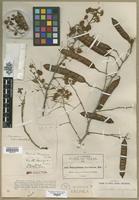
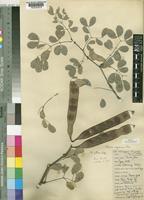
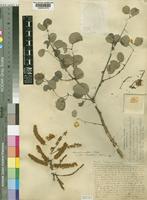
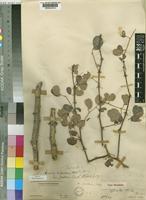
4 Images see all

Type? of Pithecolobium pallens [family FABACEAE]
Acacia nigrescens Oliv. [family LEGUMINOSAE-MIMOSOIDEAE]
Previous
Next

Name

Identification
Acacia pallens Rolfe [family LEGUMINOSAE-MIMOSOIDEAE ] Acacia nigrescens Oliv. [family LEGUMINOSAE-MIMOSOIDEAE ] (stored under name);
Related name
  • Albizia lugandi
  • Acacia pallens
  • Acacia nigrescens

Flora

Entry for ACACIA nigrescens Oliv. [family LEGUMINOSAE-MIMOSOIDEAE]
Herbarium
Royal Botanic Gardens, Kew (K)
Collection
Flora of Tropical East Africa
Resource Type
Reference Sources
Entry From
Flora of Tropical East Africa, page 1, (1959) Author: J. P. M. Brenan
Names
ACACIA nigrescens Oliv. [family LEGUMINOSAE-MIMOSOIDEAE], F.T.A. 2: 340 (1871); L.T.A.: 829 (1930); T.T.C.L.: 329 (1949); Young in Candollea 15: 118 (1955); Coates Palgrave, Trees Centr. Afr.: 250–253 (1956); Consp. Fl. Angol. 2: 274 (1956). Type: Nyasaland, near Mitonde, Kirk (K, holo.!)
ACACIA nigrescens Benth. var. pallens [family LEGUMINOSAE-MIMOSOIDEAE], in Trans. Linn. Soc. 30: 517 (1875). Type: Portuguese East Africa, near Sena, Kirk 201 (K, holo.!)
ACACIA brosigii Harms [family LEGUMINOSAE-MIMOSOIDEAE], in N.B.G.B. 2: 194 (1898). Type: Tanganyika, Kilosa, Brosig (B, holo. †)
ACACIA perrotii Warb. [family LEGUMINOSAE-MIMOSOIDEAE], in N.B.G.B. 2: 249 (1898). Type: Tanganyika, Lindi, Perrot (B, holo. †)
ACACIA pallens (Benth.) Rolfe [family LEGUMINOSAE-MIMOSOIDEAE], in K.B. 1907: 361 (1907)
ACACIA schliebenii Harms [family LEGUMINOSAE-MIMOSOIDEAE], in N.B.G.B. 12: 507 (1935); T.T.C.L.: 329 (1949). Type: Tanganyika, Lindi District, Lake Lutamba, Schlieben 5565 (B, holo. †, BM, P, iso.!)
Information
Trees 4–25 m. high; trunk usually ± beset with knobby prickles. Young branchlets glabrous to sometimes pubescent. Stipules not spinescent. Prickles in pairs just below each node, hooked, blackish, persistent, 2.5–7 mm. long (on branchlets). Leaves: petiole glandular or not; rhachis glabrous to pubescent, sometimes with a gland between the top 1–2 pairs of pinnae; pinnae 2–4 pairs; leaflets 1–2 pairs, (8–) 10–26 (–50) mm. long, (6–) 7–22 (–45) mm. wide, obliquely obovate-orbicular to broadly obovate-elliptic, glabrous to sometimes pubescent, venose, subcoriaceous, apex rounded and often emarginate. Flowers white or cream, sessile, in ± aggregate or solitary spikes 1–9.5 cm. long on peduncles 0.6–2 cm. long; axis glabrous except for minute sessile glands, sometimes pubescent. Calyx 1.5–2 mm. long, glabrous. Corolla 2–2.5 mm. long, 5-lobed. Stamen-filaments 3.5–6 mm. long, free; anthers 0.1 mm. across, with a caducous gland. Ovary glabrous, very shortly stipitate. Pods (Fig. 14/9, p. 52) darkish brown, dehiscent, glabrous, oblong, straight, hardly venose, acuminate at apex, 7–14.5 cm. long, 1.5–2.4(–2.7) cm. wide. Seeds subcircular-lenticular, 12–13 mm. diam.; central areole large, 7–8 mm. long, 7 mm. wide, somewhat impressed.
Range
DISTR. T1, 3,? 4, 5–8 southwards to Bechuanaland, the Transvaal and Zululand
Altitude range
240–1160 m.
Distribution
TANGANYIKA Shinyanga/Nzega District Manyonga R., 27 June 1931, B. D. Burtt 3440!;TANGANYIKA Handeni District Korogwe-Morogoro road, 15 Oct. 1951, Hughes 132!;TANGANYIKA Mpwapwa District Gulwe, 21 Oct. 1936, Hornby 689!
Notes
VARIATION. This easily recognized species shows comparatively little variation. It is generally glabrous, but is occasionally puberulous and rarely quite densely pubescent. Schlieben 5291 (P!), from the same locality as typical A. schliebenii (see above), discussed by Harms in N.B.G.B. 12: 508 (1935), is evidently one of these pubescent forms of A. nigrescens which are probably best considered as no more than part of the range of variation within the species. The number of leaflets per pinna is usually only two, but some specimens show an inconstant tendency, though quite probably genetically controlled, to produce four. The characteristic raised knobs on the trunk are evidently variable in their occurrence. B. D. Burtt, quoted in T.T.C.L.: 329 (1949), says that trees in the coastal regions show them but not those in the Central and Lake Provinces. Perrot, quoted by Warburg in N.B.G.B. 2: 247–8 (1898), says that in Lindi District the Africans recognize “male” trees whose trunks have few and inconspicuous knobs and “female” trees with numerous large knobs.

Related Materials

  • Terms and Conditions
  • Privacy Policy
  • Cookie Policy
  • Cookie Settings
  • Accessibility
  • Help
  • Contact Us
  • Facebook
  • Twitter
ITHAKA

JSTOR is part of ITHAKA, a not-for-profit organization helping the academic community use digital technologies to preserve the scholarly record and to advance research and teaching in sustainable ways.

©2000-2026 ITHAKA. All Rights Reserved. JSTOR®, the JSTOR logo, JPASS®, Aluka®, and ITHAKA® are registered trademarks of ITHAKA.

╳