JSTOR Global Plants Home
  • Home
  • Browse
  • About
  • Access
  • Account
    • Saved Items
    • Profile
  • Log in

Global Plants

Skip to Main Content
  • JSTOR Global Plants Home
  • Global Plants

    • Browse
    • About
    • Access
    • Account
      • Saved Items
      • Profile
Log in
  • Browse
  • About
  • Access
  • Account
    • Saved Items
    • Profile
Advanced Search

Compilation
Acacia nebrownii

9 Images see all

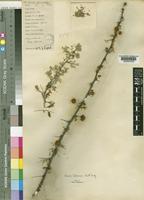
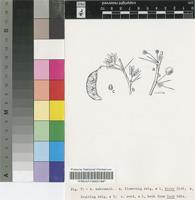
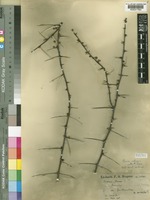
Acacia nebrownii Burtt Davy [family LEGUMINOSAE-MIMOSOIDEAE]
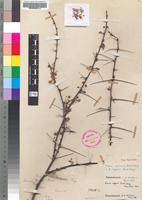
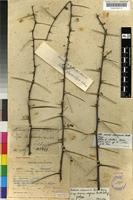
Holotype of Acacia rogersii Burtt Davy [family FABACEAE]
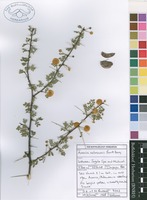
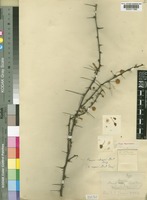
Filed as Acacia nebrownii Burtt Davy [family MIMOSACEAE]
Holotype of Acacia rogersii Burtt Davy [family FABACEAE]
Acacia nebrownii Burtt Davy
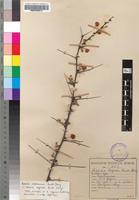
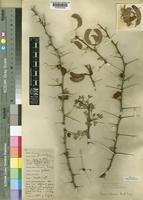
Type of Acacia rogersii Burtt Davy [family FABACEAE]
Type of Acacia nebrownii Burtt Davy [family LEGUMINOSAE-MIMOSOIDEAE]
Acacia glandulifera Schinz [family LEGUMINOSAE-MIMOSOIDEAE]
Acacia nebrownii Burtt Davy [family LEGUMINOSAE-MIMOSOIDEAE]
Previous
Next

Name

Identification
Acacia nebrownii Burtt Davy [family FABACEAE ]
Related name
  • Acacia nebrownii

Flora

Entry for Acacia nebrownii [family FABACEAE]
Herbarium
South African National Biodiversity Institute, Compton Herbarium, Cape Town (SAM)
Collection
Flora of Southern Africa
Resource Type
Reference Sources
Entry From
Flora of South Africa, (2003) Author: Dr J.P. Roux
Names
Acacia nebrownii [family FABACEAE]
Common names
A. glandulifera Schinz in Mem. Herb. Boiss. 1:111 (1900) nom. illegit., non A. glandulifera S. Wats, in Proc. Am. Acad. 25 : 147 (1890); Burtt Davy in Kew Bull. 1908 : 158 (1908) pro parte quoad Mrs. E. J. Lugard 14 & 16, excl. specim. Burtt Davy 3045 & 5230; Glover in Ann. Bolus Herb. 1 : 149, t.18/9 (1915); Dinter in Feddes Repert. 15 : 79 (1917). Syntypes: South West Africa, Great Namaqualand, Fleck 484a (Z!); Hereroland, Tsoachaub, Fleck 480a (Z!). A. rogersii Burtt Davy in Kew Bull. 1922 : 331 (1922); in Fl. Transv. 2 : 342 (1932); Bak.f., Leg. Trop. Afr. 3 : 851 (1930); O. B. Miller, Checklist Bech. Prot. 21 (1948). Type: Transvaal, Soutpansberg Distr., Messina, Rogers 21843 (PRE, holo.!; K!, NH!, Z!). A. waited Suesseng. in Mitt. Bot. Staatssamml. Munchen 1 : 333 (1953). Syntypes as for A. glanduli­fera Schinz.
Information
Many stemmed shrub with slender ascending branches or occasionally a slender tree to 4 m high. Bark reddish-brown to purplish-black; young branchlets yellowish-or reddish-brown to purplish, sometimes as though whitewashed over a purple back­ground, with numerous dark sessile pustular glands, sometimes glutinous, glabrous or subglabrous. Stipules spinescent, in pairs, 0,5-7 cm long, straight or slightly arcuate and deflexed, slender, whitish, tips usually reddish-brown; other prickles absent. Leaves: petiole 0,3-1,4 cm long, glabrous or sub­glabrous; rhachis 0-0,9 cm long, glabrous or subglabrous, a shortly columnar gland at the junction of the pinna pair; pinnae mostly 1 pair, rarely 3 pairs; rhachillae 0,5-1,4 cm long, glabrous or subglabrous, glandular; leaflets 3-5 pairs per pinna, 2,1-5,7 x 0,9-3(4) mm, linear-oblong to obovate or ovate, eglandular or with some small pale inconspicuous glands on the margin and sometimes the surface, glabrous, margins entire, apex usually shortly mucronate, lateral nerves inconspicuous beneath. In­florescences capitate, on axillary peduncles, solitary or fascicled. Flowers bright yellow, sessile; peduncles 0,6-2,4 cm long, glabrous or subglabrous, glandular; involucel basal or up to i-way up the peduncle. Calyx glabrous, tube 1-1,6 mm long, lobes up to 0,6 mm long. Corolla glabrous, tube 1,8-2,5 mm long, lobes up to 0,8 mm long, often reflexed. Stamen-filaments free, up to 5,5 mm long; anthers with a deciduous apical gland. Ovary shortly stipitate, up to 1,8 mm long, glabrous. Pods pale to dark yellowish-brown or chestnut, 2~4(5,6) x 0,6-1,3 cm, slightly to strongly falcate, not or scarcely constricted between the seeds, with numerous con­spicuous dark sessile pustular glands scat­tered over the surface, otherwise glabrous, longitudinally dehiscent, venose, apex obtuse, acute or mucronate. Seeds olive to olive-brown, 6-10 x 5-7 mm, elliptic, compressed; areole 4-6 x 2,5-3,5 mm.
Use
23. Acacia nebrownii Burtt Davy in Kew Bull. 1921 : 50 (1921) pro parte excl. specim. Burtt Davy 3045, Swaziland, et Burtt Davy 5230, Potgietersrust, Transvaal; Bak.f., Leg. Trop. Afr. 3 : 851 (1930); O. B. Miller, Checklist Bech. Prot. 20 (1948); in J. S. Afr. Bot. 18 : 23 (1952); Verdoorn in Bothalia 6 : 156, fig. 4 (1951); Schreiber in Mitt. Bot. Staatssamml. Munchen 2 : 284 (1957); Von Breitenbach, Indig. Trees S. Afr. 2 : 289 (1965); Leistner, Mem. Bot. Surv. S. Afr. 38 : 123 (1967); Schreiber in F.S.W.A. 58 : 10 (1967): Brenan in F.Z. 3,1 : 92, t.15/9 (1970); Ross in Bothalia 10 : 351 (1971); Palmer & Pitman, Trees S. Afr. 2 : 793 (1973). Syntypes: Botswana, Kwebe Hills, Mrs. E. J. Lugard 14 (K!) and 16 (K!).
Range
Found in South West Africa, Botswana, the western portion of Rhodesia and north of the Sout-pansberg in the Transvaal. Occurs in low lying sandy flats, around pans or along river banks; in dry bush, thornveld or woodland, sometimes with Colo-phospermum mopane. Frequently forms thickets.

Related Materials

  • Terms and Conditions
  • Privacy Policy
  • Cookie Policy
  • Cookie Settings
  • Accessibility
  • Help
  • Contact Us
  • Facebook
  • Twitter
ITHAKA

JSTOR is part of ITHAKA, a not-for-profit organization helping the academic community use digital technologies to preserve the scholarly record and to advance research and teaching in sustainable ways.

©2000-2026 ITHAKA. All Rights Reserved. JSTOR®, the JSTOR logo, JPASS®, Aluka®, and ITHAKA® are registered trademarks of ITHAKA.

╳