JSTOR Global Plants Home
  • Home
  • Browse
  • About
  • Access
  • Account
    • Saved Items
    • Profile
  • Log in

Global Plants

Skip to Main Content
  • JSTOR Global Plants Home
  • Global Plants

    • Browse
    • About
    • Access
    • Account
      • Saved Items
      • Profile
Log in
  • Browse
  • About
  • Access
  • Account
    • Saved Items
    • Profile
Advanced Search

Compilation
Acacia montis-usti

11 Images see all

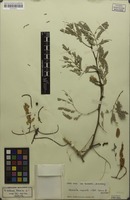
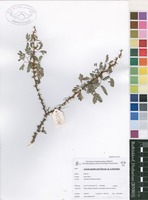
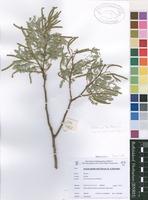
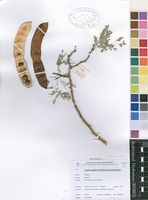
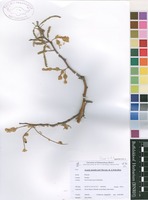
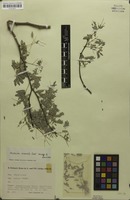
Paratype of Acacia montis-usti Merxm. & A.Schreib. [family MIMOSACEAE]
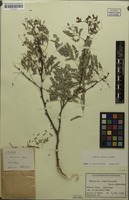
Filed as Acacia montis-usti Merxm. & A.Schreib. [family MIMOSACEAE]
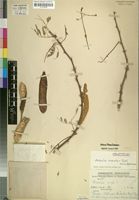
Paratype of Acacia montis-usti Merxm. & A.Schreib. [family MIMOSACEAE]
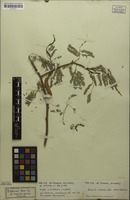
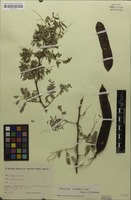
Holotype of Acacia montis-usti Merxm. & A.Schreib. [family LEGUMINOSAE-MIMOSOIDEAE]
Paratype of Acacia montis-usti Merxm. & A.Schreib. [family MIMOSACEAE]
Acacia montis-usti Merxm. & A.Schreib.
Paratype of Acacia montis-usti Merxm. & A.Schreib. [family MIMOSACEAE]
Previous
Next

Name

Identification
Acacia montis-usti Merxm. & A.Schreib. [family FABACEAE ]
Related name
  • Acacia montis-usti

Flora

Entry for Acacia montis-usti [family FABACEAE]
Herbarium
South African National Biodiversity Institute, Compton Herbarium, Cape Town (SAM)
Collection
Flora of Southern Africa
Resource Type
Reference Sources
Entry From
Flora of South Africa, (2003) Author: Dr J.P. Roux
Names
Acacia montis-usti [family FABACEAE]
Information
Tree to 9 m high branching from near the base, "broom-like", crown flattened and spreading or rounded; trunk to 0,5 m in diam. Bark olive- or yellowish- to reddish-brown or purplish-black and smooth when young, grey-brown to black, rough and fissured in mature trees; young branchlets olive-or reddish-brown, with numerous somewhat transversely elongated cream or reddish-brown lenticels, glabrous or subglabrous. Stipules not spinescent, in pairs, linear, up to 3 mm long, 0,2-0,8 mm wide, soon deci­duous. Prickles in pairs near the nodes or frequently absent (rarely a third prickle a short distance below and between the two lateral ones), spreading laterally, straightish or slightly recurved, up to 8 mm long. Leaves: petiole 0,6-2,8 cm long, glabrous or subglabrous, adaxial gland usually present, often just below the lowest pinna pair, slightly raised, 0,3-1,5 X 0,3-1,5 mm; rhachis 0,8-4(6,8) cm long, glabrous or subglabrous, lower surface usually without recurved prickles, a small gland usually at the junction of the top 1-2 pinnae pairs only, occasionally between each pinna pair or absent altog
Use
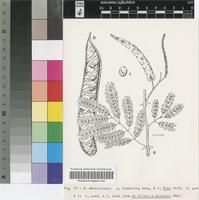
6. Acacia montis-usti Merxm. & Schreiber in Bull. Jard. Bot. Brux. 27 : 270, t.8 (1957); Von Breitenbach, Indig. Trees S. Afr. 2 : 278 (1965); Schreiber in F.S.W.A. 58 : 10 (1967); Palmer & Pitman, Trees S. Afr. 2 : 757 (1973). Type: South West Africa, Brandberg, Welwitsch-Tal, Von Wettstein 95 (M, holo.!).
Range
Confined to South West Africa; found in a fairly restricted area within the Omaruru and Outjo districts and in the Kaokoveld. Occurs in rocky ravines, kloofs and on rocky ridges.

Related Materials

  • Terms and Conditions
  • Privacy Policy
  • Cookie Policy
  • Cookie Settings
  • Accessibility
  • Help
  • Contact Us
  • Facebook
  • Twitter
ITHAKA

JSTOR is part of ITHAKA, a not-for-profit organization helping the academic community use digital technologies to preserve the scholarly record and to advance research and teaching in sustainable ways.

©2000-2026 ITHAKA. All Rights Reserved. JSTOR®, the JSTOR logo, JPASS®, Aluka®, and ITHAKA® are registered trademarks of ITHAKA.

╳