JSTOR Global Plants Home
  • Home
  • Browse
  • About
  • Access
  • Account
    • Saved Items
    • Profile
  • Log in

Global Plants

Skip to Main Content
  • JSTOR Global Plants Home
  • Global Plants

    • Browse
    • About
    • Access
    • Account
      • Saved Items
      • Profile
Log in
  • Browse
  • About
  • Access
  • Account
    • Saved Items
    • Profile
Advanced Search

Compilation
Acacia monticola

9 Images see all

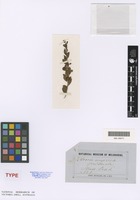
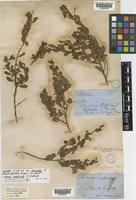
Syntype of Acacia monticola J.M.Black [family FABACEAE]
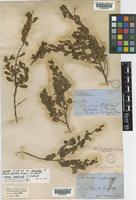
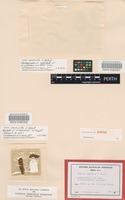
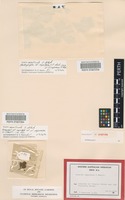
Syntype of Acacia impressa F.Muell. [family LEGUMINOSAE-MIMOSOIDEAE]
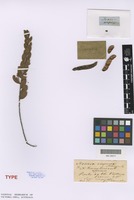
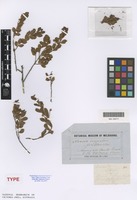
Syntype of Acacia impressa F. Muell. [family MIMOSACEAE]
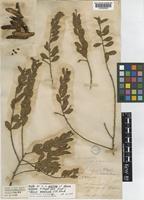
Syntype of Acacia impressa F.Muell. [family LEGUMINOSAE-MIMOSOIDEAE]
Isotype of Acacia pennata (L.) Willd. [family LEGUMINOSAE]
Syntype of Acacia monticola J.M.Black [family FABACEAE]
Syntype of Acacia impressa F. Muell. [family MIMOSACEAE]
Previous
Next

Name

Identification
Acacia impressa F.Muell. [family LEGUMINOSAE-MIMOSOIDEAE ] Verified by Maslin, B.R., Acacia monticola J.M.Black [family LEGUMINOSAE-MIMOSOIDEAE ] (stored under name); Verified by Maslin, B.R., Acacia translucens A.Cunn. [family LEGUMINOSAE-MIMOSOIDEAE ]
Related name
  • Acacia sp.
  • Acacia monticola
  • Acacia pennata
  • Acacia impressa
  • Acacia translucens

Flora

Entry for ACACIA monticola Brenan & Exell [family LEGUMINOSAE-MIMOSOIDEAE]
Herbarium
Royal Botanic Gardens, Kew (K)
Collection
Flora of Tropical East Africa
Resource Type
Reference Sources
Entry From
Flora of Tropical East Africa, page 1, (1959) Author: J. P. M. Brenan
Names
ACACIA monticola Brenan & Exell [family LEGUMINOSAE-MIMOSOIDEAE], in Bol. Soc. Brot., sér. 2, 31: 125 (1957). Type: Uganda, Murole Hill, Purseglove 2693 (K, holo.!, EA, iso.!)
Information
Scandent shrub to 30 m. high. Young branchlets ± densely pubescent with fulvous hairs and many red-purple glands mixed, dark brown, later going blackish. Prickles deflexed, scattered, arising from longitudinal bands usually darker than the intervening ones. Leaves: petiole 1.5–3.5 cm. long; pinnae 7–19 pairs, 3–4.5(–5.5) cm. long; leaflets linear-oblong, 0.5–1.25 mm. wide, glabrous or margins sparsely and inconspicuously ciliolate, midrib nearer one margin at base. Flowers cream or white, in heads 10–15 mm. in diameter usually in pyramidal panicles. Stipules at base of peduncles small, 1–1.5 mm. wide, inconspicuous, soon caducous, not subcordate at base. Calyx puberulous and eglandular outside. Corolla puberulous outside. Pods (Fig. 15/26, p. 66) subcoriaceous, oblong, dark brown, dehiscent, 8–18 cm. long and 3–4.5 cm. wide, with margins 1–1.5 mm. wide and not very thickened. Seeds brown or black, smooth, elliptic, compressed, 9–12 mm. long, 6–7 mm. wide; areole small, 5–7 mm. long and 2.5–3.5 mm. wide.
Range
DISTR. U2; K5; T3, 5, 6
Altitude range
1000–2130 m.
Distribution
KENYA N. Kavirondo District Kakamega, Mar. 1944, Carroll 15!TANGANYIKA Lushoto District Monga, 24 Nov. 1906, Zimmermann 6982! & 24 Nov. 1916, Peter K309!;TANGANYIKA Mpwapwa District Kiboriani Mt., 17 Sept. 1938, Hornby 864!;TANGANYIKA Morogoro District Uluguru Mts., 12 Dec. 1932, Schlieben 3087!UGANDA Kigezi District Murole Hill, Apr. 1948, Purseglove 2693! & Kashambya Swamp, Gombolola side, 16 Oct. 1952, Mrs. Norman 53!
Distribution (external)
; Belgian Congo
Nyasaland
Notes
This until recently would have been included under “ A. pennata ”. A. monticola is most closely related to A. pentagona (p. 100) and A. kamerunensis (p. 98), differing from both in the dense indumentum of hairs and also glands clothing the young branchlets. The leaflets of A. monticola are usually narrower than in A. pentagona, and the ovary is always pubescent while in A. pentagona it is frequently glabrous. Very important differences are found in the pod, which is dehiscent in A. monticola with much less thickened margins than those of the indehiscent pods of A. pentagona; in addition the areole on the seed is small, not large. A. pentagona is typical of low-land rain- and swamp-forest, occurring only doubtfully in upland rain-forest, while A. monticola is typical of the latter. The pods of A. kamerunensis are dehiscent, like those of A. monticola, but are narrower (1.7–2.8 cm. as against 3–4.5 cm.) and are paler in colour

Related Materials

  • Terms and Conditions
  • Privacy Policy
  • Cookie Policy
  • Cookie Settings
  • Accessibility
  • Help
  • Contact Us
  • Facebook
  • Twitter
ITHAKA

JSTOR is part of ITHAKA, a not-for-profit organization helping the academic community use digital technologies to preserve the scholarly record and to advance research and teaching in sustainable ways.

©2000-2026 ITHAKA. All Rights Reserved. JSTOR®, the JSTOR logo, JPASS®, Aluka®, and ITHAKA® are registered trademarks of ITHAKA.

╳