JSTOR Global Plants Home
  • Home
  • Browse
  • About
  • Access
  • Account
    • Saved Items
    • Profile
  • Log in

Global Plants

Skip to Main Content
  • JSTOR Global Plants Home
  • Global Plants

    • Browse
    • About
    • Access
    • Account
      • Saved Items
      • Profile
Log in
  • Browse
  • About
  • Access
  • Account
    • Saved Items
    • Profile
Advanced Search

Compilation
Acacia mearnsii

21 Images see all

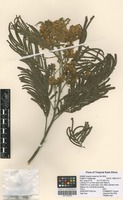
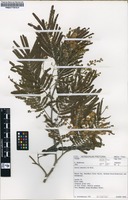
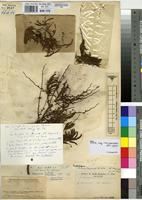
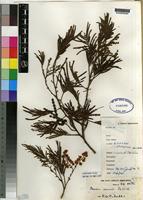
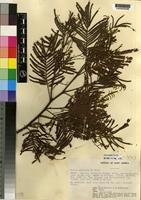
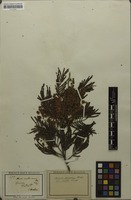
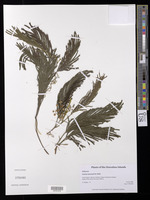
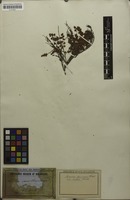
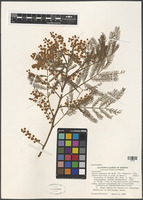
Acacia mearnsii De Wild.
Filed as Acacia mearnsii De Wild. [family MIMOSACEAE]
[family ]
Filed as Acacia mearnsii De Wild. [family MIMOSACEAE]
Acacia mearnsii De Wild. [family FABACEAE]
Filed as Acacia mearnsii De Wild. [family MIMOSACEAE]
Acacia mearnsii De Wild.
Acacia mearnsii De Wild. [family FABACEAE]
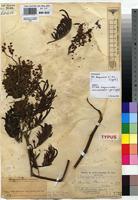
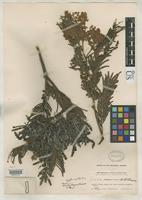
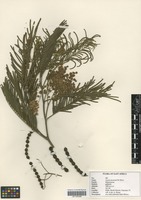
Lectotype of Acacia mearnsii De Wild. [family FABACEAE]
Filed as Acacia mearnsii De Wild. [family MIMOSACEAE]
Filed as Acacia mearnsii E.Mey. [family FABACEAE]
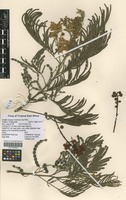
Lectotype of Acacia mearnsii De Wild. [family FABACEAE]
[family ]
Filed as Acacia mearnsii Wildeman, E.A.J. de 1925 [family FABACEAE]
Previous
Next

Name

Identification
Acacia mearnsii De Wild. [family FABACEAE ]
Related name
  • Acacia mearnsii

Flora

Entry for Acacia mearnsii [family FABACEAE]
Herbarium
South African National Biodiversity Institute, Compton Herbarium, Cape Town (SAM)
Collection
Flora of Southern Africa
Resource Type
Reference Sources
Entry From
Flora of South Africa, (2003) Author: Dr J.P. Roux
Names
Acacia mearnsii [family FABACEAE]
Common names
A. decurrens sensu Bak.f., Leg. Trop. Afr. 3 : 853 (1930) saltern pro parte, non Willd. sensu stricto. A. mollissima sensu auct. mult., Benth. in Hook., Lond. J. Bot. 1 : 385 (1842); Burtt Davy, Fl. Transv. 2 : 345 (1932); Brenan, Checklist Tang. Terr. 333 (1949); Salter in Adamson & Salter, Fl. Cape Penins. 454 (1950); F. White, For. Fl. N. Rhod. 82 (1962), non Willd.
Information
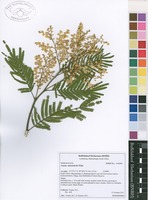
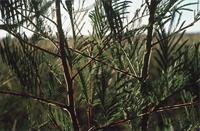
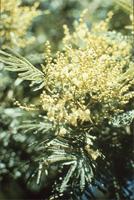
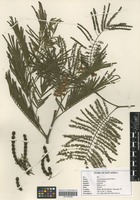
Unarmed tree up to 15 m high with a conical or rounded crown; bark grey-brown to blackish, smooth or rough on very old trunks; young branchlets angular; all parts (except flowers) ± densely pubescent or puberulous, indumentum on young parts often golden. Leaves bipinnate: petiole 1-2,5 cm long, often with a gland above; rhachis usually 4-12 cm long, with numerous raised glands all along its upper surface both at and between the junctions of the pinnae pairs; pinnae 8-21 pairs; leaflets 15-70 pairs, 1,5-4 x 0,5-0,75 mm, linear-oblong, appressed-pubescent or glabrous beneath, margins usually with cilia. Inflorescences capitate, in terminal panicles. Flowers pale yellow, fragrant; peduncles 2-6 mm long. Calyx sparingly pubescent especially towards the apices of the lobes. Corolla glabrous or almost so. Pods (1,6)3-10 x 0,5-0,8 cm, jointed, almost moniliform, ± grey- puberu­lous, dehiscing longitudinally along one margin only, straight or slightly curved. Seeds black, ± 5 x3,5 mm, elliptic, com­pressed, smooth; caruncle conspicuous; areole 3,5x2 mm.
Habitat
A. mearnsii is the well-known Black Wattle which is economically important for the tannin content of the bark. The wood is used for firewood and for building.
Use
49. Acacia mearnsii De Wild., PL Bequaert. 3 : 61 (1925); Brenan in F.T.E.A. Legum.-Mimos. : 95, fig. 15/21 (1959); Brenan & Melville in Kew Bull. 14 : 37 (1960); Tindale in Beadle, Evans & Carolin, Handb. Vase. PL Sydney Distr. & Blue Mts. 231 (1962); Brenan in F.Z. 3,1 : 111 (1970); Court in Willis, Handb. PL Victoria 2 : 243 (1972); Tindale in Beadle, Evans & Carolin, Fl. Sydney Region 275 (1972); Ross, FL Natal 193 (1973); in Bothalia 11 : 465 (1975). Type: Kenya, near Thika, Meams 1092 (BR,lecto.;BM.!).
Range
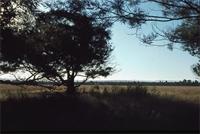
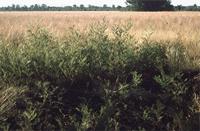
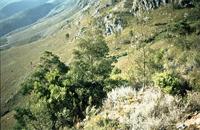
Introduced from Australia and now widespread in parts of the Transvaal, Swaziland, Natal and the Cape Province.

Related Materials

  • Terms and Conditions
  • Privacy Policy
  • Cookie Policy
  • Cookie Settings
  • Accessibility
  • Help
  • Contact Us
  • Facebook
  • Twitter
ITHAKA

JSTOR is part of ITHAKA, a not-for-profit organization helping the academic community use digital technologies to preserve the scholarly record and to advance research and teaching in sustainable ways.

©2000-2026 ITHAKA. All Rights Reserved. JSTOR®, the JSTOR logo, JPASS®, Aluka®, and ITHAKA® are registered trademarks of ITHAKA.

╳