JSTOR Global Plants Home
  • Home
  • Browse
  • About
  • Access
  • Account
    • Saved Items
    • Profile
  • Log in

Global Plants

Skip to Main Content
  • JSTOR Global Plants Home
  • Global Plants

    • Browse
    • About
    • Access
    • Account
      • Saved Items
      • Profile
Log in
  • Browse
  • About
  • Access
  • Account
    • Saved Items
    • Profile
Advanced Search

Compilation
Acacia malacocephala

4 Images see all

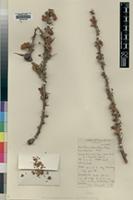
Isotype of Acacia mbuluensis Brenan [family LEGUMINOSAE]
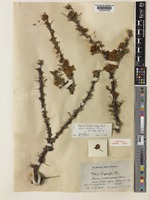
Acacia malacocephala Harms
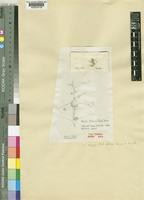
Type of Acacia malacocephala Harms [family LEGUMINOSAE-MIMOSOIDEAE]
Acacia mbuluensis Brenan [family LEGUMINOSAE-MIMOSOIDEAE]
Previous
Next

Name

Identification
Acacia malacocephala Harms [family FABACEAE ]
Related name
  • Acacia malacocephala

Flora

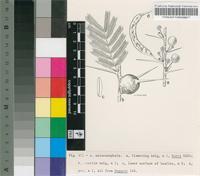
Entry for ACACIA malacocephala Harms [family LEGUMINOSAE-MIMOSOIDEAE]
Herbarium
Royal Botanic Gardens, Kew (K)
Collection
Flora of Tropical East Africa
Resource Type
Reference Sources
Entry From
Flora of Tropical East Africa, page 1, (1959) Author: J. P. M. Brenan
Names
ACACIA malacocephala Harms [family LEGUMINOSAE-MIMOSOIDEAE], in E.J. 51: 364 (1914); L.T.A.: 848 (1930); B. D. Burtt in Journ. Ecol. 30: 96 (1942), pro parte, excl. loc. Mbulu, Basotu, Basodesh; T.T.C.L.: 337 (1949). Type: Tanganyika, Shinyanga District, between Samuye and Kizumbi, Holtz 1548 (B, holo. †, K, fragment and drawing!)
Information
Small tree 2.5–4.5(–6) m. high; stems brown or sometimes black. Young branchlets grey-puberulous with hairs about 0.1 mm. long or less; older branchlets brown or blackish but without any powdery inner bark. Stipules spinescent, 1.5–5.5 cm. long, a few shorter, straight, pale grey or whitish, some fused at base into ± rounded blackish ant-galls 1.5–3 cm. in diameter. Leaves: petiole 5–10 mm. long, glandular at apex; rhachis (1.5–)3–6.5 cm. long, puberulous like the petiole, glandular between the top 1–3 pairs of pinnae; pinnae 3–10 pairs, mostly 1.5–3.5 cm. long; leaflets 10–22 pairs, glabrous, subacute at apex, 2.5–6 mm. long, 0.8–1.5 mm. wide. Flowers white, in heads; involucel at base of the densely puberulous peduncle. Calyx 1–1.5 mm. long, densely tomentellous outside. Corolla 3–3.75 mm. long, clothed like the calyx outside (except at base). Pods (Fig. 16/52, p. 67) curved or falcate, thinly coriaceous, densely grey-puberulous, mostly attenuate or acuminate at ends, 4.5–7 cm. long, 0.6–1.1 cm. wide. Seeds grey, smooth, ± elliptic or quadrate, compressed, sometimes curved, 9–11 mm. long, 5.5 mm. wide; areole 5–7 mm. long, 2.5–3 mm. wide.
Range
DISTR. T1, 4 not known elsewhere
Altitude range
about 1060–1100 m.
Distribution
TANGANYIKA Shinyanga District Wembere region towards Sakamaliwa, Sept.–Oct. 1935, B. D. Burtt 5254! & between Mango and Sakamaliwa, 24 Jan. 1936, B. D. Burtt 5530!;TANGANYIKA Nzega District Ukama & Sakamaliwa, 27 Aug. 1933, B. D. Burtt 4938!
Notes
Burtt remarks (l.c. supra) that this acacia “covers vast expanses of country fringing the Wembere Steppe and extending up some of the tributary valleys ”. To this area it is perhaps confined. There is, however, a specimen at Kew, Doggett 108 from Mwanza/Kwimba Districts, 16 km. S. of Nyegezi on the Nyambiti road, which appears to be A. malacocephala but is uncertain because it is incomplete; more material from this locality is wanted. For the differences between A. malacocephala and A. mbuluënsis, to which it is related, see under the latter. (p. 125). A. malacocephala much resembles A. drepanolobium when not in flower, and on the evidence of herbarium specimens one might be tempted to suggest that they are extremes of one species. However, B. D. Burtt, who knew them both well as living trees, considered them distinct species, and made (Journ. Ecol. 30: 96 (1942)) the interesting distinction that A. malacocephala flowers in the later dry season, the flowers disappearing in the first rains, while A. drepanolobium flowers in the rains.

Related Materials

  • Terms and Conditions
  • Privacy Policy
  • Cookie Policy
  • Cookie Settings
  • Accessibility
  • Help
  • Contact Us
  • Facebook
  • Twitter
ITHAKA

JSTOR is part of ITHAKA, a not-for-profit organization helping the academic community use digital technologies to preserve the scholarly record and to advance research and teaching in sustainable ways.

©2000-2026 ITHAKA. All Rights Reserved. JSTOR®, the JSTOR logo, JPASS®, Aluka®, and ITHAKA® are registered trademarks of ITHAKA.

╳