JSTOR Global Plants Home
  • Home
  • Browse
  • About
  • Access
  • Account
    • Saved Items
    • Profile
  • Log in

Global Plants

Skip to Main Content
  • JSTOR Global Plants Home
  • Global Plants

    • Browse
    • About
    • Access
    • Account
      • Saved Items
      • Profile
Log in
  • Browse
  • About
  • Access
  • Account
    • Saved Items
    • Profile
Advanced Search

Compilation
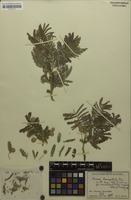
Acacia lasiopetala

5 Images see all

Filed as Acacia lasiopetala Oliv. [family FABACEAE]
Acacia lasiopetala Oliv. [family LEGUMINOSAE-MIMOSOIDEAE]
Filed as Acacia lasiopetala Oliv. [family FABACEAE]
Acacia lasiopetala Oliv.
Previous
Next

Name

Identification
Acacia lasiopetala Oliv. [family FABACEAE ]
Related name
  • Acacia lasiopetala

Flora

Entry for ACACIA lasiopetala Oliv. [family LEGUMINOSAE-MIMOSOIDEAE]
Herbarium
Royal Botanic Gardens, Kew (K)
Collection
Flora of Tropical Africa
Resource Type
Reference Sources
Entry From
Flora of Tropical Africa, Vol 2, page 1, (1871) Author: Papilionaceae by Mr. J. G. Baker; Caesalpinieae and Mimoseae by Prof. Oliver)
Names
ACACIA lasiopetala Oliv. [family LEGUMINOSAE-MIMOSOIDEAE]
Information
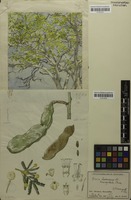
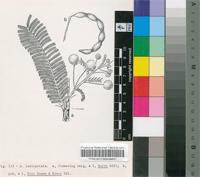
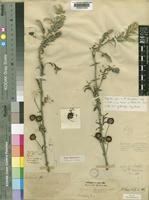
Extremities uniformly softly hoary-tomentose. Stipular spines straight or subrecurved, pubescent nearly to the apex. Young leaves, especially on the rachis, silky tomentose; pinnæ in 14–22 pairs; leaflets 20–30 pairs, probably often more numerous, not wholly developed in our specimens; gland sessile near the base of the rachis. Peduncles in pairs or solitary from the lower axils, pubescent, 1–2 in. long. Bracts obsolete. Flowers capitate. Calyx pilose-pubescent, lobes ovate obtuse. Petals externally silky, cohering 1/2 or 2/3 their length, about half as long again as the calyx. Ovary subsessile, glabrous, subtruncate above, with an obliquely inserted filiform style. Fruit unknown.
Distribution
Mozamb. Dist. Foot of Impemba Peak, Shire river, Dr. Kirk!

Related Materials

  • Terms and Conditions
  • Privacy Policy
  • Cookie Policy
  • Cookie Settings
  • Accessibility
  • Help
  • Contact Us
  • Facebook
  • Twitter
ITHAKA

JSTOR is part of ITHAKA, a not-for-profit organization helping the academic community use digital technologies to preserve the scholarly record and to advance research and teaching in sustainable ways.

©2000-2026 ITHAKA. All Rights Reserved. JSTOR®, the JSTOR logo, JPASS®, Aluka®, and ITHAKA® are registered trademarks of ITHAKA.

╳