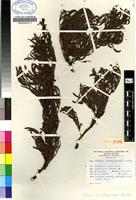
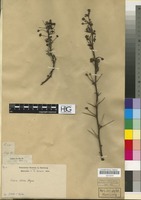
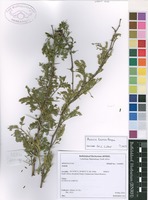
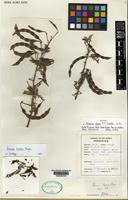
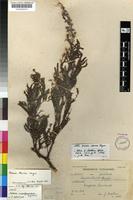
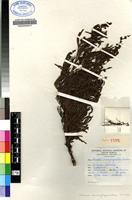
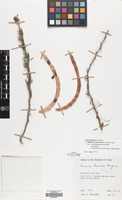
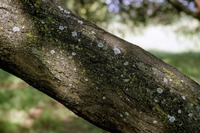
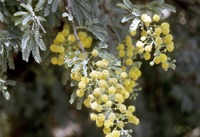
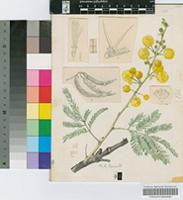
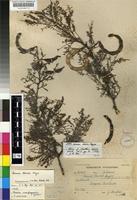
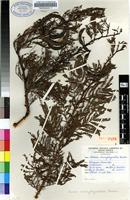
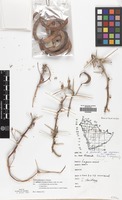
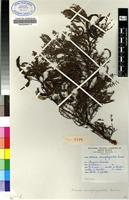
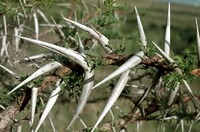
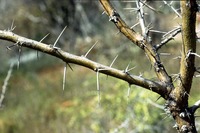
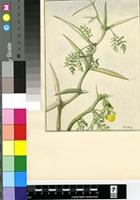
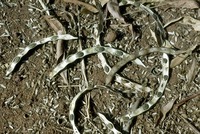
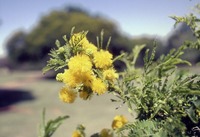
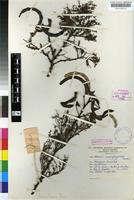
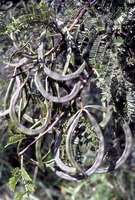
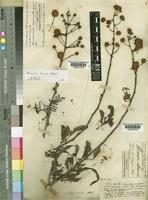
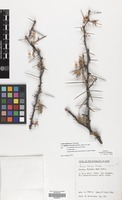
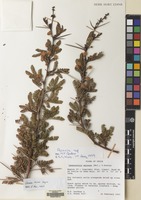
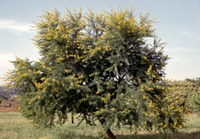
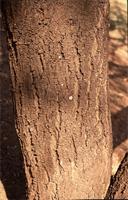
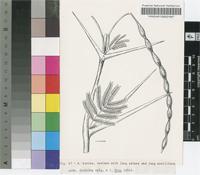
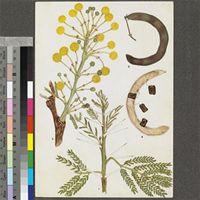
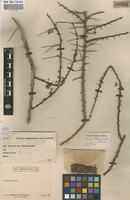
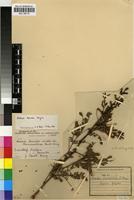
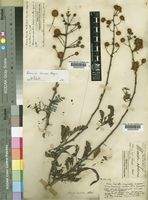
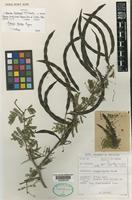
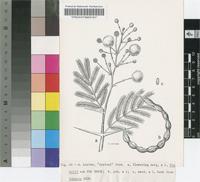
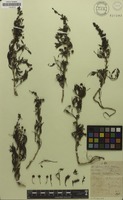
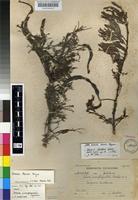
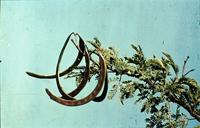
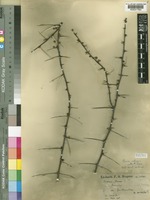
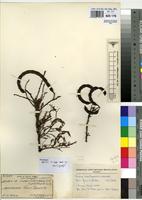
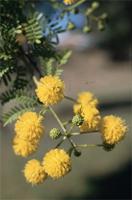
Shrub, often several stemmed, or a tree to 22 m high, sometimes very slender, spindleÂlike, and sparsely branched; crown rounded, often irregularly so, or flattened; trunk to 0,75 m diam. Bark dark brown, reddish-brown, brownish-black to black, rough, often fissured, or white to pale greyish-white or greyish-brown and smooth, the latter often with scattered persistent paired spines; young branchlets reddish- to purplish- or blackish-brown, often flaking to expose a rusty-red inner layer, sometimes white to yellowish- or greyish-brown and smooth, glabrous or sometimes sparingly to densely pubescent, eglandular or with small inconspicuous reddish sessile glands. Stipules spinescent, in pairs, usually 0,4-7(10) cm long, sometimes greatly elongated to 25 cm long, the latter usually slightly inflated and up to ± 1 cm in diam., remaining distinct to the base and not confluent, straight or sometimes ± deflexed, whitish or the same colour as the stem, entire plant frequently exceedingly spinescent; other prickles absent. Leaves; petiole 0,5-1,8 cm long, adaxial gland usually present, variable in position, usually rounded or oval, up to 1,5 X 1,5 mm; rhachis (0)1-4,6(9) cm long, glabrous or sometimes sparingly to densely pubescent, with a yellowish- or reddish-brown to black gland at the junction of each of the top 1-3 pinna pairs, between every pinna pair or absent from some; pinnae (1)2-6(13) pairs; rhachillae (1)1,5-3,8(7,2) cm long, glabrous or sometimes densely pubescent; leaflets 5-15(27) pairs per pinna, (2,8)3,5-8(12,5) x 1-2,5(5) mm, linear, linear-oblong to obovate-oblong, eglandular, apex rounded to subacute but not spinulose-mucronate, usually glabrous but sometimes fairly densely pubescent beneath, margins usually without cilia but sometimes spreading cilia present. Inflorescences capitate, on axillary peduncles, fascicled or sometimes solitary, forming terminal racemes, sometimes on lateral axillary branchlets, the entire inflorescence forming an irregular terminal panicle. Flowers bright yellow, sessile; peduncles 0,7-2,4(4) cm long, glabrous or occasionally densely pubescent, sometimes glandular; in-volucel |-| way up the peduncle (when the flowers are young the involucel often appears apical, but as the peduncle lengthens the involucel soon assumes its true position), ± 2 mm long. Calyx glabrous throughout or apices of lobes sparingly or sometimes ± densely pubescent, tube 1,2-1,8 mm long, lobes up to 0,5 mm long. Corolla glabrous or almost so, tube 1,5-2,3 mm long, lobes up to 0,8 mm long, reflexed. Stamen-filaments free, up to 5 mm long; anthers with a deciduous apical gland. Ovary glabrous, up to 1,5 mm long. Pods yellowish- or reddish-brown to brown, (4)5-10,5(21) X 0,5-0,7(1,1) cm, linear, slightly to strongly falcate or sometimes straightish, usually conÂstricted between the seeds, often distinctly moniliform, apex rounded to acuminate, sometimes attenuate at both ends, longiÂtudinally dehiscent, usually longitudinally venose, mostly glabrous but at times densely tomentellous, sometimes inconÂspicuously glandular. Seeds olive-brown or brown, (3,5)4,5-6,5(9) x (2)3-4(7) mm, elliptic or lenticular, sometimes ± quadrate, compressed; areole3-5,5(7) x 2-3,5(4,5)mm. Reference: * non Sim in Agric. J. 19 (1900); For. Fl. Cape Col. 211, t.59 (1907). Sim was apparently referring to A. sieberana DC. var. woodii (Burtt Davy) Keay & Brenan as evidenced by his description of the bark as "yellowish white flaky" and of the pod as "4 inches long, J-l inch wide, solid, indehiscent, tomentose". However, A. sieberana var. woodii seldom has only 4 pinnae pairs as described by Sim and the involucel is in the upper half of the peduncle or apical and not in the lower third as illustrated by Sim in t.59. Sim described the inflorescence as "light yellow or nearly white" which is in contrast to the bright yellow Inflorescence of A. karroo. A. robusta Burch., however, which often has only 4 pinnae pairs, has a whitish inflorescence and has the involucel in the lower third of the peduncle so it appears as though Sim's descripÂtion of A. hirtella may possibly have been taken from A. sieberana var. woodii and from A. robusta. Sim, For. Fl. P.E. Afr. 57, t.35A (1909), was clearly referring to A. robusta,