JSTOR Global Plants Home
  • Home
  • Browse
  • About
  • Access
  • Account
    • Saved Items
    • Profile
  • Log in

Global Plants

Skip to Main Content
  • JSTOR Global Plants Home
  • Global Plants

    • Browse
    • About
    • Access
    • Account
      • Saved Items
      • Profile
Log in
  • Browse
  • About
  • Access
  • Account
    • Saved Items
    • Profile
Advanced Search

Compilation
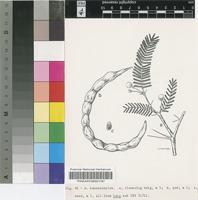
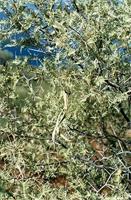
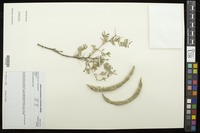
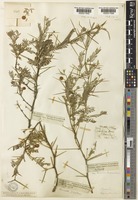
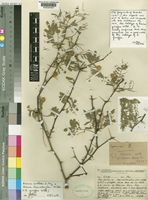
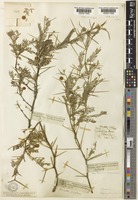
Acacia haematoxylon

10 Images see all

Acacia haematoxylon Willd.
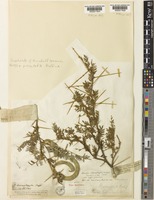
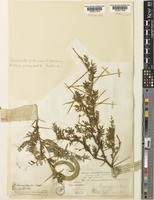
Type of Acacia haematoxylon Willd. [family LEGUMINOSAE-MIMOSOIDEAE]
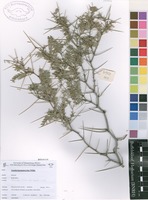
Acacia haematoxylon Willd. [family FABACEAE]
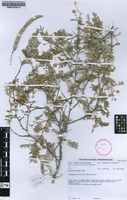
Acacia haematoxylon Willd. [family LEGUMINOSAE-MIMOSOIDEAE]
Acacia erioloba E.Mey. [family LEGUMINOSAE-MIMOSOIDEAE]
Acacia haematoxylon Willd. [family LEGUMINOSAE-MIMOSOIDEAE]
Filed as Acacia haematoxylon Willd. [family MIMOSACEAE]
Acacia haematoxylon Willd.
Type of Acacia atomiphylla Burch. [family LEGUMINOSAE-MIMOSOIDEAE]
Filed as Acacia haematoxylon Willd. [family FABACEAE]
Previous
Next

Name

Identification
Acacia haematoxylon Willd. [family FABACEAE ]
Related name
  • Acacia haematoxylon

Flora

Entry for Acacia haematoxylon [family FABACEAE]
Herbarium
South African National Biodiversity Institute, Compton Herbarium, Cape Town (SAM)
Collection
Flora of Southern Africa
Resource Type
Reference Sources
Entry From
Flora of South Africa, (2003) Author: Dr J.P. Roux
Names
Acacia haematoxylon [family FABACEAE]
Common names
A. atomiphylla Burch., Trav. 1 : 341 (1822). Type: Cape, Hopetown Distr., Asbestos mountains, at Kloof village, Burchell 1685 (K, holo.!).
Information
Shrub or small tree to 10 m high; trunk to 0,3 m in diam.; crown often irregularly rounded, narrow, branches drooping some­what. Bark dark greyish-brown to blackish, rough; young branchlets pale to dark grey or reddish-brown to purple, often appearing as though whitewashed over a purplish background, flaking minutely, slender, sparingly to densely grey-puberulous or tomentellous, seldom subglabrous. Stipules spinescent, in pairs, 0,5-5,7 cm long, slender, never inflated, straight, greyish-white to reddish-brown; other prickles absent. Leaves usually densely grey-tomentellous, bipinnate but the leaflets so small and laterally com­pressed that the pinnae resemble single linear crenulate leaflets: petiole 1-5(7) mm long, adaxial gland often absent; rhachis 0,8-5,1(8,2) cm long, with minute reddish glands scattered amongst the grey indumen­tum, a small yellowish-brown gland often present at the junction of the top 1-6 and the lowest 1-3 pinnae pairs or between each or most pairs; pinnae 6-26 pairs; rhachillae (0,3)0,5-1(1,5) cm long, with minute reddish glands scattered amongst the grey indumen­tum; leafle
Habitat
A very distinctive species which is easily recog­nized by its compact densely grey-tomentellous leaves with minute leaflets.
Use
28. Acacia haematoxylon Willd., Enum. Hort. Berol. 1056 (1809); DC, Prodr. 2 : 462 (1825); Harv. in F.C. 2 : 280 (1862); Benth. in Trans. Linn. Soc. Lond. 30 : 504 (1875); Engl, in Bot. Jahrb. 10 : 23 (1888); Marloth in Trans. S. Afr. Phil. Soc. 5 : 269 (1889); Schinz in Mem. Herb. Boiss. 1 : 112 (1900); Sim, For. Fl. Cape Col. 211 (1907); Dinter, Veg. Veldkost Deutsch-Sudwest-Afrikas 32 (1912); Glover in Ann. Bolus Herb. 1 : 148 (1915); Harms in Engl., Pflanzenw. Afr. 3,1 : 354 (1915); Dinter in Feddes Repert. 15 : 79 (1917); Pole Evans in S. Afr. J. Sci. 17 : fig. 29 (1920); Bak.f., Leg. Trop. Afr. 3 : 835 (1930); Hutch., Botanist in S. Afr. 413 (1946); O. B. Miller in J. S. Afr. Bot. 18 : 22 (1952); Palmer & Pitman, Trees S. Afr. 156, t.vii (1961); Von Breitenbach, Indig. Trees S. Afr. 2 : 296 (1965); Volk in J. S.W. Afr. Wiss. Ges. 20 : 43, fig.7 (1966); Leistner, Mem. Bot. Surv. S. Afr. 38 : 67, 123, t.21 (1967); Schreiber in F.S.W.A. 58 : 8 (1967); Brenan in F.Z. 3,1 : 93, t.15/11 (1970); Ross in Bothalia 10 : 359 (1971); in Bothalia 10 : 548 (1972); Palmer & Pitman, Trees S. Afr. 2 : 773 (1973). Type: Interior of the Cape Province, Lichtenstein sub Herb. Willdenow 19186 (B, holo.).
Range
Restricted to South West Africa, south-western Botswana and the northern Cape Province. Occurs mostly on the Kalahari sands and in other areas where loose sandy soils are prevalent; in dry wood­land, bush or thornveld. Often found on the sandy flats between the dunes or along dry watercourses.

Related Materials

  • Terms and Conditions
  • Privacy Policy
  • Cookie Policy
  • Cookie Settings
  • Accessibility
  • Help
  • Contact Us
  • Facebook
  • Twitter
ITHAKA

JSTOR is part of ITHAKA, a not-for-profit organization helping the academic community use digital technologies to preserve the scholarly record and to advance research and teaching in sustainable ways.

©2000-2026 ITHAKA. All Rights Reserved. JSTOR®, the JSTOR logo, JPASS®, Aluka®, and ITHAKA® are registered trademarks of ITHAKA.

╳