

Compilation
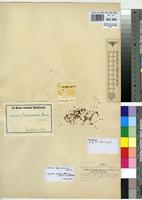
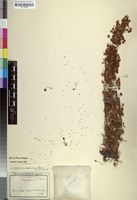
Acacia formicarum
2 Images see all
Name
Identification
Acacia formicarum Harms [family FABACEAE ] Verified by Not on sheet, Acacia drepanolobium Harms ex Sjostedt [family FABACEAE ] (stored under name); Verified by Not on sheet,
Related name
- Acacia formicarum
- Acacia drepanolobium
Flora
Entry for ACACIA drepanolobium [Harms ex] Sjöstedt [family LEGUMINOSAE-MIMOSOIDEAE]
Herbarium
Royal Botanic Gardens, Kew (K)
Collection
Flora of Tropical East Africa
Resource Type
Reference Sources
Entry From
Flora of Tropical East Africa, page 1, (1959) Author: J. P. M. Brenan
Names
ACACIA drepanolobium [Harms ex] Sjöstedt [family LEGUMINOSAE-MIMOSOIDEAE], Schwed. Zool. Exped. Kilimandjaro 8: 116–117, t. 6, fig. 7–8, t. 7, fig. 2–3 (1908); Harms in E.J. 51: 361 (1914); L.T.A.: 846 (1930); T.S.K.: 71 (1936); B. D. Burtt in Journ. Ecol. 30: 89, 95 (1942); Bogdan in Nature in E. Afr., ser. 2, No. 1: 14 (1949); T.T.C.L.: 336 (1949); I.T.U., ed. 2: 207, fig. 48b (1952). Type: Tanganyika, Kilimanjaro, between Kwagogo and Moshi, Engler 1688 (B, holo. †, K, drawings!)
ACACIA formicarum Harms [family LEGUMINOSAE-MIMOSOIDEAE], in E.J. 51: 362, 363 (fig. 2) (1914); L.T.A.: 846 (1930); T.T.C.L.: 337 (1949). Type: Tanganyika, Moshi District, Engare Nairobi, Endlich 721 (B, syn. †, K, drawing!); Tanganyika, between Kilimanjaro and Mt. Meru, Merker (B, syn. †)
Information
Bush or small tree 1–5(–7.5) m. high, with short radiating branches from main stem, sometimes spreading at top. Young branchlets shortly pubescent to puberulous, rarely glabrous, grey then going brown; no powdery inner bark on twigs. Old bark black or grey, usually rough, sometimes smoothish. Stipules spinescent, mostly 1.5–4.5(–7.5) cm. long (some shorter ones often also present), straight, grey or whitish, some fused at base into ± round “ant-galls” 1–3.5 cm. in diameter, grape-purple going blackish. Leaves: petiole 2–5 (very rarely to 10) mm. long, glandular at the lowest of the 3–13 pairs of pinnae; rhachis 0.8–4.5(–9) cm. long, glandular between the top 1–6 pairs of pinnae; leaflets 11–22 pairs, glabrous or minutely ciliolate, subacute or acute sometimes obtuse at apex, 1.5–5.5 mm. long, 0.7–1.25 (–1.75) mm. wide. Flowers white or sometimes cream, in heads; involucel at or rarely a short way above base of the glabrous puberulous or shortly pubescent peduncle. Calyx 0.75–1.5(–2.5) mm, long, glabrous or ciliolate. Corolla glabrous outside, sometimes puberulous on lobes, 3–4 mm. long. Pods (Fig. 16/48, p. 67) falcate or annular, thinly coriaceous, finely longitudinally venose, glabrous or ± puberulous, mostly attenuate or even acuminate at ends, 4–7 cm. long, 0.5–1.0 cm. wide. Seeds mottled whitish-grey and dark brown, smooth, irregularly quadrate or elliptic, compressed, 10–12 mm. long, 4.5–5.5 mm. wide; areole 5–6 mm. long, 3–3.5 mm. wide.
Range
DISTR. U1, 3; K1–6; T1–5
Altitude range
600–2680 m.
Distribution
KENYA Naivasha District Longonot Crater, 25 Aug. 1940, Greenway 5996!;KENYA Machakos District Mua Hills, 12 Mar. 1953, Trump 49!;KENYA Masai District Kapiti Plains, Nairobi-Kajiado road, 21 Feb. 1953, Drummond & Hemsley 1247!TANGANYIKA Shinyanga District near Kizumbi, 4 Jan. 1933, B. D. Burtt 45131;TANGANYIKA Moshi District Engare Nairobi, 4 July 1943, Greenway 6702!;TANGANYIKA Dodoma District Mwitikira, 14 Aug. 1928, Greenway 775!UGANDA Karamoja District near Kangole, July 1930, Liebenberg 187! & near Moroto, 6 Mar. 1936, Michelmore 1266!;UGANDA Mbale District Agu Swamp, Pallisa, Eggeling 746 in F.H. 1147!
Distribution (external)
; Belgian Congo
the Sudan
Ethiopia
Somalia
Notes
A. drepanolobium is both rather widely distributed and variable. It is not clear, however, how much of the variation is due to heredity and how much to such causes as exposure and burning. The indumentum, particularly of the branchlets, peduncles and flowers, may be absent or comparatively dense; the pods may be glabrous to puberulous, and they vary in width. A. formicarum appears to be simply a form of A. drepanolobium with glabrous or subglabrous pods and peduncles, and with involucels above the base. Correlation between these characters appears, however, to be absent. The habit likewise varies: Greenway 5996 is a gnarled, condensed form with stout stems, while Eggeling 746 is an opposite extreme. The range of altitude of A. drepanolobium is rather wide, and the species may comprise different ecotypes. Bally from Kenya, foot of Ngong Escarpment, 1947, bears an “ant-gall” approximately 6 cm. across (not counting the spines). Has a bigger one ever been found?