JSTOR Global Plants Home
  • Home
  • Browse
  • About
  • Access
  • Account
    • Saved Items
    • Profile
  • Log in

Global Plants

Skip to Main Content
  • JSTOR Global Plants Home
  • Global Plants

    • Browse
    • About
    • Access
    • Account
      • Saved Items
      • Profile
Log in
  • Browse
  • About
  • Access
  • Account
    • Saved Items
    • Profile
Advanced Search

Compilation
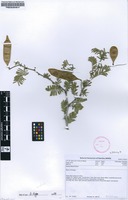
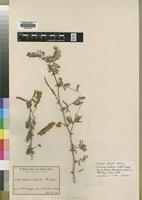
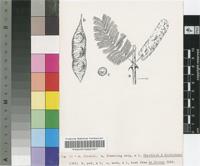
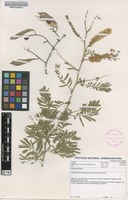
Acacia fleckii

6 Images see all

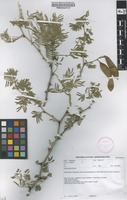
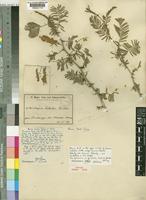
Filed as Acacia fleckii Schinz [family FABACEAE]
Type of Acacia fleckii Schinz [family LEGUMINOSAE]
Acacia fleckii Schinz
Filed as Acacia fleckii Schinz [family FABACEAE]
Acacia fleckii Schinz [family LEGUMINOSAE-MIMOSOIDEAE]
Previous
Next

Name

Identification
Acacia fleckii Schinz [family FABACEAE ]
Related name
  • Acacia fleckii

Flora

Entry for Acacia fleckii [family FABACEAE]
Herbarium
South African National Biodiversity Institute, Compton Herbarium, Cape Town (SAM)
Collection
Flora of Southern Africa
Resource Type
Reference Sources
Entry From
Flora of South Africa, (2003) Author: Dr J.P. Roux
Names
Acacia fleckii [family FABACEAE]
Common names
A. cinerea Schinz in Verh. Bot. Ver. Prov. Bran-denb. 30 : 240 (1888), nom. illegit., non A. cinerea Spreng. (1826); Dinter in Feddes Repert. 15 : 78 (1917); Bak.f., Leg. Trop. Afr. 3 : 832 (1930); O. B. Miller, Checklist Bech. Prot. 17 (1948); in J. S. Afr. Bot. 18 : 19 (1952). Type: South West Africa, Amboland, "Omatope", Schinz 252 (Z, holo.!). A. catechu sensu Harms in Warb., Kunene-Samb. Exped. 243 (1903), non (L.f.) Willd. A. caffra sensu N.E. Br. in Kew Bull. 1909 : 107 (1909) pro parte quoad specim. Lugard 93. A. caffra var. tomentosa sensu Bak.f., Leg. Trop. Afr. 3 : 833 (1930) pro parte quoad specim. Lugard 93; O. B. Miller, Checklist Bech. Prot. 17 (1948); in J. S. Afr. Bot. 18 : 19 (1952) saltern quoad specim. Curson 173. A. catechu subsp. suma (Roxb.) Roberty var. baumii Roberty in Can-dollea 11 : 157 (1948). Type: Angola, Cubango District, bank of the Cubango River, near Kalolo, Baum 438 (G, hole; BM1, E!, K!, Z!).
Information
Shrub, often with many stems, or a tree to 7 m high; crown rounded or flattened and spreading. Bark pale to dark yellowish- or greyish-brown, rough, the outer layer papery and flaking off; young branchlets pale yellowish or grey to greyish-brown, puberulous to pubescent, with few to many small reddish glands intermixed. Stipules not spinescent, in pairs, linear, 2-4,5 X 0,2-0,8 mm. soon deciduous. Prickles in pairs below the nodes, usually strongly recurved, broad-based, grey-brown to reddish-brown or purplish, up to 1 cm long. Leaves: petiole 0,3-1(1,3) cm long, adaxial gland variable in position, elliptic or discoid, 0,8-2,2 X 0,4-1,1 mm, reddish-brown to black; rhachis (0,7)1,8-5,6(7,5) cm long, puberulous to densely pubescent, with few small reddish glands intermixed, without a conspicuous gland at the junction of any of the pinnae pairs; pinnae (4)8-16(20) pairs; rhachillae 0,7-2,9 cm long, puberulous to densely pubescent; leaflets 9-28(35) pairs per pinna, 2-5(6,5) X 0,5-1,2(1,6) mm, linear-oblong, straight or almost so, apex rounded to obtuse or subacute, veins often prominent beneath at first but becoming obscure with age, glabrous or sparingly to densely appres-sed-pubescent below, margins usually with spreading cilia. Inflorescences spicate, solitary or paired, sometimes forming a terminal panicle. Flowers yellowish-white, sessile; spikes (1,8)2,6-5,4(6,5) cm long; peduncles 0,6-2,4 cm long, puberulous to densely pubescent. Calyx often olive-green, puberu­lous to densely pubescent, sometimes sub-glabrous, tube 1,3-2,5 mm long, lobes 0,6-1,2 mm long. Corolla glabrous or slightly puberulous, especially towards the apices of the lobes, tube up to 3,2 mm long, lobes up to 1,4 mm long. Stamen-filaments free, up to 9 mm long; anthers 0,2-0,25 mm across, with a deciduous apical gland. Ovary 0,7-1,5 mm long, glabrous or puberulous, stipitate. Pods fawn to dark brown, 4-13,5 X 1,1-2(2,3) cm, linear-oblong, straight, rounded to acute or sometimes rostrate apically, longitudinally dehiscent, venose, coriaceous, puberulous to subglabrous, with numerous small reddish glands. Seeds olive-brown, subcircular, 8-12,5 x 8-12 mm, compressed; areole 1-4 x 1-3 mm, horse­shoe shaped.
Habitat
A. fleckii is closely related to A. erubescens Welw. ex Oliv. and the two species are often confused. A. fleckii differs from A. erubescens in having:
Use
14. Acacia fleckii Schinz in Mem. Herb. Boiss. 1 : 108 (1900); Dinter in Feddes Repert. 15 : 79 (1917); Bak.f., Leg. Trop. Afr. 3 : 832 (1930); O. B. Miller, Checklist Bech. Prot. 18 (1948); Brenan in Kew Bull. 11 : 197 (1956); Torre in C. F. A. 2 : 277, t.54 (1956); Story in Mem. Bot. Surv. S. Afr. 30 : 22 (1958); F. White, For. Fl. N. Rhod. 84, fig.Hi (1962); Von Breitenbach, Indig. Trees S. Afr. 2 : 285 (1965); Schreiber in F.S.W.A. 58 : 8 (1967); Brenan in F.Z. 3,1 : 74 (1970); Palmer & Pitman, Trees S. Afr. 2 : 758 (1973). Type: Botswana, Ghanzi [Chansis], Fleck 412a (Z, holo.!).
Range
Found in Angola, South West Africa, Botswana, Zambia, Rhodesia and the western Transvaal. Occurs in drier types of mixed deciduous woodland, thicket, bushland and scrub, sometimes on sandy flats adjacent to rivers. Frequent on Kalahari sand.

Related Materials

  • Terms and Conditions
  • Privacy Policy
  • Cookie Policy
  • Cookie Settings
  • Accessibility
  • Help
  • Contact Us
  • Facebook
  • Twitter
ITHAKA

JSTOR is part of ITHAKA, a not-for-profit organization helping the academic community use digital technologies to preserve the scholarly record and to advance research and teaching in sustainable ways.

©2000-2026 ITHAKA. All Rights Reserved. JSTOR®, the JSTOR logo, JPASS®, Aluka®, and ITHAKA® are registered trademarks of ITHAKA.

╳