JSTOR Global Plants Home
  • Home
  • Browse
  • About
  • Access
  • Account
    • Saved Items
    • Profile
  • Log in

Global Plants

Skip to Main Content
  • JSTOR Global Plants Home
  • Global Plants

    • Browse
    • About
    • Access
    • Account
      • Saved Items
      • Profile
Log in
  • Browse
  • About
  • Access
  • Account
    • Saved Items
    • Profile
Advanced Search

Compilation
Acacia eriocarpa

7 Images see all

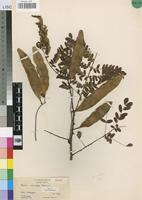
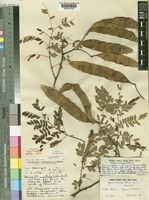
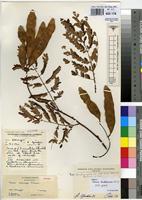
Isotype of Acacia eriocarpa Brenan [family LEGUMINOSAE-MIM]
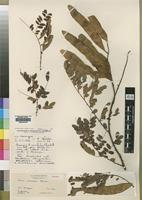
Isotype of Acacia eriocarpa Brenan [family FABACEAE]
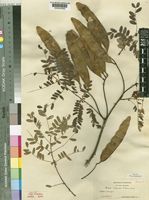
Holotype of Acacia eriocarpa Brenan [family LEGUMINOSAE-MIMOSOIDEAE]
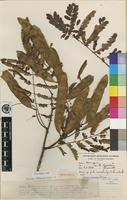
Holotype of Acacia eriocarpa Brenan [family FABACEAE]
Isotype of Acacia eriocarpa Brenan [family LEGUMINOSAE]
Holotype of Acacia eriocarpa Brenan [family LEGUMINOSAE-MIMOSOIDEAE]
Acacia eriocarpa Brenan
Previous
Next

Name

Identification
Acacia eriocarpa Brenan [family FABACEAE ]
Related name
  • Acacia eriocarpa

Flora

Entry for Acacia eriocarpa Brenan [family LEGUMINOSAE]
Herbarium
Royal Botanic Gardens, Kew (K)
Collection
Flora Zambesiaca
Resource Type
Reference Sources
Entry From
FZ, Vol 3, Part 1, (1970) Author: J.P.M. Brenan
Names
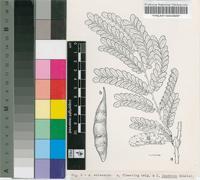
Acacia eriocarpa Brenan [family LEGUMINOSAE], in Kew Bull. 12: 360 (1957). — F. White, F.F.N.R.: 432 (1962). — Boughey in Journ. S. Afr. Bot. 30: 157 (1964). TAB. 15 fig. 2. Type: Rhodesia, Chirundu, Goodier 81 (K, holotype; LISC; SRGH).
Information
Shrub or small to medium tree c. 3-6 m. high, sometimes many-stemmed; young branchlets tomentose, soon glabrescent. Stipules not spinescent, 5-7 x 4-6 mm., broadly and obliquely ovate. Prickles scattered along the internodes, ± hooked or deflexed, up to c. 5 mm. long. Leaves: rhachis 4-19 cm. long, prickly or unarmed; petiole with a prominent gland 1-2·5 mm. long on the upper side near the base; rhachis glandular below the top 1-2 pairs of pinnae; pinnae 4-9 pairs; leaflets 4-15 pairs, (5)7-18 x 3-9 mm., obliquely oblong-elliptic or -lanceolate (or the terminal ones obovate), ± densely pubescent especially beneath when young, ± glabrescent at maturity; lateral nerves and usually venation also clearly visible beneath. Flowers sessile, in spikes 4-5 (? more) cm. long on peduncles 0·5-1·3 cm. long; axis tomentose. Calyx 3·5 mm. long, tomentose. Corolla 4-4·5 mm. long, with 5 lobes 1-1·25 mm. long which are tomentose outside. Stamen-filaments 5-6 mm. long, irregularly connate towards the base; anthers 0·2 mm. across, with a caducous gland. Ovary tomentose, on an almost equally long stipe. Pods dehiscent, 7-14 x 1·8-2·4 cm., with dense often ± matted long brownish tomentum outside, linear-oblong, straight, obtuse rarely subacute at the apex. Seeds subcircular, 6-10 mm. in diam.; central areole small, 1·5-3 x 2·5 mm.
Habitat
Woodland and thicket
Range
Known only from our area
Distribution
Zimbabwe W Wankie, fl. 11.xii.1934, Eyles 8287 (K; SRGH).Mozambique T Máguè, between Máguè and R. Zambeze, fr. 30.iv.1964, Wild 6538 (K; SRGH).Zimbabwe N Urungwe Distr., 16 km. S. of Chirundu, fr. 26.iii.1956, Goodier 63 (K; SRGH).Zambia E Luangwa R., fr. 5.vi.1958, Fanshawe 4533 (K; LISC).
Notes
A. eriocarpa is unique among our spicate species in having tomentose pods.

Related Materials

  • Terms and Conditions
  • Privacy Policy
  • Cookie Policy
  • Cookie Settings
  • Accessibility
  • Help
  • Contact Us
  • Facebook
  • Twitter
ITHAKA

JSTOR is part of ITHAKA, a not-for-profit organization helping the academic community use digital technologies to preserve the scholarly record and to advance research and teaching in sustainable ways.

©2000-2026 ITHAKA. All Rights Reserved. JSTOR®, the JSTOR logo, JPASS®, Aluka®, and ITHAKA® are registered trademarks of ITHAKA.

╳