JSTOR Global Plants Home
  • Home
  • Browse
  • About
  • Access
  • Account
    • Saved Items
    • Profile
  • Log in

Global Plants

Skip to Main Content
  • JSTOR Global Plants Home
  • Global Plants

    • Browse
    • About
    • Access
    • Account
      • Saved Items
      • Profile
Log in
  • Browse
  • About
  • Access
  • Account
    • Saved Items
    • Profile
Advanced Search

Compilation
Acacia dolichocephala

5 Images see all

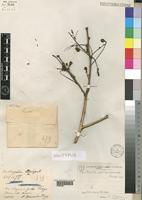
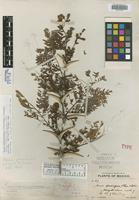
Holotype of Acacia dolichocephala Harms [family LEGUMINOSAE]
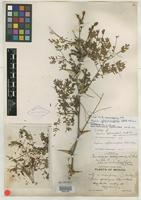
Isotype of Acacia dolichocephala Saff. [family MIMOSACEAE]
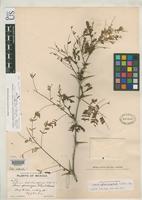
Isotype of Acacia dolichocephala Safford, W.E. 1915 [family FABACEAE]
Acacia dolichocephala Harms
Holotype of Acacia dolichocephala Saff. [family FABACEAE]
Previous
Next

Name

Identification
Acacia dolichocephala Harms [family FABACEAE ]
Related name
  • Acacia dolichocephala

Flora

Entry for ACACIA dolichocephala Harms [family LEGUMINOSAE-MIMOSOIDEAE]
Herbarium
Royal Botanic Gardens, Kew (K)
Collection
Flora of Tropical East Africa
Resource Type
Reference Sources
Entry From
Flora of Tropical East Africa, page 1, (1959) Author: J. P. M. Brenan
Names
ACACIA dolichocephala Harms [family LEGUMINOSAE-MIMOSOIDEAE], in Ann. 1st. Bot. Roma 7: 86 (1897); L.T.A.: 854 (1930). Type: Ethiopia, between Rogono and Gobo Duaya [Galla Sidamo, about 5° 33′ N., 38° 8′ E.], Riva 599 (FI, holo.!)
Information
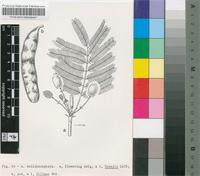
Small tree 4–7.5 m. high. Young branchlets brown or grey-brown, longitudinally ridged and very sparsely puberulous when young, soon glabrous. Stipules spinescent, short, straight, slender, suberect, to about 4 mm. long (on mature shoots), not enlarged or fusiform; no prickles below the stipules. Leaves: petiole (1.5–)2–3 cm. long; rhachis sparsely puberulous, eglandular, 5–9 cm. long; pinnae 6–14 pairs; leaflets 12–35 pairs, 2.5–7.5 mm. long, 0.6–1.5 mm. wide, rounded to subacute at apex, glabrous unless for a few very inconspicuous appressed cilia; lateral nerves invisible; surface of leaflets paler beneath than above. Flowers sessile, in very short spikes or ellipsoid heads 1–1.5 cm. long, on usually long (4–7.5 cm., to 9 cm. in fruit) peduncles which are puberulous and with some sessile glands above. Calyx 0.5–1 mm. long, glabrous. Corolla 3.75–4 mm. long, glabrous, with 4 lobes about 1 mm. long. Stamen-filaments about 7 mm. long, free or irregularly connate (not tubular) near base; anthers about 0.1 mm. across, with a caducous gland. Pods purplish-brown, dehiscent, almost or quite glabrous, oblong, straight or very slightly falcate, ± reticulate-venose, flattened, rounded or acute at apex, stipitate at base, 5.5–10 cm. long, 1.3–1.9 cm. wide. Seeds ± elliptic, somewhat compressed, olive-green, 5.5–6 mm. long, 4–5 mm. wide; central areole small, 2.5 × 1–1.25 mm. Fig. 18.
Range
DISTR. U1, 3; T3
Altitude range
1150–1520 m.
Distribution
TANGANYIKA ?Lushoto District W. Usambara Mts., Kihitu, Gillman 802!UGANDA Karamoja District 1.5 km. N. of Moroto, Jan. 1956, Wilson 219!;UGANDA Mbale District NW. Elgon, Sebei flats, Dec. 1942, Dale U340!
Distribution (external)
; the Sudan (Didinga Mts., Myers 11219!)
Ethiopia
Notes
This remarkable species is difficult to place taxonomically, since it seems to bridge the gap between the capitate- and spicate-flowered groups of acacias. It seems, however, best considered as a relative of A. lahai, on account of the flower characters.

Related Materials

  • Terms and Conditions
  • Privacy Policy
  • Cookie Policy
  • Cookie Settings
  • Accessibility
  • Help
  • Contact Us
  • Facebook
  • Twitter
ITHAKA

JSTOR is part of ITHAKA, a not-for-profit organization helping the academic community use digital technologies to preserve the scholarly record and to advance research and teaching in sustainable ways.

©2000-2026 ITHAKA. All Rights Reserved. JSTOR®, the JSTOR logo, JPASS®, Aluka®, and ITHAKA® are registered trademarks of ITHAKA.

╳