JSTOR Global Plants Home
  • Home
  • Browse
  • About
  • Access
  • Account
    • Saved Items
    • Profile
  • Log in

Global Plants

Skip to Main Content
  • JSTOR Global Plants Home
  • Global Plants

    • Browse
    • About
    • Access
    • Account
      • Saved Items
      • Profile
Log in
  • Browse
  • About
  • Access
  • Account
    • Saved Items
    • Profile
Advanced Search

Compilation
Acacia chrysothrix

9 Images see all

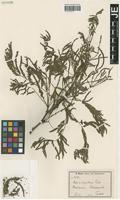
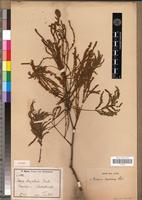
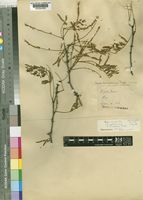
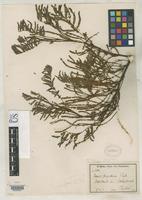
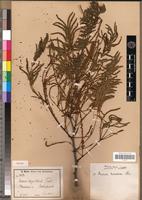
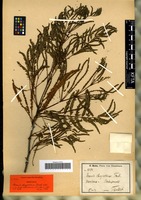
Isotype of Acacia chrysothrix Taub. [family MIMOSACEAE]
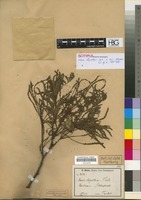
Isotype of Acacia chrysothrix Taub. [family LEGUMINOSAE/FABACEAE]
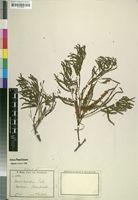
Isotype of Acacia chrysothrix Taub. [family LEGUMINOSAE-MIMOSOIDEAE]
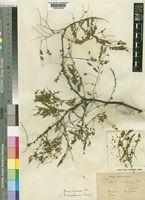
Acacia rovumae Oliv. [family LEGUMINOSAE-MIMOSOIDEAE]
Isotype of Acacia chrysothrix Taub. [family FABACEAE-MIMOSOIDEAE]
Acacia rovumae Oliv. [family LEGUMINOSAE-MIMOSOIDEAE]
Isotype of Acacia chrysothrix Taubert, P.H.W. 1895 [family FABACEAE]
Isotype of Acacia chrysothrix Taub. [family FABACEAE-MIMOSOIDEAE]
Syntype of Acacia chrysothrix Taub. [family MIMOSACEAE]
Previous
Next

Name

Identification
Acacia rovumae Oliv. [family MIMOSACEAE ] (stored under name); Verified by orig., Isotype of Acacia chrysothrix Taub. [family MIMOSACEAE ]
Related name
  • Piptadenia unrecorded
  • Acacia morondavensis
  • Acacia chrysothrix
  • Acacia rovumae

Flora

Entry for ACACIA rovumae Oliv. [family LEGUMINOSAE-MIMOSOIDEAE]
Herbarium
Royal Botanic Gardens, Kew (K)
Collection
Flora of Tropical East Africa
Resource Type
Reference Sources
Entry From
Flora of Tropical East Africa, page 1, (1959) Author: J. P. M. Brenan
Names
ACACIA rovumae Oliv. [family LEGUMINOSAE-MIMOSOIDEAE], F.T.A. 2: 353 (1871); L.T.A.: 831 (1930), pro parte; T.T.C.L.: 331 (1949). Type: Tanganyika or Portuguese East Africa, Ruvuma Bay, Kirk (K, holo.!)
ACACIA chrysothrix Taub. [family LEGUMINOSAE-MIMOSOIDEAE], in P.O.A. C: 194 (1895); L.T.A.: 833 (1930); T.T.C.L.: 331 (1949). Type: Tanganyika, Lushoto District, Mashewa, Holst 8793 (B, holo. †, K. iso.!)
ACACIA morondavensis Drake [family LEGUMINOSAE-MIMOSOIDEAE], Hist. Pl. Madag. 1: 62 (1902). Type: Madagascar, Grevé (P, holo., K, iso.!)
Information
Tree 10–15 m. high, with openly branched flat crown and rough or smooth dark grey or grey-green bark. Young branchlets puberulous or very shortly pubescent with short curved hairs that are yellowish, at least when dry. Stipules not spinescent. Prickles in pairs just below nodes, deep grey to blackish, spreading or pointing a little upwards, usually straight or only slightly curved (see, however, note below), up to 4–6 mm. long. Leaves: petiole with a small gland 0.4–0.7 mm. in diameter; rhachis puberulous, glandular between the top 1–4 pairs of pinnae; pinnae 6–9 pairs; leaflets (9–)13–31 pairs, 4–8 mm. long, 1.5–2(–3.5) mm. wide, oblong, oblique at base and the subacute to obtuse apex, pale glaucescent beneath, puberulous especially beneath, lateral nerves visible when young, becoming obscure. Flowers sessile or nearly so, in spikes 6–10 cm. long on 1.5–3 cm. long peduncles, produced with the leaves; axis puberulous. Calyx 1.5–2 mm. long, puberulous. Corolla 2–3 mm. long, glabrous or slightly puberulous on lobes outside, 5-lobed, exceeding the calyx. Stamen-filaments 4–5 mm. long, free; anthers 0.1 mm. across, with a caducous gland. Ovary glabrous, very shortly stipitate. Pods (Fig. 14/15, p. 52) probably not dehiscent, apparently irregularly breaking up, glabrous, oblong, straight, and smooth or nearly so, dark brown when dry, green when living, rather thick and turgid, rounded or acute at apex, 7–15 cm. long, 1.7–2.5 cm. wide. Seeds oblong-elliptic-lenticular, 10–13 mm. long, 7–9 mm. wide, hard-walled; central areole large, 7–9 × 4.5–5 mm., not impressed.
Range
DISTR. K7; T3, 6, 8
Altitude range
6–700 m.
Distribution
KENYA Tana River District Tana R., Garissa, 4 Feb. 1956, Greenway 8859!;KENYA Lamu District Boni forest, 26 Oct. 1957, Greenway & Rawlins 9432!TANGANYIKA Lushoto District Mkundi, Gillman 749!;TANGANYIKA Tanga District Amboni Kibuguni, 25 Nov. 1936, Greenway 4734!;TANGANYIKA Uzaramo District Dar es Salaam, 26 Apr. 1933, B. D. Burtt 4474!TANGANYIKA Mafia Is., Kipandeni, 26 Sept. 1937, Greenway 5323!
Distribution (external)
; Portuguese East Africa
Madagascar
Notes
The name A. rovumae has been wrongly applied to the inland A. tanganyikensis Brenan. True A. rovumae seems usually to occur on or not far from the coast; in T.T.C.L.: 331, it is d as occurring on margins of Avicennia marina mangroves, associated with Barringtonia racemosa, with its roots in brackish water. It also occurs in riverine forest further from the sea, e.g. at Garissa in Kenya. The appearance of the pods of A. rovumae suggests that they are indehiscent and perhaps water-borne in their dispersal. If this is confirmed, and it requires further observation on the spot, then it is a very unusual feature in any Acacia. A. rovumae is also outstanding among its nearest relatives by usually having its prickles not or scarcely hooked. Plants superficially resembling A. rovumae occur in Portuguese East Africa, especially towards the south, and extend into Natal. They differ in their strongly hooked prickles, the longer hairs on the calyces, the usually broader leaflets and longer bracteoles, and apparently in the habitat. Their affinity seems to be with A. burkei Benth. rather than with A. rovumae. The direction of the prickles of A. rovumae may prove not quite constant: Peter, Excursion no. O. III. 176, from Tanganyika, Tanga Province, Umba Steppe, Kigwasi Hill, 27 Aug. 1915 (EA!) is very close to and in my view a form of A. rovumae, although the prickles are somewhat hooked and the leaflets up to 3.5 mm. wide. The hooking is considerably less than in those plants discussed in the previous paragraph.

Related Materials

  • Terms and Conditions
  • Privacy Policy
  • Cookie Policy
  • Cookie Settings
  • Accessibility
  • Help
  • Contact Us
  • Facebook
  • Twitter
ITHAKA

JSTOR is part of ITHAKA, a not-for-profit organization helping the academic community use digital technologies to preserve the scholarly record and to advance research and teaching in sustainable ways.

©2000-2026 ITHAKA. All Rights Reserved. JSTOR®, the JSTOR logo, JPASS®, Aluka®, and ITHAKA® are registered trademarks of ITHAKA.

╳