JSTOR Global Plants Home
  • Home
  • Browse
  • About
  • Access
  • Account
    • Saved Items
    • Profile
  • Log in

Global Plants

Skip to Main Content
  • JSTOR Global Plants Home
  • Global Plants

    • Browse
    • About
    • Access
    • Account
      • Saved Items
      • Profile
Log in
  • Browse
  • About
  • Access
  • Account
    • Saved Items
    • Profile
Advanced Search

Compilation
Acacia caraniana

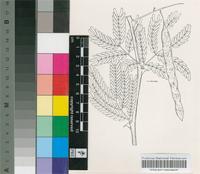
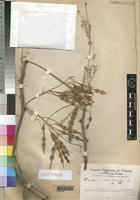
2 Images see all

Holotype of Acacia caraniana Chiov. [family LEGUMINOSAE]
Acacia caraniana Chiov.
Previous
Next

Name

Identification
Acacia caraniana Chiov. [family FABACEAE ]
Related name
  • Acacia caraniana

Flora

Entry for ACACIA caraniana Chiov. [family LEGUMINOSAE-MIMOSOIDEAE]
Herbarium
Royal Botanic Gardens, Kew (K)
Collection
Flora Somalia
Resource Type
Reference Sources
Entry From
Flora Somalia, Vol 1, (1993) Author: by M. Thulin (Acacia by M. Thulin, A. S. Hassan & B. T. Styles) [updated by M. Thulin 2008]
Names
ACACIA caraniana Chiov. [family LEGUMINOSAE-MIMOSOIDEAE], (1929);. type: Somalia, N3, “Behèn”, Puccioni & Stefanini 704 (FT holo.).
Information
Slender tree to 7 m tall, with pale grey or whitish bark; young branchlets glabrous, with long internodes. Prickles solitary or in threes, central prickle somewhat recurved, the laterals, if any, spreading. Leaves: petiole 2–6 mm long, with a large flattened gland 1–2 mm in diam. between the lowest pinna pair; pinnae c. 3 pairs; leaflets 5–13 pairs, 5–13 x 1.25–4 mm, oblong, glaucous, glabrous. Spikes up to 12.5 cm long; flowers not known. Pods straight, dehiscent, 6–15.5 cm long including a 1.8–4 cm long stipe, 0.9–1 cm wide, margins slightly constricted between some of the seeds, finely veined, glabrous.
Range
N2, 3 not known elsewhere.
Altitude range
c. 600–800 m.
Distribution
SOMALIA Hemming 1376; Glover & Gilliland 1047; Hassan 210.
Notes
Calakuyaal (Som.).

Related Materials

  • Terms and Conditions
  • Privacy Policy
  • Cookie Policy
  • Cookie Settings
  • Accessibility
  • Help
  • Contact Us
  • Facebook
  • Twitter
ITHAKA

JSTOR is part of ITHAKA, a not-for-profit organization helping the academic community use digital technologies to preserve the scholarly record and to advance research and teaching in sustainable ways.

©2000-2026 ITHAKA. All Rights Reserved. JSTOR®, the JSTOR logo, JPASS®, Aluka®, and ITHAKA® are registered trademarks of ITHAKA.

╳