JSTOR Global Plants Home
  • Home
  • Browse
  • About
  • Access
  • Account
    • Saved Items
    • Profile
  • Log in

Global Plants

Skip to Main Content
  • JSTOR Global Plants Home
  • Global Plants

    • Browse
    • About
    • Access
    • Account
      • Saved Items
      • Profile
Log in
  • Browse
  • About
  • Access
  • Account
    • Saved Items
    • Profile
Advanced Search

Compilation
Acacia buchananii

2 Images see all

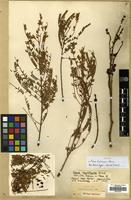
Isotype of Acacia buchananii Harms [family LEGUMINOSAE]
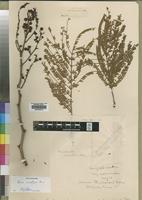
Type of Acacia buchananii Harms [family LEGUMINOSAE]
Previous
Next

Name

Identification
Acacia macrothyrsa Harms [family LEGUMINOSAE ] (stored under name); Verified by Brenan,J.P.M., Acacia buchananii Harms [family LEGUMINOSAE ]
Related name
  • Acacia macrothyrsa
  • Acacia buchananii

Flora

Entry for ACACIA macrothyrsa Harms [family LEGUMINOSAE-MIMOSOIDEAE]
Herbarium
Royal Botanic Gardens, Kew (K)
Collection
Flora of Tropical East Africa
Resource Type
Reference Sources
Entry From
Flora of Tropical East Africa, page 1, (1959) Author: J. P. M. Brenan
Names
ACACIA macrothyrsa Harms [family LEGUMINOSAE-MIMOSOIDEAE], in E.J. 28: 396 (1900); L.T.A.: 851 (1930); T.S.K.: 68 (1936); Bogdan in Nature in E. Afr., ser. 2, No. 1: 12 (1949); T.T.C.L.: 336 (1949); Gilb. & Bout. in F.C.B. 3: 157 (1952); I.T.U., ed. 2: 210, fig. 48a (1952); Coates Palgrave, Trees Centr. Afr.: 246–9 (1956); F.W.T.A., ed. 2, 1: 501 (1958). Type: Tanganyika, Iringa, Goetze 653 (B, holo. †, K, iso.!)
ACACIA buchananii Harms [family LEGUMINOSAE-MIMOSOIDEAE], in E.J. 30: 76 (1901); L.T.A.: 852 (1930); T.S.K., ed. 2: 68 (1936). Type: Nyasaland, Buchanan 256 (B, holo. †)
ACACIA prorsispinula Stapf [family LEGUMINOSAE-MIMOSOIDEAE], in J.L.S. 37: 513 (1906); Battiscombe, Cat. Trees Kenya Col.: 54 (1926). Types: Uganda, Acholi District, Dawe 856 (K, syn.!); Kenya, Nandi country, Sibu, Evan James (K, syn.!)
Information
Small or medium tree 2–12(–15 fide F.C.B.) m. high; bark rough, fissured, grey (or brown fide F.C.B.). Stipules spinescent, stout, brown, glossy, compressed, up to 1.6(–2.8) cm. long. Leaves large, 10–20 cm. wide; rhachis (with petiole) 10–37 cm. long; pinnae mostly 9–16(–27) pairs; leaflets 12–40 pairs (in our area, elsewhere up to 70 pairs), (4–)6–11(–20) mm. long, 1–3.5(–6) mm. wide, rather stiff and glossy above, glabrous (or ciliolate on margins, but apparently not in our area). Flowers orange or yellow, strongly and sweetly scented, in heads 8–13 mm. in diameter, in a panicle up to about 45 cm. long and 30 cm. wide, whose branches (and usually also main axis) are leafless. Pods (Fig. 15/30, p. 66) coriaceous, glossy, glabrous, oblong, straight, blackish, blackish-purple or brown, 8–20 cm. long and 1.5–2.5 cm. wide. Seeds deep brown, smooth, elliptic to subcircular, compressed, 8–10 mm. long, 7–8 mm. wide; areole 4–5 mm. long, 3–3.5 mm. wide.
Range
DISTR. U1–4; K2, 3, 5; T1, 2, 4–8
Altitude range
600–1830 m.
Distribution
KENYA Turkana District Kacheliba escarpment, May 1932, Napier 2008!KENYA Uasin Gishu District Kipkarren, Aug. 1934, Dale 3287!KENYA S. Kavirondo District Gori R., Suna, Sept. 1933, Napier 5296!TANGANYIKA Mwanza District Geita, Jan. 1949, Watkins 183 in F.H. 2621!;TANGANYIKA Kahama District Ushirombo, 23 Feb. 1937, B. D. Burtt 5458!TANGANYIKA Morogoro, 3 Sept. 1930, Greenway 2503! & Apr. 1951, Eggeling 6070!UGANDA Lango District Lira, July 1937, Eggeling 3353!;UGANDA Teso District Serere, July 1932, Chandler 797!;UGANDA Mbale District Siroko valley, 10 Nov. 1933, Tothill 2248!
Distribution (external)
; Ghana
Nigeria
Belgian Congo
the Sudan
Portuguese East Africa
Nyasaland
Northern Rhodesia
Southern Rhodesia
Notes
VARIATION. The young branchlets, inflorescence-axes, leaf-rhachides etc. are usually glabrous in East Africa. Elsewhere they may be puberulous, as in all West African material (including the type of A. dalzielii Craib) and in some specimens from the Belgian Congo, Portuguese East Africa and Northern Rhodesia. Similar forms apparently occur rarely with us: Busse 868 (EA!), without precise locality, is an example. The leaflets vary much in size and number, but the variation does not seem to follow any clear pattern of geography. The large leaves coupled with the robust panicles of yellow or orange flower-heads make A. macrothyrsa easy to recognize.

Related Materials

  • Terms and Conditions
  • Privacy Policy
  • Cookie Policy
  • Cookie Settings
  • Accessibility
  • Help
  • Contact Us
  • Facebook
  • Twitter
ITHAKA

JSTOR is part of ITHAKA, a not-for-profit organization helping the academic community use digital technologies to preserve the scholarly record and to advance research and teaching in sustainable ways.

©2000-2026 ITHAKA. All Rights Reserved. JSTOR®, the JSTOR logo, JPASS®, Aluka®, and ITHAKA® are registered trademarks of ITHAKA.

╳