JSTOR Global Plants Home
  • Home
  • Browse
  • About
  • Access
  • Account
    • Saved Items
    • Profile
  • Log in

Global Plants

Skip to Main Content
  • JSTOR Global Plants Home
  • Global Plants

    • Browse
    • About
    • Access
    • Account
      • Saved Items
      • Profile
Log in
  • Browse
  • About
  • Access
  • Account
    • Saved Items
    • Profile
Advanced Search

Compilation
Acacia ancistroclada

4 Images see all

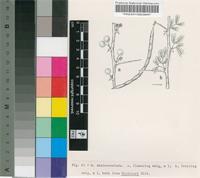
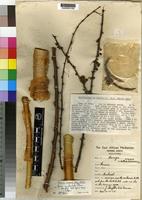
Isotype of Acacia ancistroclada Brenan [family LEGUMINOSAE]
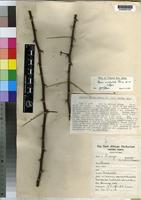
Acacia ancistroclada Brenan
Filed as Acacia ancistroclada Brenan [family MIMOSACEAE]
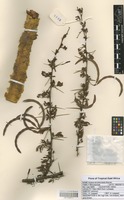
Isotype of Acacia ancistroclada Brenan [family LEGUMINOSAE]
Previous
Next

Name

Identification
Acacia ancistroclada Brenan [family FABACEAE ]
Related name
  • Acacia ancistroclada

Flora

Entry for ACACIA ancistroclada Brenan [family LEGUMINOSAE-MIMOSOIDEAE]
Herbarium
Royal Botanic Gardens, Kew (K)
Collection
Flora of Tropical East Africa
Resource Type
Reference Sources
Entry From
Flora of Tropical East Africa, page 1, (1959) Author: J. P. M. Brenan
Names
ACACIA ancistroclada Brenan [family LEGUMINOSAE-MIMOSOIDEAE], in K.B. 1958: 412 (1959). Type: Kenya, Masai District, Amboseli, Knight & Thomas H 344/58 (K, holo.!)
Information
Shrub or small tree up to 7.5 m. high; trunk usually branching a short distance above ground; bark peeling off in large papery pieces, reddish- or greenish-yellow. Young branchlets glabrous except for minute sessile reddish glands which soon disappear, purplish at first, soon grey- to red-brown; bark of twigs not flaking off. Stipules spinescent, mostly short, 2.5–8 mm. long and downwardly hooked, but some (especially on older twigs) elongate, 2–5.8 cm. long and nearly straight; “ant-galls” and other prickles absent. Leaves: pinnae 1–2 pairs, a small gland between the top (or only) pair; rhachis 0–8 mm. long; leaflets 3–9 pairs, mostly 2–5 mm. long, 0.75–1.5 mm. wide, glabrous or margins very sparsely and inconspicuously ciliolate; lateral nerves invisible beneath. Flowers bright yellow, in axillary pedunculate heads; involucel about ⅓–⅔-way up the peduncle. Calyx (except for puberulous lobes) and corolla glabrous outside. Pods dehiscent, linear, falcate, slightly constricted between the seeds, finely longitudinally or somewhat obliquely veined, glabrous, 6–15 cm. long, 0.5–0.6 cm. wide. Seeds olive or olive-brown, smooth, elliptic or elliptic-oblong, 6–7 mm. long, 3–3.5 mm. wide; areole 4.5–5 mm. long, 1.5–2 mm. wide.
Range
DISTR. K6,?7; T2,?3 not known elsewhere
Altitude range
about 820–1310 m.
Distribution
KENYA Masai District Ngom watercourse near Selengai, 4 Nov. 1948, Vesey-FitzGerald 214! & Amboseli, Apr. 1958, D. B. Thomas 628!KENYA Masai/Teita District Tsavo National Park, near Nzima Springs, 3 May 1952, Trapnell 2213!TANGANYIKA Masai District Naberera, 9 Oct. 1934, Hornby M1106/No. 6! & between Mgera and Kibaya, B. D. Burtt 4934! & between Longido and Namanga, 13 Nov. 1958, Trapnell 2431!TANGANYIKA ?Handeni District E. of Loskitu Mt., 18 Sept. 1933, B. D. Burtt 4916!
Notes
The bright yellow flowers and pods are similar to those of A. seyal, while the spines are reminiscent of those of A. tortilis. The papery-peeling bark is different from both.

Related Materials

  • Terms and Conditions
  • Privacy Policy
  • Cookie Policy
  • Cookie Settings
  • Accessibility
  • Help
  • Contact Us
  • Facebook
  • Twitter
ITHAKA

JSTOR is part of ITHAKA, a not-for-profit organization helping the academic community use digital technologies to preserve the scholarly record and to advance research and teaching in sustainable ways.

©2000-2026 ITHAKA. All Rights Reserved. JSTOR®, the JSTOR logo, JPASS®, Aluka®, and ITHAKA® are registered trademarks of ITHAKA.

╳