JSTOR Global Plants Home
  • Home
  • Browse
  • About
  • Access
  • Account
    • Saved Items
    • Profile
  • Log in

Global Plants

Skip to Main Content
  • JSTOR Global Plants Home
  • Global Plants

    • Browse
    • About
    • Access
    • Account
      • Saved Items
      • Profile
Log in
  • Browse
  • About
  • Access
  • Account
    • Saved Items
    • Profile
Advanced Search

Compilation
Abutilon rehmannii

5 Images see all

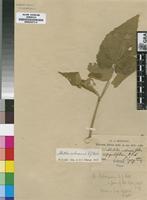
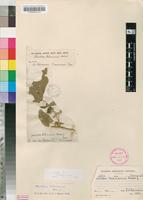
Type of Abutilon rehmannii Baker f. [family MALVACEAE]
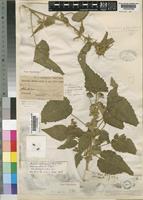
Isosyntype of Abutilon rehmannii Baker f. [family MALVACEAE]
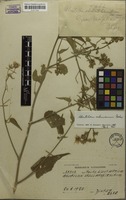
Filed as Abutilon rehmannii Baker f. [family MALVACEAE]
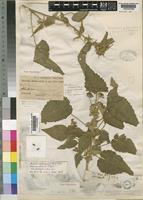
Isotype of Abutilon rehmannii Baker f. [family MALVACEAE]
Type of Abutilon rehmannii Baker f. [family MALVACEAE]
Previous
Next

Name

Identification
Abutilon rehmannii Baker f. [family MALVACEAE ] (stored under name); Verified by Not on sheet,
Related name
  • Abutilon indicum
  • Abutilon rehmannii

Flora

Entry for Abutilon rehmannii Bak. f. [family MALVACEAE]
Herbarium
Royal Botanic Gardens, Kew (K)
Collection
Flora Zambesiaca
Resource Type
Reference Sources
Entry From
FZ, Vol 1, Part 2, page 420, (1961) Author: A. W. Exell
Names
Abutilon seineri Ulbr. [family MALVACEAE], op. cit. 48: 369 (1912); op. cit. 51: 16 (1913). Type from SW. Africa.
Abutilon rehmannii Bak. f. [family MALVACEAE], in Journ. of Bot. 31: 217 (1893). — Ulbr. in Engl., Bot. Jahrb. 51: 30 (1913). — Burtt Davy, F.P.F.T. 2: 275 (1932). TAB. 93 fig. 14. Type from the Transvaal.
Information
Soft-wooded shrub (probably annual) up to 1–5 m. tall, erect, usually not much branched, with a usually yellowish but occasionally dull-greyish-green dense short stellate-subvelutinous indumentum; stems terete or sometimes ± angular when very young, sulcate or ribbed, sometimes pilose towards the base. Leaf-lamina 2–10 (16) × 1–7 (9) cm., usually (at least those of the younger leaves) cordate-triangular, up to twice as long as broad (relatively broader and ± suborbicular-cordate in the older leaves), apex attenuate to long-acuminate or sometimes caudate (acute to shortly acuminate in the older leaves), margin irregularly or doubly serrate-dentate, sometimes shallowly crenate or serrate but rarely subentire (if so, youngest leaves distinctly serrate), upper surface rather dark green, minutely and scabridly stellate-pubescent, rarely somewhat velutinous, lower surface paler, somewhat glaucous, usually softly velutinous, rarely somewhat scabridly tomentose; petiole terete or sometimes sulcate, shorter than to longer than the lamina; stipules c. 5 mm. long, linear-lanceolate, velvety, usually very early caducous. Flowers yellow or pale yellow, solitary, mainly in upper axils of terminal and side-branches, often forming pseudo-racemes or pseudo-panicles because the upper leaves are usually small; pedicels usually under 3 cm. long (in fruit under 5 cm. long), articulated and usually more or less geniculate at or above the middle. Calyx 6–8 mm. long, cupuliform, lobed to about the middle; lobes ovate, acute to acuminate, often more or less apiculate or with a short narrow acumen, ciliate and distinctly mid-veined. Petals c. 13 mm. long, glabrous except for the ciliate narrow base. Staminal tube glabrous. Fruit c. 10 × 12–14 mm., subcylindrical-semiglobose, concave and umbilicate at the apex. Mericarps 10–20 (often 12–16), 7·5–9 × 4–5 mm., 3-seeded, rounded at the back and at the somewhat narrowed base, convex to obliquely truncate at the apex, toothed to shortly awned at the dorsal apical angle, 7·5–9 mm. long and 4–5 mm. broad measured across the large ventral tooth, the back and apical parts of lateral faces grey-velutinous. Seeds c. 2 × 1·5 mm., finely verruculose.
Habitat
On alkaline soils such as dolomite hillsides, limestone flats and salt pans
Altitude range
at 700–1200 m.
1200
700
Distribution
Zimbabwe S Beitbridge, fl. & fr. 14.v.1959, Drummond 6145 (SRGH).
Distribution (external)
SW. Africa
Griqualand-W.
northern Transvaal
Notes
This is the first record outside S. Africa.

Related Materials

  • Terms and Conditions
  • Privacy Policy
  • Cookie Policy
  • Cookie Settings
  • Accessibility
  • Help
  • Contact Us
  • Facebook
  • Twitter
ITHAKA

JSTOR is part of ITHAKA, a not-for-profit organization helping the academic community use digital technologies to preserve the scholarly record and to advance research and teaching in sustainable ways.

©2000-2026 ITHAKA. All Rights Reserved. JSTOR®, the JSTOR logo, JPASS®, Aluka®, and ITHAKA® are registered trademarks of ITHAKA.

╳