Global Plants
Skip to Main Content
Global Plants
Browse
About
Access
Account
Saved Items
Profile
Log in
Browse
About
Access
Account
Saved Items
Profile
Filter search by
Names
Names with Synonyms
Places
People
Free Text
Search
Search
Advanced Search
Compilation
Abronia alpina
7 Images
see all
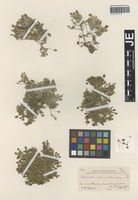
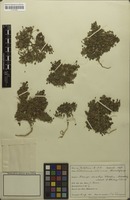
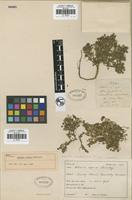
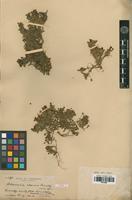
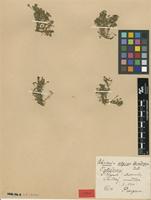
Syntype of Abronia alpina Brandegee [family NYCTAGINACEAE]
Syntype of Abronia alpina Brandegee [family NYCTAGINACEAE]
Filed as Abronia alpina Brandegee, T.S. 1899 [family NYCTAGINACEAE]
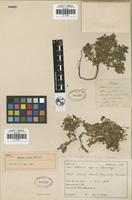
Isosyntype of Abronia alpina Brandegee [family NYCTAGINACEAE]
Syntype of Abronia alpina Brandegee [family NYCTAGINACEAE]
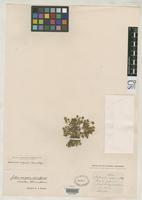
Type of Abronia alpina Brandegee [family NYCTAGINACEAE]
Type of Abronia alpina Brandegee [family NYCTAGINACEAE]
Previous
Next
Name
Identification
Abronia alpina
Brandegee
[family
NYCTAGINACEAE
] (stored under name); Verified by Not on sheet,
Related name
Abronia alpina
Flora
Entry for Abronia alpina Brandegee [family NYCTAGINACEAE]
Herbarium
Flora of North America (FNA)
Collection
Flora of North America
Resource Type
Reference Sources
Entry From
Flora of North America, Vol 4,
Names
Abronia alpina
Brandegee
[family
NYCTAGINACEAE
], Bot. Gaz., 27: 456. 1899
Treatment Author(s)
Leo A. Galloway
Information
Plants perennial. Stems prostrate, well branched, forming small mats, elongate, viscid-pubescent. Leaves: petiole 1–2 cm; blade orbiculate-oval, 0.4–1 × 0.3–0.5 cm, margins entire, plane, surfaces glandular-pubescent. Inflorescences: peduncle shorter than subtending petiole; bracts lanceolate to ovate, 2–3 × 1–2 mm, papery, glandular-pubescent; flowers 1–5. Perianth: tube whitish, 10–18 mm, limb white to lavender-pink, 6–8 mm diam. Fruits narrowly obovate in profile, 3–4 × 2–3 mm, thin, coriaceous, apex broadly conic; wings absent or 5-angled.
Conservation Status
of conservation concern;
Phenology
jun-aug (summer)
Altitude range
2600–3000 m;
Distribution
USA Calif.
Related Materials
╳