JSTOR Global Plants Home
  • Home
  • Browse
  • About
  • Access
  • Account
    • Saved Items
    • Profile
  • Log in

Global Plants

Skip to Main Content
  • JSTOR Global Plants Home
  • Global Plants

    • Browse
    • About
    • Access
    • Account
      • Saved Items
      • Profile
Log in
  • Browse
  • About
  • Access
  • Account
    • Saved Items
    • Profile
Advanced Search

Compilation
Abies grandis

11 Images see all

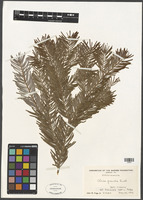
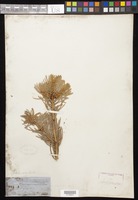
Holotype of Abies grandis var. idahoensis Silba [family PINACEAE]
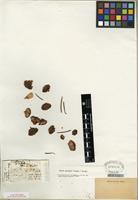
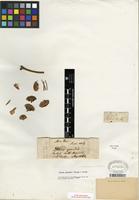
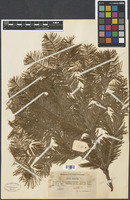
Type of Abies grandis (Douglas ex D. Don) Lindl. [family PINACEAE]
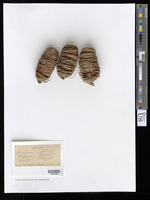
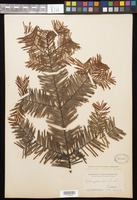
Abies grandis (Douglas ex D. Don) Lindl. [family PINACEAE]
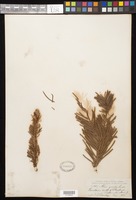
Filed as Abies grandis (Douglas ex D. Don) Lindl. [family PINACEAE]
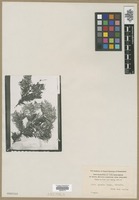
Abies grandis (Douglas ex D. Don) Lindl. [family PINACEAE]
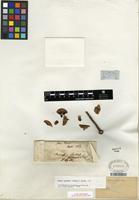
Type of Abies grandis (Douglas ex D. Don) Lindl. [family PINACEAE]
Abies grandis (Douglas ex D. Don) Lindl. [family PINACEAE]
Filed as Abies grandis (Douglas ex D.Don) Lindl. [family PINACEAE]
Previous
Next

Name

Identification
Abies grandis (Douglas ex D. Don) Lindl. [family PINACEAE ] (stored under name); Verified by Elbert L. Little, Jr.,, Abies grandis Not on sheet [family PINACEAE ] Verified by Not on sheet, Abies grandis Not on sheet [family PINACEAE ] Verified by Not on sheet,
Related name
  • Abies grandis
Common name
  • Grand fir, Flora of North America Vol. 2
  • sapin grandissime, Flora of North America Vol. 2
  • lowland white fir, Flora of North America Vol. 2

Flora

Entry for Abies grandis (Douglas ex D. Don in Lambert) Lindley [family PINACEAE]
Herbarium
Flora of North America (FNA)
Collection
Flora of North America
Resource Type
Reference Sources
Entry From
Flora of North America, Vol 2,
Names
Abies grandis (Douglas ex D. Don in Lambert) Lindley [family PINACEAE], Penny Cycl., 1: 30. 1833
Pinus grandis Douglas ex D. Don [family PINACEAE], in Lambert, Descr. Pinus [ed., 3] 2: unnumbered page between 144 and 145. 1832
Treatment Author(s)
Richard S. Hunt
Information
Trees to 75m; trunk to 1.55m diam.; crown conic, in age round topped or straggly. Bark gray, thin to thick, with age becoming brown, often with reddish periderm visible in furrows bounded by hard flat ridges. Branches spreading, drooping; twigs mostly opposite, light brown, pubescent. Buds exposed, purple, green, or brown, globose, small to moderately large, resinous, apex round; basal scales short, broad, equilaterally triangular, slightly pubescent or glabrous, resinous, margins entire, apex pointed or slightly rounded. Leaves (1--)2--6cm ´ l.5--2.5mm, 2-ranked, flexible, with leaves at center of branch segment longer than those near ends, or with distinct long and short leaves intermixed, proximal portion ± straight, leaves higher in tree spiraled and 1-ranked; cross section flat, grooved adaxially; odor pungent, faintly turpentinelike; abaxial surface with 5--7 stomatal rows on each side of midrib; adaxial surface light to dark lustrous green, lacking stomates or with a few stomates toward leaf apex; apex distinctly notched (rarely rounded); resin canals small, near margins and abaxial epidermal layer. Pollen cones at pollination bluish red, purple, orange, yellow, or ± green. Seed cones cylindric, (5--)6--7(--12) ´ 3--3.5cm, light green, dark blue, deep purple, or gray, sessile, apex rounded; scales ca. 2--2.5 ´ 2--2.5cm, densely pubescent; bracts included. Seeds 6--8 ´ 3--4mm, body tan; wing about 1.5 times as long as body, tan with rosy tinge; cotyledons (4--)5--6(--7). 2 n =24.
Altitude range
0--1500m
Distribution
USA Calif.USA IdahoUSA Mont.USA Oreg.USA Wash.Canada B.C.
Discussion
Abies grandis is rather uniform morphologically and chemically. At its southern limit in southern Oregon and northern California, it introgresses with A . concolor (J.L. Hamrick and W.J. Libby 1972; E.Zavarin et al. 1975; D.B. Zobel 1973). In the area of introgression, specimens in lower, wetter habitats are best assigned to A . grandis ; those in higher, drier habitats, to A . concolor . Others are best considered to be A . concolor ´ grandis .

Related Materials

  • Terms and Conditions
  • Privacy Policy
  • Cookie Policy
  • Cookie Settings
  • Accessibility
  • Help
  • Contact Us
  • Facebook
  • Twitter
ITHAKA

JSTOR is part of ITHAKA, a not-for-profit organization helping the academic community use digital technologies to preserve the scholarly record and to advance research and teaching in sustainable ways.

©2000-2026 ITHAKA. All Rights Reserved. JSTOR®, the JSTOR logo, JPASS®, Aluka®, and ITHAKA® are registered trademarks of ITHAKA.

╳