JSTOR Global Plants Home
  • Home
  • Browse
  • About
  • Access
  • Account
    • Saved Items
    • Profile
  • Log in

Global Plants

Skip to Main Content
  • JSTOR Global Plants Home
  • Global Plants

    • Browse
    • About
    • Access
    • Account
      • Saved Items
      • Profile
Log in
  • Browse
  • About
  • Access
  • Account
    • Saved Items
    • Profile
Advanced Search

Compilation
Athyrium scandicinum

8 Images see all

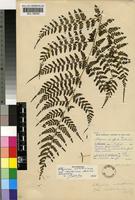
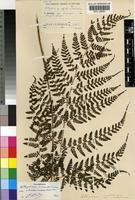
Isosyntype of Asplenium vexans Underwood [family ASPLENIACEAE]
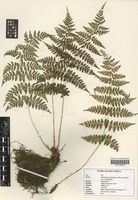
Filed as Athyrium scandicinum (Willd.) C. Presl [family WOODSIACEAE]
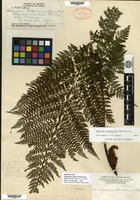
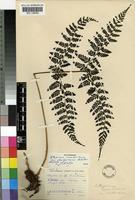
Isotype of Athyrium scandicinum Schelpe var. rhodesianum [family WOODSIACEAE]
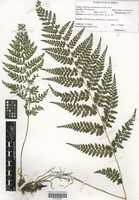
Holotype of Athyrium scandicinum (Willd.) C.Presl var. rhodesianum Schelpe [family WOODSIACEAE]
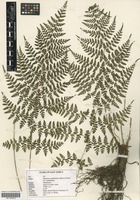
Filed as Athyrium scandicinum (Willd.) C. Presl [family WOODSIACEAE]
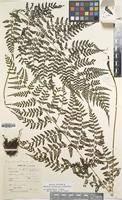
Holotype of Athyrium scandicinum (Willd.) C.Presl var. rhodesianum Schelpe [family WOODSIACEAE]
Filed as Athyrium scandicinum (Willd.) C. Presl [family WOODSIACEAE]
Holotype of Athyrium scandicinum (Willd.) C.Presl var. rhodesianum Schelpe [family WOODSIACEAE]
Previous
Next

Name

Identification
Isotype of Athyrium scandicinum Schelpe [family WOODSIACEAE ] (stored under name);
Related name
  • Athyrium scandicinum

Flora

Entry for ATHYRIUM scandicinum (Willd.) Presl [family WOODSIACEAE]
Herbarium
Royal Botanic Gardens, Kew (K)
Collection
Flora of Tropical East Africa
Resource Type
Reference Sources
Entry From
Flora of Tropical East Africa, page 1, (2003) Author: BERNARD VERDCOURT
Names
ATHYRIUM scandicinum (Willd.) Presl [family WOODSIACEAE], Tent. Pterid.: 98 (1836) & in Abh. Königl. Böhm. Ges. Wiss. ser. 4, 5: 98 (1837); Tardieu, Fl. Madag. 5 (1): 267, fig. 36/9–11 (1958) (as ‘ scandinicum’). Type: Réunion, Bory de St. Vincent s.n. (B-W 19832, holo., microfiche!)
Aspidium scandicinum Willd. [family DRYOPTERIDACEAE], Sp. Pl. ed. 4, 5: 285 (1810)
Information
Rhizome erect, ± fleshy, 5–8 mm wide but the branches forming a caudex up to 2.5 cm wide; rhizome scales brown, lanceolate-attenuate, 7–10 mm long, 1–2 mm wide. Fronds tufted, 0.15–2 m tall; stipe usually reddish or pink when living, 7.5–55 cm tall, glabrous save for scales at base but young stipes of undeveloped fronds often scaly throughout. Lamina ovate-lanceolate in outline, 20–50 cm long, 10–34 cm wide, acute to acuminate-attenuate at the apex, 2–3-pinnate with ± 18 pairs of pinnae, the basal pair somewhat reduced; pinnae lanceolate in outline, acuminate to caudate at the apex, 1.5–20 cm long, 0.8–8 cm wide, with 10–20 pairs of pinnules; pinnules oblong-ovate to oblong-lanceolate, 1–5 cm long, 0.3–2 cm wide, sometimes cut to the base into secondary pinnules, the lamina then distinctly 3-pinnate but often only 2-pinnate-pinnatifid, the pinnules crenate to divided into narrow lobes; pinnule-lobes or secondary pinnules 3–10 mm long, 1–7 mm wide; soft spinules up to 1 mm long often present where wings of rhachis or rhachilla are interrupted by pinnule-bases and some short indumentum sometimes present. Sori oblong, curved or J-shaped, up to 2 mm long, 5–7 per pinnule-lobe or secondary pinnule; indusium shortly to deeply fimbriate or subentire (fide Schelpe).
Notes
I agree with Pichi Sermolli that African material is certainly not identical with typical material from Réunion which has much more delicately cut fronds with the pinnule-lobes much smaller. I have therefore divided it into two subspecies, admittedly not too well defined.

Related Materials

  • Terms and Conditions
  • Privacy Policy
  • Cookie Policy
  • Cookie Settings
  • Accessibility
  • Help
  • Contact Us
  • Facebook
  • Twitter
ITHAKA

JSTOR is part of ITHAKA, a not-for-profit organization helping the academic community use digital technologies to preserve the scholarly record and to advance research and teaching in sustainable ways.

©2000-2026 ITHAKA. All Rights Reserved. JSTOR®, the JSTOR logo, JPASS®, Aluka®, and ITHAKA® are registered trademarks of ITHAKA.

╳