JSTOR Global Plants Home
  • Home
  • Browse
  • About
  • Access
  • Account
    • Saved Items
    • Profile
  • Log in

Global Plants

Skip to Main Content
  • JSTOR Global Plants Home
  • Global Plants

    • Browse
    • About
    • Access
    • Account
      • Saved Items
      • Profile
Log in
  • Browse
  • About
  • Access
  • Account
    • Saved Items
    • Profile
Advanced Search

Compilation
Alchemilla kiwuensis

10 Images see all

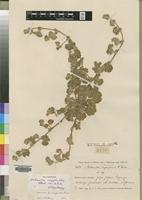
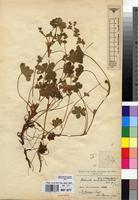
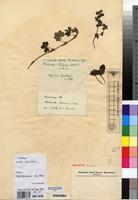
Isotype of Alchemilla inyangensis Weim. [family ROSACEAE]
Filed as Alchemilla kiwuensis Engl. [family ROSACEAE]
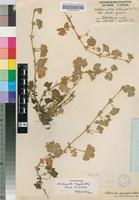
Type of Alchemilla kiwuensis Engl. [family ROSACEAE]
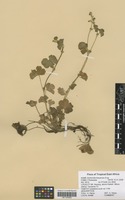
Syntype of Alchemilla mukuluensis De Wild. [family ROSACEAE]
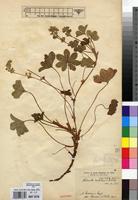
Isotype of Alchemilla kiwuensis Engl. subsp. rhodesica Hauman & Balle [family ROSACEAE]
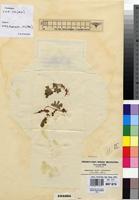
Syntype of Alchemilla mukuluensis De Wild. [family ROSACEAE]
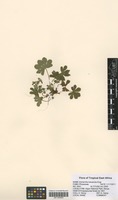
Filed as Alchemilla kiwuensis Engl. [family ROSACEAE]
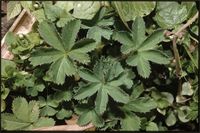
Alchemilla kiwuensis Engl. from Cameroon
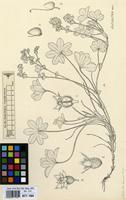
Isotype of Alchemilla adolfi-friedericii Engl. [family ROSACEAE]
Previous
Next

Name

Identification
Alchemilla kiwuensis Engl. [family ROSACEAE ]
Related name
  • Alchemilla kiwuensis

Flora

Entry for ALCHEMILLA kiwuensis Engl. [family ROSACEAE]
Herbarium
Royal Botanic Gardens, Kew (K)
Collection
Flora of Tropical East Africa
Resource Type
Reference Sources
Entry From
Flora of Tropical East Africa, page 1, (1960) Author: R. A. GRAHAM
Names
ALCHEMILLA kiwuensis Engl. [family ROSACEAE], in Z.A.E.: 225, t. 21 F–G (1911); Hauman & Balle in Rev. Zool. Bot. Afr. 24: 308 (1934); F.P.N.A. 1: 244, t. 23 (1948); F.C.B. 3: 6, t. 1 (1952); Hedb. in Symb. Bot. Ups. 15 (1): 102 (1957); F.W.T.A., ed. 2, 1: 424 (1958). Type: Ruanda-Urundi, Lake Kalago, Mildbraed 1538 (B, holo.†, BR, fragment, ? holo.!)
ALCHEMILLA adolphi-friedericii Engl. [family ROSACEAE], in Z.A.E.: 225, t. 21 A–E (1911). Type: Ruanda-Urundi, Rukarara, Mildbraed 889 (B, holo. †)
ALCHEMILLA kiwuensis Engl. var. kandtiana [family ROSACEAE], in Z.A.E.: 225 (1911). Type: Ruanda-Urundi, Mt. Niansa, Kandt 123 (B, holo. †)
Information
A low herb usually with basal rosettes with or without creeping, ± slender runners covered with long spreading white hairs, often rooting and developing secondary rosettes at intervals. Stipules commonly 1–2.5 cm. long, united below, free and foliaceous above, the dorsal and ventral sutures being nearly of equal length, thus the aperture scarcely oblique. Rosette-leaves petiolate, rounded to reniform in outline, 5–7(–9)-lobed, 1.8–3(–4.5) cm. long, 2.5–4.5(–7) cm. wide, variably hairy on both surfaces with whitish hairs; lobes usually reaching beyond the centre of the lamina, oblong-elliptic to obovate, terminally rounded, the teeth up to 2 mm. deep and continuing down the sides of the lobes which are entire only towards the base; petiole 3–12 cm. long. Stem-leaves smaller, usually 5-lobed, 1–1.5 cm. long, 1.5–2.5 cm. wide; petiole 1.5–2.5 cm. long. Flowers in 1–4-flowered cymose clusters or in shortly branched panicles; the inflorescence rarely of only 1–2 flowers hidden by the stipules as in A. cryptantha; pedicels short, up to 1 mm. long, glabrous or hairy. Calyx-tube ± 2 mm. long, covered with long, spreading white hairs; calyx-lobes 0.75 mm. long, ovate-triangular; epicalyx-lobes exceeding the calyx-lobes, 1–1.25 mm. long, broadly ovate. Achenes 5–8.
Range
DISTR. U1–3; K3, 4; T2–4, 6–8
Altitude range
1250–3000 m.
Distribution
KENYA Ravine District Eldama Ravine, Whyte!KENYA Aberdare Mts., Kinangop, Sept. 1951, Verdcourt 601!KENYA Mt. Kenya, western side, Fries 613A!, 613B!TANGANYIKA Moshi District Lyamungu, Oct. 1943, Wallace 1099B!;TANGANYIKA Ufipa District Malonje, Apr. 1950, Buttock 2780!;TANGANYIKA Rungwe District Kiwira R., Lower Fishing Camp, Oct. 1947, Greenway & Brenan 8264!UGANDA Karamoja District Mt. Debasien, Jan. 1936, Eggeling 2698!;UGANDA Kigezi District Behungi, Dec. 1933, A. S. Thomas 1159!UGANDA Ruwenzori, Aug. 1938, Purseglove 298!
Distribution (external)
; Fernando Po
British Cameroons
the Belgian Congo
Southern Rhodesia
Notes
This species is distinguished from A. cryptantha by the longer, laterally more dentate leaf-lobes, by the tendency to produce persistent primary and secondary rosettes, by the stipules being subequally sutured, and by the stronger, cymose or paniculate inflorescences. There is also an apparent tendency for the urceoles of A. cryptantha to be glabrous, whereas in A. kiwuensis they are covered with long hairs. Conversely the pedicels of the latter are sometimes glabrous, a feature not noticed in A. cryptantha. But none of these characters provides a clear distinction, there being many intermediates, due perhaps either to overlapping of the limits of variation of each or to interspecific hybridity. Bullock 2780 approaches subsp. rhodesica Hauman & Balle (Rev. Zool. Bot. Afr. 24: 342 (1934)) in having some densely hairy petioles and subglabrous flowers with calyx-lobes nearly equalling the epicalyx, but examples corresponding exactly to the description of this subspecies, which does not seem to be very clearly distinguishable, have not yet been found in our area.

Related Materials

  • Terms and Conditions
  • Privacy Policy
  • Cookie Policy
  • Cookie Settings
  • Accessibility
  • Help
  • Contact Us
  • Facebook
  • Twitter
ITHAKA

JSTOR is part of ITHAKA, a not-for-profit organization helping the academic community use digital technologies to preserve the scholarly record and to advance research and teaching in sustainable ways.

©2000-2026 ITHAKA. All Rights Reserved. JSTOR®, the JSTOR logo, JPASS®, Aluka®, and ITHAKA® are registered trademarks of ITHAKA.

╳