JSTOR Global Plants Home
  • Home
  • Browse
  • About
  • Access
  • Account
    • Saved Items
    • Profile
  • Log in

Global Plants

Skip to Main Content
  • JSTOR Global Plants Home
  • Global Plants

    • Browse
    • About
    • Access
    • Account
      • Saved Items
      • Profile
Log in
  • Browse
  • About
  • Access
  • Account
    • Saved Items
    • Profile
Advanced Search

Compilation
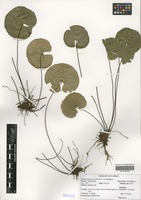
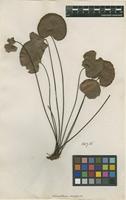
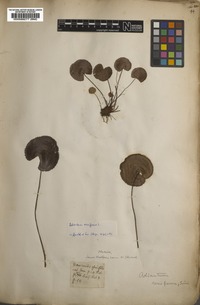
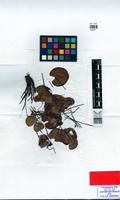
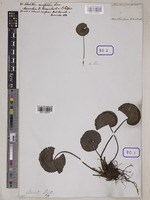
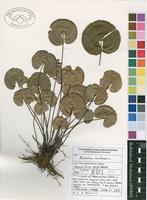
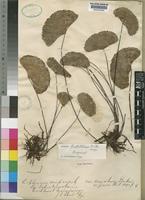
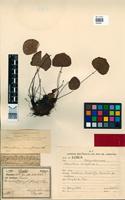
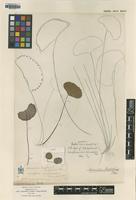
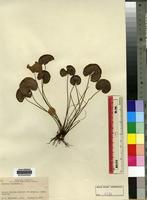
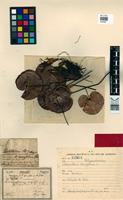
Adiantum reniforme

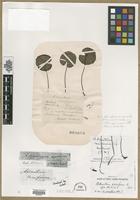
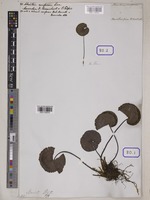
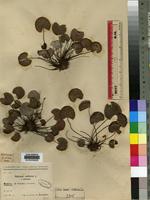
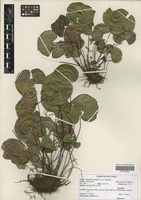
15 Images see all

Filed as Adiantum reniforme var. asarifolium Willd. [family ADIANTACEAE]
Adiantum reniforme L. [family ADIANTACEAE]
[family ]
Filed as Adiantum reniforme L. variety reniforme [family ADIANTACEAE]
Filed as Adiantum reniforme L. [family PTERIDACEAE]
Adiantum reniforme L. [family PTERIDACEAE]
Adiantum reniforme L. [family ADIANTACEAE]
Filed as Adiantum reniforme L. [family ADIANTACEAE]
Adiantum reniforme L. subsp. asarifolium (Willd.) R.Sim [family ADIANTACEAE]
Adiantum reniforme L. [family PTERIDACEAE]
Type of Adiantum reniforme Baker var. crenatum [family PTERIDACEAE]
[family ]
Adiantum reniforme L. [family PTERIDACEAE]
Previous
Next

Name

Identification
Adiantum reniforme L. [family PTERIDACEAE ] (stored under name); Verified by George Samuel Jenman,
Related name
  • `
  • Asplenium reniforme
  • Adiantum flabellum
  • Adiantum reniforme

Flora

Entry for ADIANTUM reniforme L. [family ADIANTACEAE]
Herbarium
Royal Botanic Gardens, Kew (K)
Collection
Flora of Tropical East Africa
Resource Type
Reference Sources
Entry From
Flora of Tropical East Africa, page 1, (2002) Author: BERNARD VERDCOURT
Names
ADIANTUM reniforme L. [family ADIANTACEAE], Sp. Pl.: 1094 (1753); Bory, Voy.: 358 (1804); Hook., Sp. Fil. 2: 2, t. 71/a (1858); Hook. & Bak., Syn. Fil. ed. 2: 114 (1874); Hieron. in V.E. 2: 43 (1908); Verdc. in Journ. E. Afr. Nat. Hist. Soc. 24: 38, fig. 1, 2 (1962); Schelpe in Contr. Bolus Herb. 1: 52 (1969); Brummitt in K.B. 31: 156 (1976); Kornaś, Distr. Ecol. Pterid.Zambia: 67 (1979); Kornaś et al. in Mitt. Inst. Allg. Bot. Hamburg 23b: 796 (1990); J.E. Burrows & S. Burrows in Kirkia 14: 87 (1993); Francisco-Ortega et al. in Bull. Nat. Hist. Mus. London (Bot.) 24: 12, figs. 6, 7 (1994); Crouch & J.E Burrows in Veld & Flora 85: 168–169 (1999); A. Medwecka-Kornaś et al., Pterid. Upper Katanga: 96 (2000); Hemp in Journ. E. Afr. Nat. Hist. Soc.: (in press). Type: Madeira, Plukenet, Alm.: 155 & Phytogr., t. 287/5 (1696) (lecto.!, chosen here)
ADIANTUM asarifolium Willd. [family ADIANTACEAE], Sp. Pl. 5: 427 (1810); Hook., Sp. Fil. 2: 2, t. 71/b (1858); Hieron in V.E. 2: 43 (1908). Type: Réunion, [in insulae Borboniae, Mauritii rupibus], Bory de St Vincent 37 (B-W 20064, lecto., microfiche!)
ADIANTUM reniforme Cordem. var. hydrocotyloides [family ADIANTACEAE], Fl. l’Ile Réunion, 1 (Crypt. Vasc.): 23 (1891). Types: Réunion, Plaine des Palmistes and Cascade Biberon, Cordemoy s.n. (MARS, syn.)
ADIANTUM reniforme (Willd.) Cordem. var. asarifolium [family ADIANTACEAE], Fl. I’Ile Réunion 1 (Crypt. Vasc.): 23 (1891); Sim, Ferns S. Afr.: 240, pl. 118, fig. 1 (1915); Tardieu, Fl. Madag. 5 (1): 123 (1958)
ADIANTUM reniforme (Willd.) C. Chr. subsp. asarifolium [family ADIANTACEAE], Ind. Filicum: 23 (1905)
Information
Rhizome short with scales narrowly lanceolate, entire, formed of thin-walled-cells. Fronds tufted; stipe 15–30 cm long; lamina undivided, kidney-shaped or ± round, 1.5–8(–10) cm long and wide, usually with a deep basal sinus, the lobes more or less overlapping or in some young leaves ± truncate, entire or slightly lobed, subcoriaceous, glabrous except for woolly hairs sometimes present near the apex of stipe or in some variants lamina at first densely woolly all over; venation fan-shaped, the nerves usually bifurcate in lower 1/3 of limb. Sori numerous, closely placed or ± contiguous along the total circumference. Fig. 12 (p. 53).
Range
DISTR. K 1; T 2
Altitude range
1650–2100 m
Distribution
KENYA Northern Frontier Province Marsabit, July 1959, T. Adamson in EA 11691! & Marsabit, 3 June 1960, Oteke 25! & Mt. Kulal, Apr. 1959, T. Adamson in EA 11649!TANZANIA Kilimanjaro, Mrusanga Valley, between Natiro and Uru, 7 Dec. 1999, Hemp 2424!
Distribution (external)
; Canary Is
Madeira
Congo (Kinshasa) (Shaba)
Malawi
Madagascar
Mauritius
Réunion
China
Notes
Y.X. Lin (Acta Phytotax. Sin. 18: 103 (1980)) has recently described a var. sinense from China, Shichuan Province and determined that it is a tetraploid 2n = 120. It closely resembles the typical material. Sim recorded var. asarifolium from the Drakensberg Mts. on the evidence of some sterile fronds collected by the Rev. J. Buchanan. There is certainly material in herbaria of this species collected by him in Madeira but that is after he left South Africa. W. Jacobsen, Ferns and Fern Allies S. Afr. (1983) and Schelpe & N.C. Anthony, F.S.A., Pterid. (1986) do not mention the record, and so obvious a plant could scarcely have remained uncollected. Kuhn (Filices Africanae (1868)) recorded it doubtfully from Senegambia but this is clearly an error. However it must be remembered that it escaped detection at Marsabit for over half a century in a place much visited by naturalists although it is locally very abundant there. Moreover, its recent discovery in Tanzania, N Malawi and China shows it can turn up unexpectedly. Schelpe (1969) states that subsp. asarifolium has the basal lamina lobes frequently overlapping, thicker black margins and larger scales on the rhachis; he treats Kenya material as typical. He also omits Madagascar from the distribution of subsp. asarifolium .Réunion material often has the young fronds densely woolly at first but this wears off. I am not satisfied with the infraspecific classification and until detailed studies are made it is best treated as an aggregate. I have found it impossible to separate the Canary Island and some Mascarene material.

Related Materials

  • Terms and Conditions
  • Privacy Policy
  • Cookie Policy
  • Cookie Settings
  • Accessibility
  • Help
  • Contact Us
  • Facebook
  • Twitter
ITHAKA

JSTOR is part of ITHAKA, a not-for-profit organization helping the academic community use digital technologies to preserve the scholarly record and to advance research and teaching in sustainable ways.

©2000-2026 ITHAKA. All Rights Reserved. JSTOR®, the JSTOR logo, JPASS®, Aluka®, and ITHAKA® are registered trademarks of ITHAKA.

╳