JSTOR Global Plants Home
  • Home
  • Browse
  • About
  • Access
  • Account
    • Saved Items
    • Profile
  • Log in

Global Plants

Skip to Main Content
  • JSTOR Global Plants Home
  • Global Plants

    • Browse
    • About
    • Access
    • Account
      • Saved Items
      • Profile
Log in
  • Browse
  • About
  • Access
  • Account
    • Saved Items
    • Profile
Advanced Search

Compilation
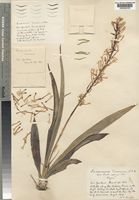
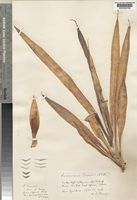
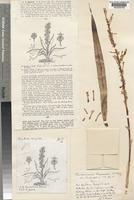
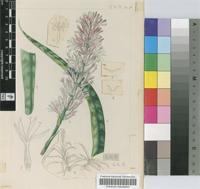
Sansevieria dooneri

4 Images see all

Type of Sansevieria dooneri N.E.Brown [family DRACAENACEAE]
Sansevieria dooneri N.E.Br.
Previous
Next

Name

Identification
Sansevieria dooneri N.E.Br. [family DRACAENACEAE ]
Related name
  • Sansevieria dooneri

Flora

Entry for Sansevieria parva N.E.Br. [family DRACAENACEAE]
Herbarium
Royal Botanic Gardens, Kew (K)
Collection
Flora of Tropical East Africa
Resource Type
Reference Sources
Entry From
Flora of Tropical East Africa, page 1, (2007) Author: Geoffrey Mwachala & Paul Mbugua
Names
Sansevieria parva N.E.Br. [family DRACAENACEAE], in K.B. 1915: 233, fig. 13c–f (1915); Mbugua in U.K.W.F. ed. 2: 312 (1994); L.E. Newton in Ill. Handbook Succ. Plants 1: 268 (2001). Type: Kenya, Naivasha District: near Gilgil River, 1906, Powell 15 (K!, holo.)
Sansevieria dooneri N.E.Br. [family DRACAENACEAE], in K.B. 1915: 231, fig. 13 (1915); L.E. Newton in Ill. Handbook Succ. Plants 1: 264 (2001). Type: Kenya, Naivasha/Masai District: Rift Valley, near the Kedong River, Dooner s.n. (K!, holo.), syn. nov.
Information
Rosulate herb with subsurface to aerial branching; rhizome brownish orange, (1–)1.5–2 cm thick; stem (1–) 2.5–8 cm long, 0.5–0.8 cm in diameter, sometimes concealed completely between the leaves. Leaves ascending or suberect, slightly recurved-spreading at the upper part, linear-lanceolate to lanceolate, (6–)8–14(–18) per plant, 20–47≈0.8–1.4 cm, shallowly concave and folded longitudinally, rounded or obtusely keeled on the back, smooth on both surfaces, tapering at the apex into a stout subulate tip (2–)3.5–5 cm long with soft green point, base narrowed into a petiole up to 5–7 cm long, flat on the face and very rounded at the back but broadly clasping at the base; young leaves very clearly banded on both surfaces with transverse bands of dark bright green and paler green which fade with age hence deep green, margins green, soft; basal scaly leaves 3–4 per plant, 1.5–5.2≈2.2 cm, membranous, acute, subulate tip 0.3 cm long, grey-green, margin narrow, with evident vertical veins. Inflorescence a lax raceme (25–)30–50(–60) cm long; axis greenish-purple to pale green, 0.2–0.3 cm wide, smooth, glaucous; flower clusters on upper third of axis, flowers (1–)2 per cluster, always solitary in lower and upper parts of the inflorescence, ascending; lower inflorescence bracts 3–4(–5), 1.5–2.5 cm long, the basal clasping, membranous, acute; bracteoles spreading, narrowly lanceolate, 3–4(–6) mm long, membranous, acute, each subtending a flower; pedicel 2–3 mm long, the base hardly jointed. Flower perianth (18–)21–23 mm long; tube pale pinkish-white, 9–12 mm long, swollen at base, lobes greenish grey at base, grey-white in middle, pinkish-brown at apex, linear, 9.5–11 mm long, obtuse; filament 15–17 mm long, anthers 1.5 mm long; ovary greenish grey, elongate, (1.5–)2.4–2.7 mm wide. Fruit a yellow berry, 5–8 mm in diameter.
Range
DISTR. U 2–4; K 3, 4, 6, 7 not known elsewhere
Altitude range
600–2400 m
Distribution
KENYA Kiambu District East Kedong Escarpment, 25 Jan. 1974, Brandham & Cutler 4/30!KENYA Masai District Narok, 21 Sep. 1992, Mbugua 358!KENYA Teita District Tsavo National Park, Mazinga Hill near Voi, 26 Mar. 1975, Bally 13416!UGANDA Kigezi District Obugwegwe (Lukiga) Kamwezi, Aug. 1949, Purseglove 3095!UGANDA Masaka District Masaka–Mbarara road, ± 3 km towards Mbirizi, 30 Aug. 1977, Pfennig 1244!UGANDA Mengo District Kipayo, 20 Nov. 1915, Dummer 2639!
Notes
USES. Used as a fodder by farmers during droughts around Kijabe area – Kenya. CONSERVATION Least concern. During fieldwork it was found that leaf banding varies from very bright and evident markings to faint or no bands on the plants growing in the shade. Leaf size also varies much, depending on a number of factors, such as water availability, soil type, etc. In his revision of this genus Brown (1915) stated that S. dooneri was closely related to S. parva, though distinguishing it by “its less evident stem and less erect habit, the leaves being much more recurved; they do not have a very distinct petiole, and their subulate points are usually much shorter; also the colour is of a much darker and dull green, with very inconspicuous pale markings”. The two taxa, however, grow together in their natural habitats. The type localities are not very far apart i.e. near Gilgil River and in the Kedong Valley – within 30–40 km of each other and both in the Rift Valley. After careful study and comparison, it has been decided that the two are actually one species exhibiting variation due to microhabitat factors.

Related Materials

  • Terms and Conditions
  • Privacy Policy
  • Cookie Policy
  • Cookie Settings
  • Accessibility
  • Help
  • Contact Us
  • Facebook
  • Twitter
ITHAKA

JSTOR is part of ITHAKA, a not-for-profit organization helping the academic community use digital technologies to preserve the scholarly record and to advance research and teaching in sustainable ways.

©2000-2026 ITHAKA. All Rights Reserved. JSTOR®, the JSTOR logo, JPASS®, Aluka®, and ITHAKA® are registered trademarks of ITHAKA.

╳