

Search Results
Results 1 - 13 of 13
Page 1 of 1
Previous
Next
![Type of Zanthoxylum thunbergii DC. var. multijuga [family RUTACEAE]](/fsi/img/size1/alukaplant/k/phase_01/k0001/k000199461.jpg)
Type of Zanthoxylum thunbergii DC. var. multijuga [family RUTACEAE]
Gill, #s.n.
None
Specimens
Fagara capensis Thunb. [family RUTACEAE];
Fagara armata Thunb. [family RUTACEAE];
Elaphrium capense DC. [family BURSERACEAE];
Zanthoxylum capense (Thunb.) Harv. [family RUTACEAE] (stored under name);
Type of Zanthoxylum thunbergii DC. var. multijuga [family RUTACEAE];
Fagara armata Thunb. [family RUTACEAE];
Elaphrium capense DC. [family BURSERACEAE];
Zanthoxylum capense (Thunb.) Harv. [family RUTACEAE] (stored under name);
Type of Zanthoxylum thunbergii DC. var. multijuga [family RUTACEAE];
![Type of Zanthoxylum thunbergii DC. var. obtusifolia Harv. [family RUTACEAE]](/fsi/img/size1/alukaplant/k/phase_01/k0000/k000199460.jpg)
Type of Zanthoxylum thunbergii DC. var. obtusifolia Harv. [family RUTACEAE]
None, #None
None
Specimens
Zanthoxylum capense (Thunb.) Harv. [family RUTACEAE] (stored under name)
Fagara magalismontana Engl. [family RUTACEAE]
Type of Zanthoxylum thunbergii DC. var. obtusifolia Harv. [family RUTACEAE]
Fagara magalismontana Engl. [family RUTACEAE]
Type of Zanthoxylum thunbergii DC. var. obtusifolia Harv. [family RUTACEAE]
![Type of Zanthoxylum thunbergii DC. var. obtusifolia Harv. [family RUTACEAE]](/fsi/img/size1/alukaplant/k/phase_01/k0009/k000199459.jpg)
Type of Zanthoxylum thunbergii DC. var. obtusifolia Harv. [family RUTACEAE]
None, #None
None
Specimens
Type of Zanthoxylum thunbergii DC. var. obtusifolia Harv. [family RUTACEAE]
Zanthoxylum capense (Thunb.) Harv. [family RUTACEAE] (stored under name)
Fagara magalismontana Engl. [family RUTACEAE]
Zanthoxylum capense (Thunb.) Harv. [family RUTACEAE] (stored under name)
Fagara magalismontana Engl. [family RUTACEAE]
![Zanthoxylum capense (Thunb.) Harv. [family RUTACEAE]](/fsi/img/size1/alukaplant/k/phase_01/k0008/k000199458.jpg)
Zanthoxylum capense (Thunb.) Harv. [family RUTACEAE]
Thorncroft, G., #1089
10-1920
Specimens
South Africa
Fagara thorncroftii I.Verd. [family RUTACEAE]
Zanthoxylum capense (Thunb.) Harv. [family RUTACEAE] (stored under name)
Zanthoxylum capense (Thunb.) Harv. [family RUTACEAE] (stored under name)
![Filed as Zanthoxylum capense (Thunb.) Harv. [family RUTACEAE]](/fsi/img/size1/alukaplant/pre/phase_01/pre0000/pre0669844-0.jpg)
Filed as Zanthoxylum capense (Thunb.) Harv. [family RUTACEAE]
Hildyard, C.J., #176
1980-01-27
Specimens
South Africa
Zanthoxylum capense (Thunb.) Harv. [family RUTACEAE] (stored under name)
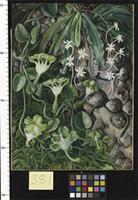
The Knobwood and Flowers of Natal
North, Marianne; 1830-1890 (Artist)
Paintings
Zanthoxylum capense [family RUTACEAE]
![Filed as Zanthoxylum capense (Thunb.) Harv. [family RUTACEAE]](/fsi/img/size1/alukaplant/bnrh/phase_01/bnrh0004/bnrh0009504.jpg)
Filed as Zanthoxylum capense (Thunb.) Harv. [family RUTACEAE]
Burrows, J.E., #9390
2006-04-12
Specimens
South Africa
Zanthoxylum capense (Thunb.) Harv. [family RUTACEAE] (stored under name); Verified by Burrows, J.E.,
![Filed as Elaphrium capense [family BURSERACEAE]](/fsi/img/size1/alukaplant/sbt/phase_01/sbt0006/sbt12216.jpg)
Filed as Elaphrium capense [family BURSERACEAE]
Ekeberg, C.G., #s.n.
None
Specimens
South Africa
Elaphrium capense [family BURSERACEAE] (stored under name); Verified by J.E. Wikström
Fagara capensis [family RUTACEAE]; Verified by C.P. Thunberg
Fagara capensis [family RUTACEAE]; Verified by C.P. Thunberg
![Filed as Elaphrium capense [family BURSERACEAE]](/fsi/img/size1/alukaplant/sbt/phase_01/sbt0005/sbt12215.jpg)
Filed as Elaphrium capense [family BURSERACEAE]
Thunberg, C.P., #s.n.
None
Specimens
South Africa
Elaphrium capense [family BURSERACEAE] (stored under name); Verified by J.E. Wikström
Fagara capensis [family RUTACEAE]; Verified by C.P. Thunberg
Fagara capensis [family RUTACEAE]; Verified by C.P. Thunberg

Zanthoxylum capense (Thunb.) Harv.
March
Paintings
Xylotheca kraussiana Hochst. [family ACHARIACEAE]
![XANTHOXYLON capense Harv. [family ]](/fsi/img/misc/plants/static_thumbs/flora_capensis_icon96.jpg)
XANTHOXYLON capense Harv. [family ]
Flora Capensis, Vol 1, page 445, (1894) Author: (By W. H. HARVEY).
Royal Botanic Gardens, Kew (K)
Reference Sources
branches armed; petioles unarmed, channelled; leaves paripinnate, leaflets elliptical, obovate, ovate, or ovato-lanceolate, obtuse or acute, crenulate, sessile, sub-unequal at base; panicles axillary and terminal, puberulous; flowers 4 parted; ovary single, ovoid; style filiform, equalling the petals; stigmas capitate. A large, much branched shrub or small tree, the branches and twigs armed with sharp, strong, horizontal, solitary prickles, usually placed under the insertion of the petiole. Leaflets in 4–5 pairs, opposite or alternate, 1/2–1 1/2 inch long, 2–6 lines wide, the lowest smallest, the rest gradually larger, very variable in shape, with a translucent gland in each serrature, and sometimes sparsely pellucid dotted. Panicles many flowered, shorter than the petioles. Petals of the ♂ flowers oval, concave, very obtuse; of the ♀, ovato-lanceolate, sub-acute, keeled.
![Fagara capensis Thunb. [family RUTACEAE]](/fsi/img/misc/plants/static_thumbs/flora_zambesiaca_icon96.jpg)
Fagara capensis Thunb. [family RUTACEAE]
FZ, Vol 2, Part 1, page 180, (1963) Author: F. A. Mendoça
Royal Botanic Gardens, Kew (K)
Reference Sources
In S. Africa from the Cape to the east and north, S. Rhodesia and southern Mozambique.
Tree up to 10 m. tall; trunk usually armed with aculeate corky bosses; young branches and inflorescences minutely pubescent or glabrous; stems and the rhachis of the leaves sometimes aculeate; aculei straight, greyish, up to 8 mm. long. Leaves 4–12 cm. long; rhachis together with the petiole 4–8 cm. long, deeply grooved above; leaflets sessile, opposite or alternate, (2) 3–8-jugate, becoming progressively larger from the basal pair upwards to the apical one; lamina 1·4 × 1–2·3 cm., elliptic to broadly elliptic or obovate, obtuse or rounded or rarely acute at the apex, margin slightly crenulate or serrulate with pellucid glands in the sinuses only, obtuse and usually with small callose auricles at the base, ± asymmetric, the terminal leaflet frequently atrophied or aborted; nerves 4–8 pairs. Inflorescences of terminal panicles, 2–6 cm. long; bracts 0·6 mm. long, ovate, ciliolate. Flowers 4-merous, subsessile or with pedicels up to 1·5 mm. long. Sepals 4, free, 0·5 mm. long, ovate, persistent on the fruit. Petals 4, imbricate, 2·7–3·1 × 1–1·3 mm., narrowly elliptic. Male flowers: stamens 4; vestigial ovary very small. Female flowers: staminodes 4, reduced to the aborted anthers, inserted at the base of a stout gynophore 0·3 mm. long; ovary glabrous, ovoid, conspicuously dotted with glands, 1-locular, 2-ovulate; style c. 0·8 mm. long; stigma discoid, black. Fruit 4–4·5 mm. in diam., subsessile or with a short stipe up to 2 mm. long, subglobose, gland-dotted. Seed black, shiny.
Fagara schlechteri Engl. [family RUTACEAE]
FZ, Vol 2, Part 1, page 180, (1963) Author: F. A. Mendoça
Royal Botanic Gardens, Kew (K)
Reference Sources
Known only from the coastal dunes of southern Mozambique.
Shrub or small tree up to 4 m. tall; young branches glabrous, reddish, sparsely aculeate; aculei recurved, 4–10 mm. long. Leaves 5–18 cm. long; petiole and rhachis terete, narrowly grooved above, sometimes aculeate. Leaflets (1) 2–4-jugate, chartaceous or subcoriaceous, opposite or subopposite, subsessile or shortly petiolulate, terminal one usually with a petiolule (or segment of the rhachis) 0·5–2·5 cm. long; lamina (2) 3–7 × (1) 2–3·5 cm., elliptic to broadly elliptic, sparsely dotted with very conspicuous pellucid glands, rounded or obtuse at the apex, margin crenulate, abruptly and narrowly cuneate at the base; midrib impressed on the upper surface, prominent below; lateral nerves 5–10 pairs. Inflorescence 2–10 cm. long, of terminal and sometimes also axillary subcorymbose panicles, glabrous; bracts and bracteoles very small; pedicels 1–2 mm. long. Flowers 4-merous, usually in cymose clusters at the ends of the panicle-branches. Male flowers: sepals 4, 0·4–0·6 mm. long, united at the base, obtuse or rounded; petals 4, 3·5 × 1–5 mm., imbricate; stamens 4, inserted at the base of the gynophore; filaments flattened, subulate, longer than the petals; anthers 1·3 mm. long, basifixed, deeply lobed at the base; gynophore 0·6 mm. long; vestigial ovary c. 0·8 mm. long. Female flowers, petals 4·5 × 1·7 mm.; staminodes 4, vestigial, reduced to the aborted anthers; gynophore very short; ovary of 1 carpel, 1·5 mm. long, oblique, 1-locular, 2-ovulate; style lateral, short, incurved; stigma broadly discoid, black. Fruit c. 8 mm. in diam., with stipe c. 1 mm. long, globose, densely glandular-foveolate, orange-red. Seed c. 6 mm. in diam., subglobose, black, shiny.
Page 1 of 1
Previous
Next