

Search Results
Results 1 - 7 of 7
Page 1 of 1
Previous
Next
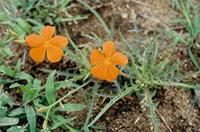
Tricliceras longepedunculatum (Mast.) R.Fern. var. eratense R.Fern.
Manning
Photographs
Tricliceras longepedunculatum (Mast.) R.Fern. var. eratense R.Fern. [family TURNERACEAE]
![Isotype of Tricliceras longepedunculatum (Mast.) R.Fernandes var. eratense R.Fernandes [family TURNERACEAE]](/fsi/img/size1/alukaplant/lisc/phase_01/lisc0008/lisc002458.jpg)
Isotype of Tricliceras longepedunculatum (Mast.) R.Fernandes var. eratense R.Fernandes [family TURNERACEAE]
Lemos, F. de & Macuácua, L., #12
1960-03-02
Specimens
Mozambique
Isotype of Tricliceras longepedunculatum (Mast.) R.Fernandes var. eratense R.Fernandes [family TURNERACEAE] (stored under name); Verified by Fernandes, A., 1979
![Isotype of Tricliceras longepedunculatum (Mast.) R.Fernandes var. eratense R.Fernandes [family TURNERACEAE]](/fsi/img/size1/alukaplant/lisc/phase_01/lisc0009/lisc002459.jpg)
Isotype of Tricliceras longepedunculatum (Mast.) R.Fernandes var. eratense R.Fernandes [family TURNERACEAE]
Lemos, F. de & Macuácua, L., #12
1960-03-02
Specimens
Mozambique
Isotype of Tricliceras longepedunculatum (Mast.) R.Fernandes var. eratense R.Fernandes [family TURNERACEAE] (stored under name); Verified by Fernandes, A., 1979
![Paratype of Tricliceras longepedunculatum (Mast.) R.Fern. var. eratense R.Fern. [family TURNERACEAE]](/fsi/img/size1/alukaplant/pre/phase_01/pre0003/pre0638733-0.jpg)
Paratype of Tricliceras longepedunculatum (Mast.) R.Fern. var. eratense R.Fern. [family TURNERACEAE]
De Lemos, F.;Macuacua, L., #12
1960-03-02
Specimens
Mozambique
Paratype of Tricliceras longepedunculatum (Mast.) R.Fern. var. eratense R.Fern. [family TURNERACEAE] (stored under name); Verified by Fernandes R,
![Tricliceras longepedunculatum var. eratense R. Fernandes [family TURNERACEAE]](/fsi/img/misc/plants/static_thumbs/flora_zambesiaca_icon96.jpg)
Tricliceras longepedunculatum var. eratense R. Fernandes [family TURNERACEAE]
FZ, Vol 4, Part 0, page 348, (1978) Author: R. Fernandes
Royal Botanic Gardens, Kew (K)
Reference Sources
Known only from Mozambique.
None
Tricliceras longepedunculatum var. longepedunculatum [family TURNERACEAE]
FZ, Vol 4, Part 0, page 348, (1978) Author: R. Fernandes
Royal Botanic Gardens, Kew (K)
Reference Sources
None
Tricliceras longepedunculatum Mast. R. Fernandes [family TURNERACEAE]
FZ, Vol 4, Part 0, page 348, (1978) Author: R. Fernandes
Royal Botanic Gardens, Kew (K)
Reference Sources
Perennial, usually caulescent, with a long vertical woody rootstock. Stems 1 to numerous, erect or rarely procumbent, simple or branched, both more or less white-pubescent (the individual hairs crisped) and setose, setae 1–5(7) mm. long, usually dark purple, not bulbous at the base, spreading, more or less dense or sometimes sparse, rarely very sparse. Leaves up to 20 cm. long, linear, narrowly lanceolate or elliptic, usually with some (up to 6) scattered, patent, narrowly triangular teeth or lanceolate to linear and acute segments near the base or in the lower half, the rest of the lamina undivided but serrate or serrulate at the margin, rarely all the lamina undivided, pubescent or puberulous to glabrescent, setose on the nerves beneath, subconcolorous, usually somewhat rigid, erect and dense, sessile to shortly petiolate. Flowers (1)4–12(14) per raceme, heterostylous. Peduncles 6–38 cm. long, the uppermost greatly exceeding the stem, pubescent, puberulous or glabrescent and with some sparse, short setae; pedicels up to 8 mm. long, setose above, accrescent and deflexed in fruit. Calyx 11·5–16 mm. long, not or sparsely puberulous, with or without short, appressed, pale setae; lobes c. 6 mm. long, oblong. Petals 25–38 × 5–10 mm., orange or bright vermilion to dull brick-red. Longistylous flowers: styles 10 mm. long, with the stigmas exceeding the anthers of the longest stamens. Brevistylous flowers: styles 3·5 mm. long. Ovary 4·5–5·5× 1 mm., pubescent. Capsule 4–8·5 × 0·1–0·15 (0·2) cm., pendulous, with or without short, sparse setae. Seeds 2·5–3·3 × 1·2–1·7 mm., obovoid.
Page 1 of 1
Previous
Next
Narrow by:
- Resource Type
- Geography