

Search Results
Results 1 - 10 of 10
Page 1 of 1
Previous
Next
![Rhus eburnea Schönland [family ANACARDIACEAE]](/fsi/img/size1/alukaplant/k/phase_01/k0000/k000423000.jpg)
Rhus eburnea Schönland [family ANACARDIACEAE]
Keet, J.D., #1457
12-1924
Specimens
South Africa
Rhus eburnea Schönland [family ANACARDIACEAE] (stored under name)
Rhus transvaalensis Engl. [family ANACARDIACEAE]
Rhus transvaalensis Engl. [family ANACARDIACEAE]
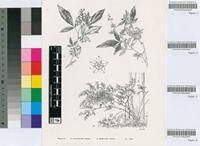
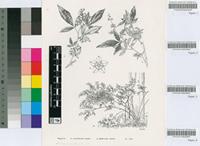
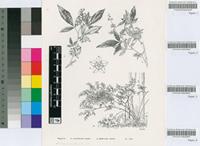
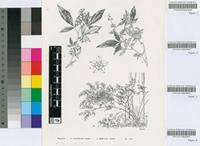
![Holotype of Rhus eburnea Schonland [family ANACARDIACEAE]](/fsi/img/size1/alukaplant/gra/phase_01/gra0007/gra0001837-0.jpg)
Holotype of Rhus eburnea Schonland [family ANACARDIACEAE]
Keet, #1457
None
Specimens
Unknown
Holotype of Rhus eburnea Schonland [family ANACARDIACEAE]
Rhus transvaalensis Engl. [family ANACARDIACEAE] (stored under name)
Rhus transvaalensis Engl. [family ANACARDIACEAE] (stored under name)
![Rhus transvaalensis [family ANACARDIACEAE]](/fsi/img/misc/plants/static_thumbs/cover_florasa_icon96.jpg)
Rhus transvaalensis [family ANACARDIACEAE]
Flora of South Africa, (2003) Author: Dr J.P. Roux
South African National Biodiversity Institute, Compton Herbarium, Cape Town (SAM)
Reference Sources
Common in the Soutpansberg and along the mountains of the north-eastern and eastern Transvaal reaching Swaziland and northern Natal. Also occurs in the eastern Transvaal Lowveld. Flowering recorded from October to December. Map 4.
Lax, many-stemmed shrub up to 2 m high, rarely small tree up to 4 m with pendulous pale branches. Bark smooth; young branches tomen-tose or glabrescent. Leaves trifoliolate, petiolate; petiole shallowly canaliculate above, pilose or glabrous, (5—)16(—37) mm long; leaflets subses-sile, subcoriaceous, glabrous, dark green above, pale olive below, hypostomatous; lamina elliptic to narrowly elliptic, base cuneate to attenuate, apex acute, mucronulate; margin entire, weakly revolute; venation somewhat kladodromous; midrib yellow, prominent below, impressed above, other veins impressed above and below; terminal leaflets (12-)36(-60) x (3-)12(-19) mm, lateral leaflets (7-)23(-40) x (3-)9(-18) mm. Panicles numerous, relatively short (up to 50 mm long), mostly axillary, also terminal. Flowers normal. Drupe circular, globoid, glaÂbrous, shiny, yellowish becoming light brown when mature 3,9 x 3,4 to 4,9 x 4,8 mm. Fig. 8.
![Rhus pyroides var. gracilis Engl. Burtt Davy [family ANACARDIACEAE]](/fsi/img/misc/plants/static_thumbs/flora_zambesiaca_icon96.jpg)
Rhus pyroides var. gracilis Engl. Burtt Davy [family ANACARDIACEAE]
FZ, Vol 2, Part 2, page 550, (1966) Author: Rosette Fernandes and A. Fernandes
Royal Botanic Gardens, Kew (K)
Reference Sources
Shrub or small tree up to 7 m. tall, often thorny, with the young branches brownish and patent-hairy, the oldest ones greyish. Petiole c. half as long as the median leaflet or shorter, slender, terete, pubescent, slightly furrowed above. Leaflets glaucous (when dried pale greenish, slightly darker above), submembranous, entire or with some teeth, appressed-pilose or sometimes densely sericeous, at times nearly glabrous; median leaflet 3–8 × 1–2·3 cm., oblanceolate to elliptic, narrowing at both ends, acute at the apex, cuneate at the base, the lateral ones elliptic, narrower and shorter than the median or ± equal to it; midrib and lateral nerves slender, raised on both surfaces, more so below, reticulation very close, visible on both surfaces. Panicles terminal and axillary, large, pubescent; flowers glomerulate. Calyx-segments 0·5–0·75 mm. long. Petals oblong, 1·25–1·5 mm. long. Drupe c. 3 mm. in diam., subglobose, slightly compressed.
Rhus grandidens [family ANACARDIACEAE]
Flora of South Africa, (2003) Author: Dr J.P. Roux
South African National Biodiversity Institute, Compton Herbarium, Cape Town (SAM)
Reference Sources
Nowhere plentiful, this species occurs along forest verges in a number of disjunct localities from the north-eastern TransÂvaal and eastern Transvaal through Swaziland, Zululand and Natal to Transkei. Flowering recorded in December and JanuÂary. Map 5.
Slender to fairly dense shrub from 1,5 to 2 m high with a vegetative and floral morphology similar to R. transvaalensis (no. 4). Bark and young branchlets are, however, always smooth and glabrous and the leaflets narrowly elliptic to oblanceolate and prominently paucidentate to pauciserrate with each tooth mucronate. Petiole (8—)15(—32) mm long; terminal leaflets (18-) 38(-70) x (3-)14(-30) mm, lateral leaflets (13-)25(-51) x (3-)10(-20) mm. Drupe 3,0x 2,4 to 4,2 x 3,8 mm.
Rhus montana [family ANACARDIACEAE]
Flora of South Africa, (2003) Author: Dr J.P. Roux
South African National Biodiversity Institute, Compton Herbarium, Cape Town (SAM)
Reference Sources
Occurs in scrub forest along the escarpment just north of Wakkerstroom, then in the higher foothills of the Qwa Qwa and Natal Drakensberg reaching as far south as the mounÂtains near Engcobo west of Umtata. Flowering recorded in October and January. Map 6.
Slender, single to multistemmed deciduous shrub to small spreading tree up to 2,25 m high. Bark smooth, glabrous, grey-brown; young branchlets glabrous, pale brown. Leaves (3-)5(-7)-foliolate, petiolate; petiole terete to canaliculate above, (ll-)24(-34) mm long; leaflets sessile, membraneous, slightly dis-colorous, glabrous, dark green above, pale olive below, turning orange-red in autumn, hypostoma-tous; lamina elliptic to narrowly elliptic or obovate, base cuneate to attenuate, apex acute to acuminate, mucronulate; margins entire or prominently pauciserrate in upper half, teeth mucronulate; venation kladodromous to semi-craspedodromous in toothed leaflets, midrib pale, prominent below, other veins impressed yet still visible below; terminal leaflets (27-)44(-68) x (8-)12(-16) mm, lateral leaflets (19-)30(-42) x (6-)9(-14) mm. Panicles much branched, multiflorous, terminal and axillary, up to 100 mm long. Flowers normal. Drupe circular, obloid, glabrous, shiny, pale brown, 3,5 x 3,0 to 4,0 x 3,5 mm.
Page 1 of 1
Previous
Next